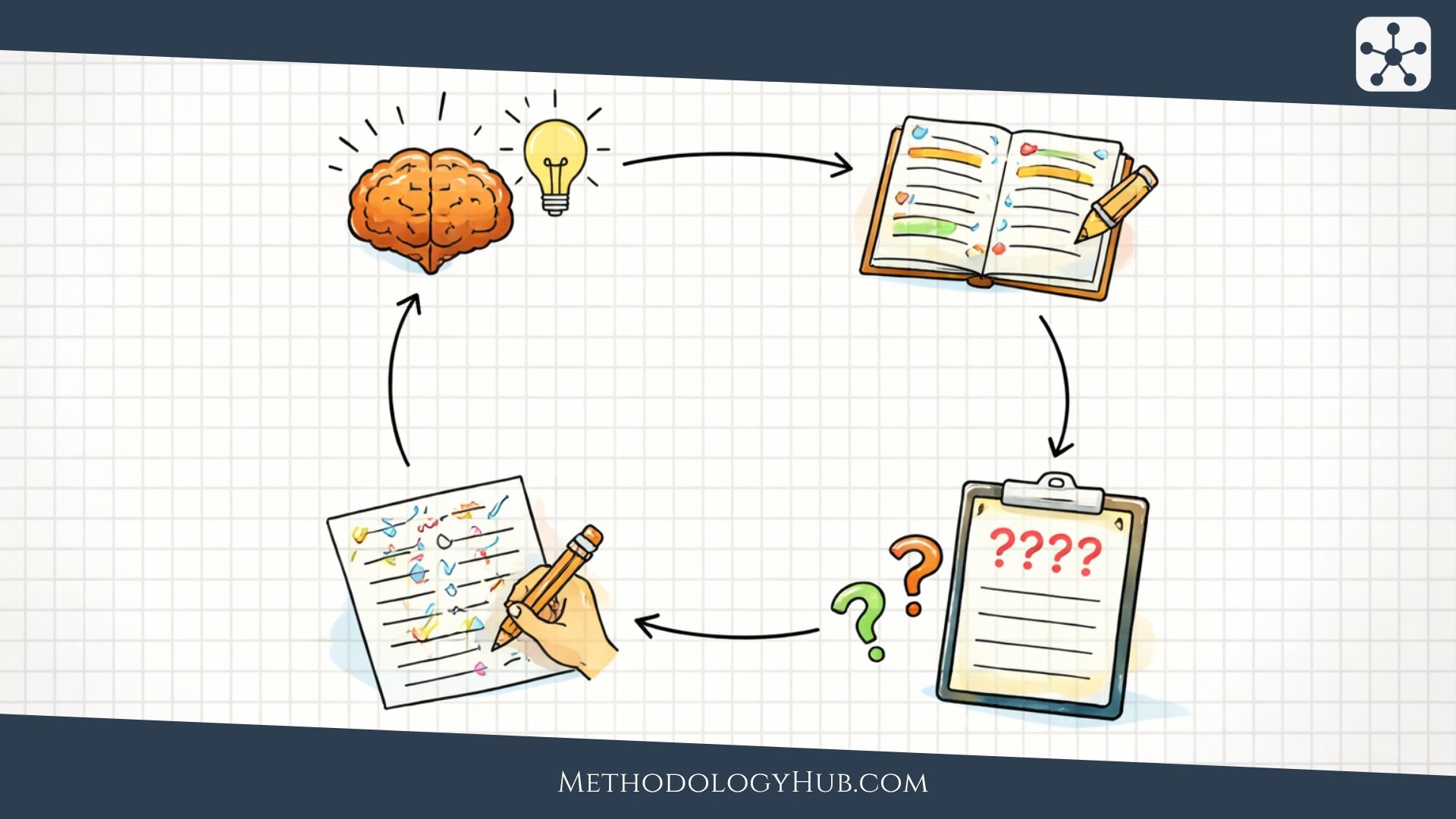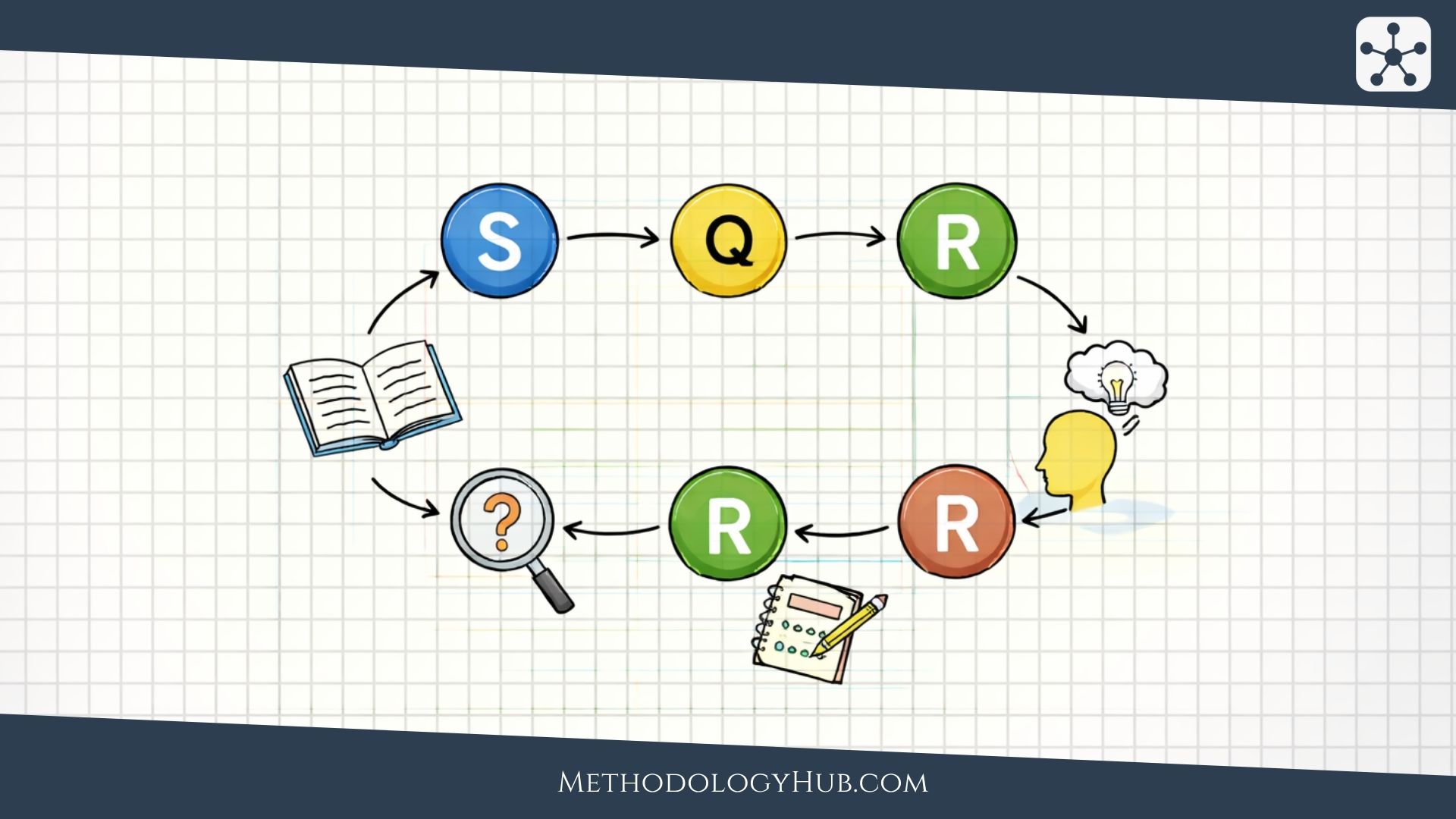
Memorization Techniques are the practical methods people use to hold on to information long enough to recall it later with less strain and less guesswork. A memorization technique is not just “trying harder” or staring at the same page until it feels familiar. It is a deliberate way of encoding material so it has a better chance of sticking, whether that means spacing reviews, turning ideas into images, grouping pieces together, repeating them aloud, or attaching them to a cue that is easier to retrieve.
This article explains what memorization techniques are, how they help when combined with specialized study methods, where the main techniques work best, where they can go wrong, and how to choose the right one for the job.
What are memorization techniques?
Memorization techniques are repeatable ways of encoding information so recall does not depend entirely on luck, mood, or brute force. They shape how material enters memory in the first place. Some techniques make information easier to store by creating structure. Others make it easier to retrieve by adding strong cues. Others keep knowledge from slipping away by returning to it at the right moment instead of only once the forgetting has already done most of its damage.
That sounds obvious, but it matters more than many learners expect. A lot of people think they have a bad memory when the real problem is that all material is being handled in one flat, tired way. They rehearse vocabulary, dates, formulas, names, speeches, and definitions with the same weak method. They reread when they should be recalling. They repeat in a rush when they should be spacing practice. They copy lines over and over and then wonder why recognition during study turns into blankness during a test.
In practice, the best memorization techniques match the kind of material you are dealing with. A formula sequence asks for something slightly different from a poem, a list of anatomy terms, a speech, a timeline, or a deck of language flashcards. Some information benefits from precision. Some benefits from imagery. Some benefits from breaking it into parts. Some benefits from being revisited across days instead of crammed into one sitting. When memorization goes badly, the issue is often not lack of discipline. It is mismatch.
What good memorization techniques need to do
A good memorization technique usually does at least four jobs. It helps you encode the material in a form your mind can grab onto. It reduces overload by making the material feel more organized. It gives you a way to retrieve the information without leaning too heavily on the page in front of you. And it makes later review more efficient, so each pass does more than the one before it.
That is why memorization techniques are not just decorative study methods. They are not there to make revision feel productive while the real work stays untouched. A technique earns its keep when it changes what happens in your head. Without one, learners often fall into one of two dead ends. They either keep rereading until the material feels familiar and mistake that for real learning, or they grind through endless repetition without ever giving the material a better shape. Neither habit is especially kind to time. Neither habit gives much control.
How memorization techniques help learning
People often speak about memory as if repetition alone should take care of everything. Read it enough, say it enough, and it should stay. Sometimes that works for very short-term recall. Often it does not. Memorization techniques help because they make learning more deliberate while the information is still fresh enough to be shaped.
This matters because learning is doing more than one job at once. First, you have to take in the material. Then you have to make it retrievable later. That second part is where weak study habits usually crack. A student may spend an hour looking at a set of terms and still come away with surprisingly little because the material was only revisited, not actively rebuilt, tested, linked, or spaced. The eyes did the work. Memory did not get enough help.
A stronger technique changes that. It gives the material some scaffolding. Spaced repetition returns at the point where forgetting is starting to win, which keeps knowledge from going completely cold. Chunking reduces the number of separate pieces you have to juggle. Mnemonics turn plain facts into something more distinct. The Method of Loci uses place and movement as retrieval hooks. Even simple rote learning has value when exact wording matters and you are careful about how you repeat.
Memorization is not the same as understanding
One common mistake is to talk as if memorization and understanding are enemies. They are not. They are different jobs. You can memorize something without understanding it well, and you can understand something broadly without being able to recall the exact detail when asked. In real study, you usually need both.
Think of multiplication facts, anatomical structures, legal definitions, chemical symbols, language genders, dates, or the steps in a process. Understanding the system helps, but there is still information that has to be available quickly and reliably. When learners say they do not want to memorize because they want to “really understand,” they sometimes end up with a generous overview and weak recall. That feels better than rote drilling for a while, until the test, the conversation, or the real-world task asks for the actual information on demand.
Technique helps when it changes your study behaviour
A memorization technique only matters if it changes what you actually do. A label by itself is worthless. A learner can say they used spaced repetition and still review everything three times in one night. Someone can say they used mnemonics and still produce a clue so vague that it does not help when recall matters. Someone can say they chunked the material while still treating every item as separate.
That is why it helps to judge memorization techniques by delayed usefulness, not by how reassuring they feel in the moment. A good method should leave traces. Can you recall the item after an hour without looking? Can you rebuild the list the next day? Can you explain the grouping you used? Can you recover the second half of the sequence because the first half gave it shape? If the answer is no, the technique may have looked busy without doing enough memory work.
Spaced Repetition
Spaced repetition is one of the most dependable memorization techniques because it works with forgetting instead of pretending forgetting does not exist. Rather than repeating material five times in one burst, you return to it across widening intervals. The gap matters. A little forgetting between reviews makes the recall effortful enough to strengthen memory, while still keeping the material recoverable.
The appeal of spaced repetition is not that it feels easy. In the moment, it can feel slightly less comfortable than rereading because each review asks you to pull something back from memory instead of merely recognizing it on the page. That discomfort is part of why it works. The material is being reactivated after a gap, not just admired while it is still sitting in front of you.
This technique works especially well for vocabulary, factual knowledge, formulas, anatomy, dates, definitions, and anything else that has to survive beyond a single evening. It is also useful when you have a lot to memorize over a longer period. One of the quiet strengths of spaced repetition is that it spreads the load. Instead of letting material pile up until panic forces a cram session, it gives you a review rhythm that is sustainable.
The weakness of spaced repetition appears when people confuse spacing with mere delay. Waiting a week and then rereading a pile of notes is not automatically good spacing. The review still has to involve recall. It also helps to be selective. If every item is treated as equally urgent, the system becomes bloated and irritating. Better spaced repetition separates weak cards from strong ones and gives more time to what still slips.
Used well, spaced repetition makes memory less dramatic. You stop depending on one heroic final session and start building recall a little at a time.
Method of Loci
The Method of Loci is one of the oldest memorization techniques still in active use, and it survives for a reason. It gives abstract information a physical route. Instead of trying to remember a loose list of items, you place each item in a familiar location – a hallway, a bedroom, a walk to school, the rooms of a house – and then retrieve the list by mentally moving through that space in order.
The trick is not the location by itself. It is the combination of place, sequence, and vivid association. If the third item on your list becomes a giant violin balanced on the kitchen sink, that odd image becomes easier to recover when you mentally arrive at the sink later. The method is often surprisingly effective because ordinary lists are easy to lose, while images tied to familiar places have a stronger outline.
The Method of Loci is especially useful for speeches, ordered points, presentations, lists, historical sequences, and any material where order matters as much as content. It is also a good fit for people who remember space and visual scenes more easily than raw verbal data. When the method clicks, recall can feel smoother because each location pulls the next idea forward.
A useful test: if your route is fuzzy or the images are bland, the method will usually feel weaker than its reputation.
The main danger is making the images too polite. A plain mental note rarely has much grip. Strange, oversized, noisy, or slightly ridiculous images are often easier to retrieve because they stand out against the familiar setting. Another problem is overloading one route with too much material before it feels stable. If fifteen items are already blurring together, adding ten more does not fix the problem.
Used well, the Method of Loci turns memorization into a guided walk. You are not staring at a blank wall hoping the next item appears. You are moving through cues that you built on purpose.
Chunking
Chunking is one of the most practical memorization techniques because it reduces how many separate pieces your mind has to hold at once. Instead of treating information as a long string of isolated units, you group it into larger, meaningful parts. Phone numbers, dates, codes, formulas, and even argument structures often become easier to remember once they are reorganized into chunks that have internal logic.
A simple example makes the point. A string like 149217761945 feels messy at first glance. Break it into 1492 / 1776 / 1945 and it becomes easier to work with, especially if those dates already mean something to you. The same principle shows up in language study, music, chess, mathematics, and everyday memory. The material becomes less like loose sand and more like a few graspable shapes.
Chunking works best when the groups are meaningful, not arbitrary. That matters. Splitting a list into pieces without a pattern can help a little, but the stronger version of chunking depends on some logic you can recover later. Maybe the items share a theme, a rhythm, a timeline, a formula family, or a physical layout. The point is not only to make the material shorter. The point is to make it make sense as a grouped whole.
- Numbers can be chunked by date, pattern, or familiar sequence.
- Words can be chunked by root, topic, sound, or usage.
- Processes can be chunked into stages instead of memorized as one long block.
The weakness of chunking is that learners sometimes use it too late. They memorize the raw list first, then try to discover the pattern afterward. It is usually better to build the chunks early. Another mistake is making chunks so large that they become heavy again. A chunk is supposed to reduce burden, not hide it inside a bigger box.
Used well, chunking changes the feel of the task. The material no longer looks endless. It starts to look structured.
Rote Learning
Rote learning gets mocked because people often associate it with dull classrooms and shallow repetition. Sometimes that criticism is deserved. But it is still one of the memorization techniques that refuses to disappear, partly because there are tasks for which plain repetition is useful. If you need exact wording, fixed sequences, multiplication tables, legal phrasing, pronunciation patterns, or lines from a script, there are moments when repetition is not the enemy. It is the job.
The problem is not rote learning by itself. The problem is unthinking rote learning. Repeating something twenty times while barely attending to it is weak practice. Repeating it with a clear pace, accurate correction, and active recall after each pass is much better. Rote learning improves when the learner is not just chanting, but checking, reconstructing, and restarting from memory.
This method works best when precision matters more than interpretation. A formula has to be exact. A poem line has to land in the right order. A foreign language phrase may need to be produced quickly and correctly before there is time for analysis. In cases like that, repetition can do honest work.
Where rote learning fails is just as important. It is a poor substitute for explanation when the learner has no idea what the material means. It is also inefficient when repetition is massed into one long sitting and never revisited. The material may feel strong in the room and vanish by tomorrow morning. That is why rote learning is often stronger when combined with spacing, chunking, or simple understanding of what the pieces are doing.
Used well, rote learning is less glamorous than other memory systems, but sometimes glamour is beside the point. If exact recall matters, steady repetition still has a place.
Repetitive Learning Method
The repetitive learning method is broader than rote learning. Where rote learning often aims at exact repetition of a fixed item, repetitive learning is the wider habit of returning to material again and again until it becomes easier to retrieve, use, and recognize. In ordinary study, this can include revisiting flashcards, reworking problems, reviewing notes, rehearsing explanations, and cycling through the same core material over multiple sessions.
The reason it works is not mysterious. Memory tends to strengthen when contact with the material is repeated over time. But the details matter. Repetition that is too passive turns into wallpaper. Repetition that is slightly effortful tends to do more. That is why repetitive learning is most useful when each pass includes some act of recall, application, or correction.
This method suits learners who benefit from routine. Some people do best when memory practice is woven into the week instead of treated as a dramatic event before the deadline. They revisit old material in short rounds, keep weak points in circulation, and let repetition build familiarity the slow, reliable way. For language study, exam review, skill training, and cumulative courses, that rhythm can be a major advantage.
The danger is slipping into mechanical repetition that never changes. If every pass looks identical, weak spots can hide inside the routine for a long time. The repetitive learning method works better when you vary the angle slightly. One review may be oral, another written, another timed, another self-tested, another used in context. The repetition stays, but the contact becomes richer.
Used well, repetitive learning makes recall less fragile. Instead of meeting the material once and hoping it stays put, you keep nudging it back into reach until it feels familiar in more than one setting.
Mnemonics
Mnemonics are memory aids that make information easier to retrieve by attaching it to something more distinctive than the original form. That “something” might be an acronym, a rhyme, a sentence, an image, a story, a peg system, or a strange association that is easier to recall than the raw list itself. Mnemonics work because plain facts are often slippery, while unusual cues give the mind a handle.
Some mnemonics are simple and practical. A first-letter acronym can help with ordered lists. A rhyme can lock in a rule. A visual image can help with foreign vocabulary. Others are more elaborate and closer to full systems, especially when they are combined with imagery and location. The common thread is that the technique creates a retrieval path that was not there before.
Mnemonics are especially useful when the material feels arbitrary. If there is no built-in logic, a good memory cue can supply one. They are also helpful when you need to recall short sets of information under pressure. The classic school examples sometimes make mnemonics seem childish, but adults use them all the time, especially in medicine, law, languages, public speaking, and technical training.
One warning: if the mnemonic is harder to remember than the thing it is meant to support, it has gone wrong.
- Acronyms help when order matters and first letters are enough to trigger recall.
- Rhymes and phrases help when sound makes the material easier to retain.
- Vivid images help when abstract material needs something concrete to cling to.
The weakness of mnemonics is that learners sometimes stop at the cue and never reconnect it to the actual meaning. A mnemonic should support recall, not replace the content. It also helps to keep the clue personal. A generic class mnemonic can work, but one that genuinely clicks with your own memory often works better.
Used well, mnemonics give plain information a bit more character. That extra character is often enough to make recall faster and cleaner.
How to choose the right memorization technique
Choosing between memorization techniques starts with the task, not the trendiest method. Before picking one, ask what kind of recall you actually need. Do you need exact wording? Ordered points? Quick recognition? Long-term retention? A way to remember many items without panic? A route through material that still feels abstract and slippery?
Once you ask those questions, the choice becomes clearer. If you need knowledge to survive for weeks or months, spaced repetition is often the strongest foundation. If order matters and imagery comes naturally, the Method of Loci can be powerful. If the material is overwhelming because it looks like too many separate parts, chunking is usually worth trying early. If exact phrasing matters, rote learning still has value. If you need steady reinforcement across time, the repetitive learning method may suit you. If the material feels arbitrary and dry, mnemonics can give it a retrieval hook.
It also helps to be honest about your real weak point. Some learners forget because they do not return to the material soon enough. Some forget because they never tried to retrieve it without looking. Some struggle because the material stayed shapeless. Some know the meaning but cannot produce the detail fast enough. The right technique is often the one that corrects your most common failure, not the one with the most mystique.
Another useful rule is to stop treating memorization as one single act. Many strong learners use a sequence. They chunk the material first, build a mnemonic for the awkward parts, and then place the result into spaced review. Or they use rote learning for exact lines, then test themselves later with spaced recall. The best memorization techniques often work together because memory itself has stages.
Common mistakes
Most problems with memorization techniques do not come from choosing the wrong named method once. They come from flattening a useful method until it becomes performance. The study session still happens. The pages still get turned. The technique just stops doing any real memory work.
Using the label without doing the hard part
This happens constantly. A learner says they used spaced repetition, but they only reread the same flashcards in one sitting. They say they used chunking, but they never built meaningful groups. They say they used mnemonics, but the cue was vague and never tested. The name of the method is not the method. The memory move is the method.
Mistaking familiarity for recall
This is one of the oldest traps in study. Material looks comfortable after a while, especially when you have reread it several times. That warm feeling is easy to trust. But recognition is not the same as retrieval. If the answer is only obvious when it is already in front of you, memory has not done enough of the lifting yet.
Reviewing too late or too all at once
Some learners leave review until the material is nearly gone. Others crush all the review into one long sitting and assume intensity will compensate. Both habits waste effort. Memory usually responds better to return visits that happen before the trace goes completely cold, and to multiple shorter reviews rather than one exhausted marathon.
Building weak cues
A bland mnemonic, a foggy location, or a random chunk usually fails quietly. It looks like a technique on paper, but there is not enough distinctiveness to pull the answer back later. Strong memory cues are usually specific, clear, and easy to recover. They do not need to be elegant. They need to work.
Using memorization where understanding is missing
Memory can carry material surprisingly far, but it has limits. If you memorize a formula without any idea what the symbols are doing, recall becomes fragile. If you memorize a list without seeing the category, the list often stays brittle. Understanding and memorization do not replace each other, but they do strengthen each other. Ignoring one weakens the other.
Never combining methods
Some learners keep searching for the one perfect system, when the better answer is often a sequence. Chunk first, then space the review. Use a mnemonic for the awkward bits inside a larger system. Use rote learning for exact language, then test recall later. Memorization techniques are often strongest when they are used at the right stage rather than asked to do everything alone.
Conclusion
Memorization techniques matter because they change what kind of work happens during study. They can give information more shape, make recall less fragile, and stop revision from collapsing into the same tired cycle of rereading and hoping. They can also fail if they are used mechanically or chosen for the wrong task. That is why the real question is not whether you know the names. It is whether the technique leaves you better able to retrieve the material when the support is gone.
For most learners, the best answer is not to pledge loyalty to one method forever. It is to get better at matching method to material. Use spaced repetition when knowledge has to last. Use the Method of Loci when order and place can work in your favour. Use chunking when the material looks crowded. Use rote learning when precision matters. Use the repetitive learning method when regular return visits will keep material alive. Use mnemonics when a stubborn set of facts needs a stronger hook.
Once that shift happens, memorization stops feeling like a fight against your own mind and starts feeling more manageable. You spend less time performing study and more time building recall on purpose. That is the quiet value of good memorization techniques. They do not make memory perfect. They make it less random.