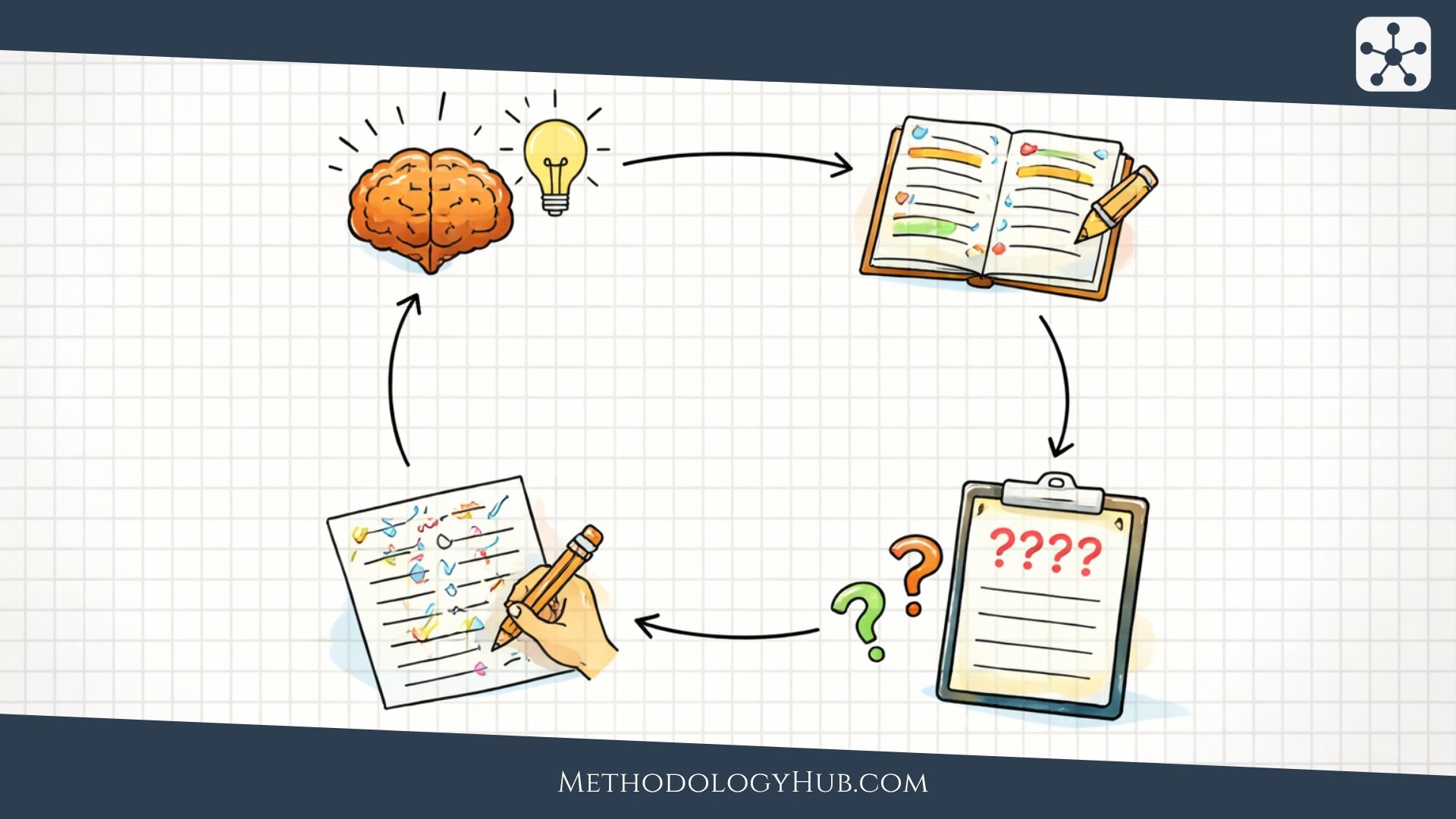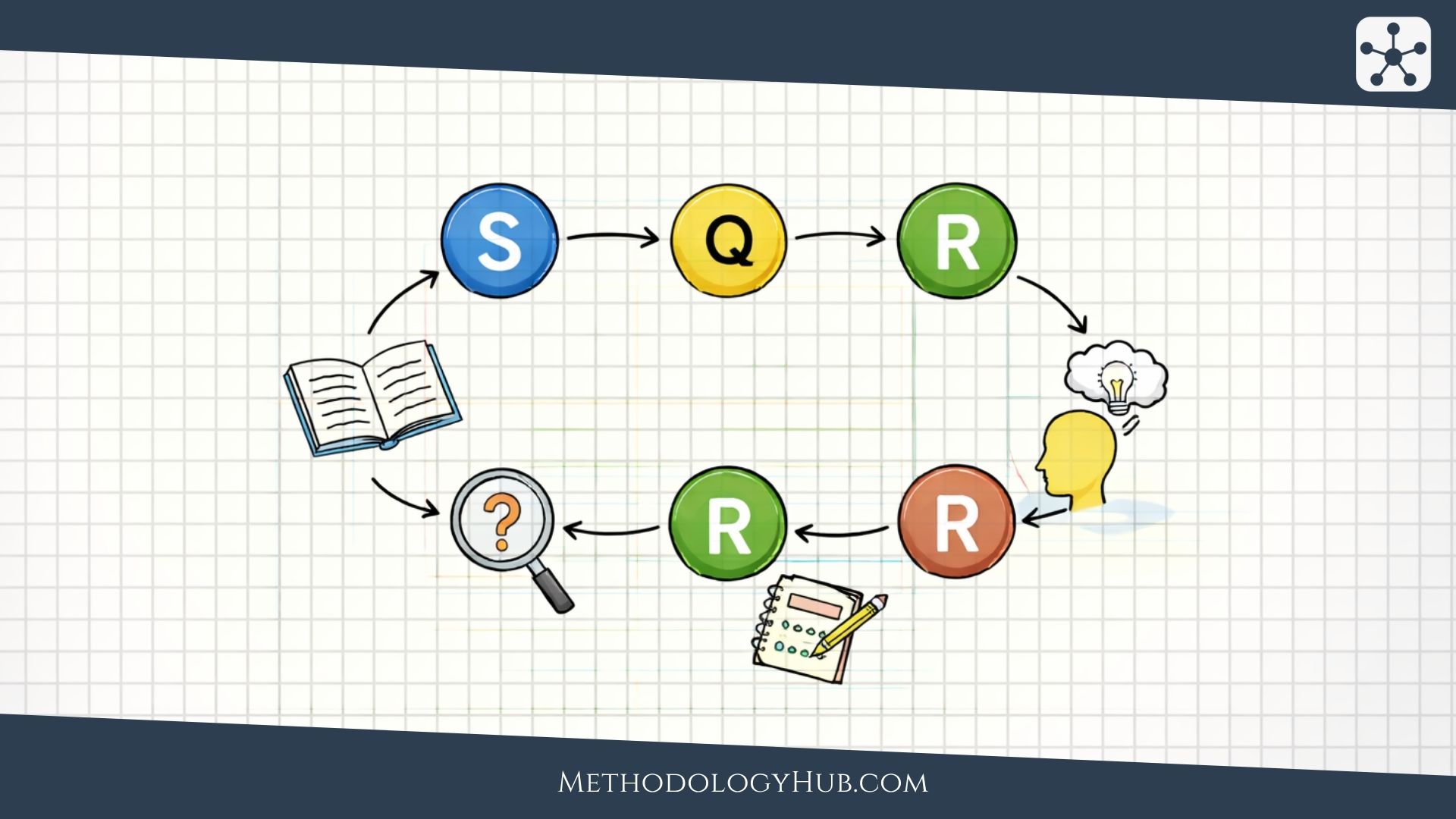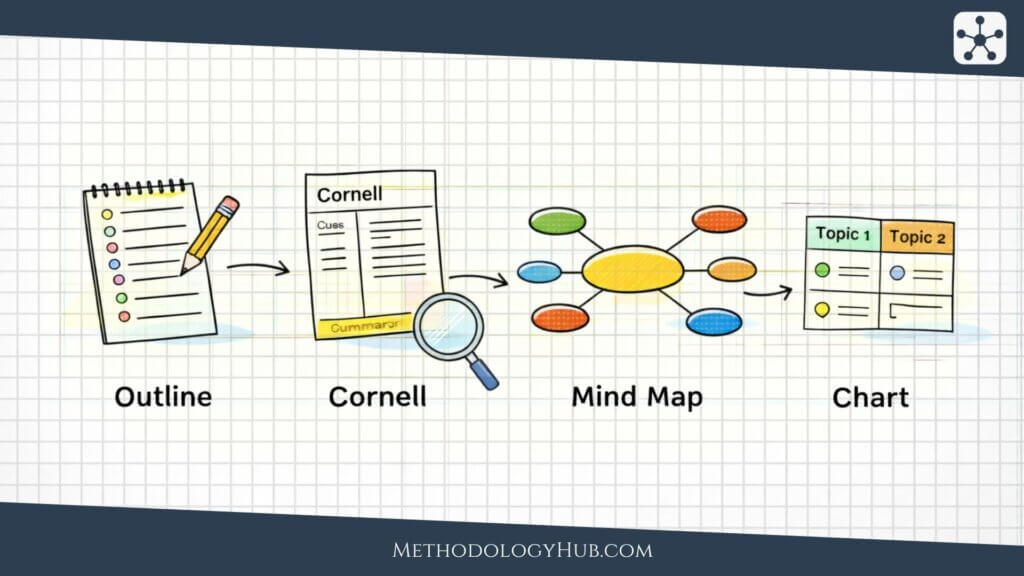
The Pomodoro Technique is a simple productivity method: work for a short stretch, take a short break, and repeat. It keeps showing up because it adds structure when attention slips, tasks feel too big, or the day starts to drift. Sometimes a small timed block is enough to make starting easier.
This article explains what the Pomodoro Technique is, how to use it properly, why it helps some people focus better, where it works well, where it falls short, and which mistakes make it feel much less effective than it should.
What Is the Pomodoro Technique?
The Pomodoro Technique is a time management method that breaks work into short, focused intervals separated by breaks. In its most familiar form, you work for 25 minutes, take a 5 minute break, and repeat the cycle. After several rounds, you take a longer break. That basic rhythm is the part most people recognise, and it is also the part that gets borrowed, simplified, and turned into countless timer apps.
The method was developed by Francesco Cirillo in the late 1980s. The name comes from the Italian word for tomato, after the tomato-shaped kitchen timer he used as a student. That detail is memorable, but the more important idea is what the timer is doing. It turns a large, blurry block of “I need to work” into one clearly defined period of effort. Instead of asking yourself to be focused all afternoon, you ask yourself to stay with one task for the next 25 minutes.
Pomodoro Technique definition
The Pomodoro Technique is a structured way of working in short bursts of concentration with planned breaks in between. The original method is not only about timing. It also includes choosing a task, estimating effort, noticing interruptions, and reviewing what got done. Still, for most people the practical starting point is simple: pick one task, set a timer, work until it rings, then step away briefly before the next round.
At its best, the method helps with three very ordinary problems. First, it makes starting easier because the work period feels small enough to face. Second, it gives distracted minds a boundary, because there is a clear rule for what you are doing right now and for how long. Third, it creates natural stopping points, which makes it easier to assess progress instead of sliding through hours of low-quality work.
In practice, the Pomodoro Technique usually involves these moves:
- choose one clear task or one small part of a larger task
- set a timer for a focused work interval, often 25 minutes
- work on that task without switching to something else
- take a short break when the timer ends
- repeat the cycle, then take a longer break after several rounds
That sounds straightforward, and it is. The challenge is not understanding the steps. The challenge is doing them honestly. The method stops helping when the “focus block” turns into checking messages every few minutes, when the break becomes a 25 minute scroll, or when the task itself is too vague to fit inside one round.
How to Use the Pomodoro Technique
The Pomodoro Technique is easy to describe and slightly harder to use well. Most failed attempts are not failures of the method itself. They usually come from vague task choices, poorly timed breaks, constant interruption, or trying to use the same interval length for every kind of work. A good Pomodoro session has a bit more structure than people expect.
The goal is not to worship the timer. The goal is to create a work rhythm that keeps you engaged long enough to finish something meaningful without drifting into mental sludge. For that reason, the quality of the setup matters almost as much as the timer itself. If you sit down without a clear target, no timer in the world will tell you what to do with the next 25 minutes.
Start with one task that can actually fit the session
Begin by choosing one task, or better, one piece of a task. “Write essay” is usually too broad. “Draft the opening paragraph” or “outline the three main sections” is much better. The smaller target matters because the Pomodoro Technique works best when the work block contains something you can genuinely attempt in one sitting.
This is where many people quietly sabotage the method. They choose a task that is too large, spend the whole interval deciding where to begin, then decide the technique does not work for them. In reality, the timer was fine. The task was not shaped well enough for the timer to be useful. The more defined your target is, the more the work interval becomes a container instead of a source of pressure.
A good test: if you cannot explain in one sentence what the next round is for, the task is probably still too vague.
Set the timer and remove obvious interruption points
Once you know what the round is for, set the timer and make the work environment slightly harder to interrupt. You do not need a monastery. You usually just need fewer open loops. Silence notifications, close the tabs you are not using, put your phone out of reach, and decide what counts as “allowed” during the session.
That last point matters more than people think. If you let yourself check one message, then one email, then one quick search that turns into four, the interval stops being a focus block and becomes a loosely supervised drift. The Pomodoro Technique is helpful partly because it reduces negotiation. During the round, the decision has already been made: this is what I am doing until the timer ends.
Work until the timer ends, without changing tasks
During the Pomodoro itself, stay with the chosen task as steadily as you can. This does not mean your mind will never wander. It means you keep returning to the same piece of work rather than giving yourself permission to switch every time friction appears. The interval is useful because it contains boredom, resistance, and uncertainty inside a short frame. You do not need to feel perfectly focused the whole time. You only need to keep returning.
For difficult work, the first several minutes can feel slow. That is normal. Many tasks only become easier once your brain has spent a bit of time inside them. The timer helps because it asks for commitment long enough to get past the jerky start.
Useful mindset: your job is not to feel inspired for 25 minutes. Your job is to stay with the same task for 25 minutes.
Take the short break properly
When the timer rings, stop and take the break. That sounds obvious, but plenty of people either skip the break because they are finally in motion, or they take a “break” that sends their attention into a completely different universe. Both habits can cause problems.
Skipping breaks sometimes works in the moment, especially if you are in a strong groove, but it can make later rounds worse. The method is built around alternating effort and recovery, not around proving that you can outlast the timer. On the other hand, a break filled with doomscrolling, inbox triage, or a task that sparks fresh stress is not much of a reset either. It often leaves you more scattered than you were before.
Use the longer break to stop focus from thinning out
After about four Pomodoros, take a longer break. This part matters because many people can do one or two decent rounds on momentum alone, then slowly slide into diminishing returns. A longer pause gives your attention a chance to reset more fully before you ask for another sustained block.
The length of the longer break does not need to be identical every time. Something in the range of 15 to 30 minutes is common. What matters is that the break is long enough to feel like an actual shift rather than a quick breath between sprints. Eat something, get outside for a few minutes, walk, or step properly away from the task.
Review what happened before you begin the next block
One part of the Pomodoro Technique that often gets ignored is the small review between rounds or sets of rounds. Before you jump into the next interval, it helps to ask a few plain questions. Did the last round do what it was supposed to do? Was the task sized correctly? What interrupted you? What needs to happen next?
That kind of information is far more useful than a vague sense that you worked “pretty well” today. The Pomodoro Technique can help you build a more realistic picture of how your time and attention actually behave.
Adjust the interval when the task genuinely calls for it
The classic 25 and 5 split is a sensible default, not a law of nature. For many people it is a helpful starting point because it is short enough to feel manageable and long enough to make progress. Still, not every task fits that rhythm equally well.
Administrative work, reading, revision, and routine writing often fit nicely into classic Pomodoros. Deep conceptual work, complex coding, or long-form drafting can sometimes feel cramped at 25 minutes, especially once you are finally inside the problem. In those cases, slightly longer intervals such as 30 and 5, 40 and 10, or even 50 and 10 can work better. The method is supposed to support the work, not force every task into an awkward mould.
The key is not random flexibility. The key is thoughtful adjustment. If you change the interval every five minutes because you feel restless, that is not adaptation. That is avoidance. But if you consistently find that one type of task needs a different cadence, changing the structure makes sense.
Do not confuse tradition with necessity. The classic interval is useful because it is simple, not because every brain and every task works best at exactly the same length.
How to Use the Pomodoro Technique More Effectively
The basic method is enough to get started, but most people eventually notice that some Pomodoro sessions feel sharp and useful while others feel thin, forced, or strangely exhausting. The difference often comes from small practical choices rather than from the timer itself. A few adjustments can make the technique feel far more natural.
Match the task to the right kind of interval
One of the most useful refinements is to stop treating every task as though it deserves the same unit of time. Shallow work and deep work do not ask for the same rhythm. Quick admin, revision, inbox cleanup, and reading notes often fit neatly into classic Pomodoros. More complex work may need a longer runway.
Use a written task list, not a mental one
The Pomodoro Technique tends to work better when you pair it with a visible list of what the next rounds are for. Keeping tasks in your head creates friction. You waste time deciding what to do, second-guessing priorities, or bouncing to whatever feels easiest. A simple written list removes some of that drift.
Track interruptions without overreacting to them
The original Pomodoro approach pays attention to interruptions, and that idea is still worth keeping. If the same kinds of disruptions keep appearing, write them down briefly. Maybe you keep checking your phone during dense reading. Maybe you are too reachable at work. Maybe you start looking up one detail and disappear into side research.
Know when to stop using it for the day
Sometimes the most sensible use of the Pomodoro Technique is knowing when it has stopped helping. If you are already mentally cooked, chaining more timed rounds together may only produce tired compliance. Likewise, if you are in a deep, stable stretch of work and the timer is now getting in the way, forcing yourself to stop because the system says so can be counterproductive.
It also helps to separate “real resistance” from “bad fit.” Sometimes you are avoiding the task because it is dull or uncomfortable, and one timed round is exactly what you need. Other times the session keeps collapsing because the work still needs setup, background reading, or a decision you have not made yet. In that case, the answer is not to keep restarting the timer with more determination. The answer is to step back and define the work more clearly. The Pomodoro Technique helps most when the task itself is ready to be worked on.
Another small improvement is to decide in advance what counts as success for the round. Finishing a paragraph, solving three problems, reviewing one lecture, or sorting one drawer gives the interval a finish line. Without that, even a focused session can feel oddly unsatisfying because you did work without a clear sense of what the work was meant to produce. A simple success rule keeps the round concrete and makes the break feel earned rather than arbitrary.
How Does the Pomodoro Technique Work?
The Pomodoro Technique works less because 25 minutes is a magical number and more because the method changes the shape of effort. Big tasks often create resistance because they feel endless. A short timed block changes that. It gives the work an edge. You know when it starts, what it is for, and when you are allowed to stop. That combination can make even unpleasant work easier to enter.
It makes starting less emotionally expensive
A lot of procrastination is tied to the feeling of starting, not to the work alone. Large tasks carry a strange weight. You imagine the whole project, the whole chapter, the whole afternoon, and your brain reacts as if you have been asked to lift the entire thing at once. The Pomodoro Technique reduces that weight by shrinking the first commitment.
Why this matters: many people do not avoid work because they are lazy. They avoid the feeling of a task that seems to have no edge and no end.
It protects attention from constant re-negotiation
Without structure, work sessions can become full of tiny decisions. Should I answer that now? Should I switch tasks? Should I look this up? Should I take a break? Each small choice may feel harmless, but together they scatter attention. The Pomodoro Technique reduces those decisions for a while. Until the timer ends, the answer is mostly already set.
It uses breaks before fatigue turns invisible
One reason the method helps is that people are not always good at noticing when their concentration has quietly deteriorated. You can sit at a desk for a long time and still do very little. Breaks interrupt that false sense of continuity. They create checkpoints before your attention becomes mushy and before frustration starts to feel like productivity because you are still sitting there.
It turns time into something you can measure more honestly
Another reason the Pomodoro Technique works is that it gives you a rough unit for estimating effort. Over time, you start to see that certain tasks take one or two rounds, while others regularly need four or more. That is useful because most people are not especially good at judging how long work really takes when they do not have a stable frame of reference.
The practical benefit: the timer gives you more than urgency. It gives you a repeatable unit for judging effort, attention, and progress.
It creates a sense of completion during long tasks
Long projects often feel demoralising because progress is hard to feel. You may spend hours moving a paper forward, revising notes, coding, or preparing material without getting the emotional payoff of “done.” Pomodoros can help because each completed interval is a visible chunk of effort. You may not be finished with the whole project, but you are not standing still either.
Pomodoro for Different Kinds of Work
The Pomodoro Technique is flexible, but it does not look identical across every kind of task. The core rule stays the same: work in a focused interval, then step away briefly. What changes is the way you define the task and the interval length that makes sense for it.
This matters because people often give up on the method after trying to use the exact same structure for everything. A technique that works well for reading and revision can feel clumsy for coding, design work, or writing that needs a long run-up. The answer is usually not to abandon the method completely. It is to use it more intelligently.
Studying and revision
This is one of the easiest places to use the Pomodoro Technique well. Study material is often easy to divide into clear units: one chapter section, one set of flashcards, one essay plan, one group of practice questions, one lecture recording, one reading passage. The method works nicely here because it gives revision a visible pace and stops “studying all day” from turning into a mix of stress and low-grade distraction.
Writing
Pomodoro can be useful for writing, but how useful it feels depends on the stage of writing. For outlining, gathering notes, editing, and drafting difficult sections, a timer often helps because it gives the work an immediate edge. It can also stop perfectionism from eating the session alive. You only have one round, so you are more likely to produce a rough paragraph than to spend 25 minutes adjusting one sentence.
Administrative work
Routine tasks often pair well with Pomodoro because they have a way of expanding to fill whatever time you give them. Email, filing, scheduling, forms, light planning, and general maintenance work can easily consume a whole morning if there is no boundary around them. A timed block can keep them contained.
Deep or complex work
For research, problem-solving, coding, conceptual thinking, or any work with a long mental warm-up, Pomodoro can be helpful as an entry point and awkward as a full structure. Some people use one or two standard rounds to overcome inertia, then move into longer uninterrupted stretches once they are fully inside the task.
Household tasks and life admin
The method can also be surprisingly good for chores, cleaning, decluttering, paperwork, or any task that feels more annoying than difficult. Short, timed bursts make these tasks less emotionally sticky. You are no longer deciding whether to spend your whole evening sorting a cupboard. You are giving it one round.
Common Mistakes
The Pomodoro Technique is simple enough to start quickly, but it is also easy to use in ways that drain most of its value. Usually the problem is not dramatic. It is a small shift in behaviour that turns a focused interval into a fuzzy one, or a restorative break into another source of distraction.
Choosing tasks that are too large or too vague
This is probably the most common problem. If the task is “study biology” or “work on project,” the session starts with uncertainty. You spend valuable minutes deciding what to tackle, opening too many materials, and circling the real work. The timer cannot rescue a session that does not know what it is for.
Letting breaks become new work sessions
Another frequent mistake is turning the break into email, social media, stressful messaging, or a random task you were supposed to postpone. By the time the next round begins, your attention is somewhere else entirely. It can take several minutes to recover, which weakens the next session before it even starts.
Switching tasks inside the interval
Task switching creates the illusion of motion. You are still doing things, so the session feels active. But each switch resets part of your attention and steals the momentum the method is trying to build. If you keep jumping around, the timer becomes decorative.
Using the timer as punishment
Some people adopt the Pomodoro Technique with a grim, disciplinary mood. Every round becomes proof that they are either serious enough or failing again. That approach usually backfires. The method works best when it reduces friction and gives the day shape, not when it becomes another tool for self-criticism.
Ignoring what the sessions are telling you
If the same task type never fits the interval, if the same interruption keeps wrecking the second round, or if your breaks always extend past the point of return, that is useful information. The technique works better when you respond to those patterns instead of forcing the same setup repeatedly.
Pros and Cons of the Pomodoro Technique
The Pomodoro Technique has a lot going for it. It is simple, cheap, flexible, easy to test, and easy to restart after a bad day. You do not need special software, and you do not need a full productivity identity to use it. For many people, that low barrier is part of why it lasts. A method is far more useful when it can still be used on a messy Tuesday, not only on the kind of perfect morning that almost never arrives.
Main benefits of the Pomodoro Technique
- It makes starting easier: A short, defined round is less intimidating than an open stretch of work.
- It helps contain procrastination: You can commit to one interval even when the whole task feels unpleasant.
- It creates visible progress: Finished rounds are easier to recognise than vague hours at a desk.
- It encourages breaks before total mental drag: That can improve consistency across the day.
- It works with very little setup: A timer and a clear task are enough to begin.
Where the Pomodoro Technique is weaker on its own
The technique is less helpful when the problem is not focus but overload, confusion, or lack of skill. If you do not understand the material, a timer will not create understanding. If your workload is unrealistic, short intervals will not magically make it manageable. If a task requires uninterrupted immersion for long periods, the classic break pattern may feel artificial.
Who benefits most from the Pomodoro Technique
The method tends to help people who struggle with starting, drifting, or working in very long unstructured stretches. It can also help students, remote workers, and anyone whose day is vulnerable to distraction and shapelessness. People who work well in short bursts often take to it quickly.
Conclusion
The Pomodoro Technique lasts because it solves a problem most people know well. Work often feels either too large to begin or too loose to hold onto. A short timed interval changes that. It gives the next stretch of effort a shape, which is often enough to turn vague intention into actual motion. That is the main appeal of the method. It does not ask you to become perfectly disciplined. It asks for one defined round.
Still, the Pomodoro Technique is most helpful when it is used with a bit of common sense. The timer is not the whole method. Clear tasks matter. Honest breaks matter. Noticing interruptions matters. So does adapting the interval when a task clearly needs a different rhythm. Once you understand that, the method becomes less like a rigid productivity gimmick and more like a practical way to shape your attention.
That is probably the best way to think about it. The Pomodoro Technique is not a cure for every kind of distraction, burnout, or overload. What it can do is make the next piece of work smaller, clearer, and easier to face. Very often, that is enough to get useful work done.
FAQs on the Pomodoro Technique
What is the Pomodoro Technique?
The Pomodoro Technique is a time management method where you work in short, focused intervals and take short breaks between them. A common version uses 25 minutes of work followed by a 5 minute break.
How many minutes is the Pomodoro Technique?
The classic format is 25 minutes of focused work and 5 minutes of break time. After about four rounds, you usually take a longer break of 15 to 30 minutes.
Does the Pomodoro Technique actually work?
It can work very well for people who struggle with getting started, staying on one task, or working in vague, unstructured stretches. It is especially useful when the task is clearly defined and the breaks are used properly.
Can I change the Pomodoro interval length?
Yes. The traditional interval is a starting point, not a rule for every task. Some people work better with slightly longer focus blocks, especially for writing, coding, or other work that needs a longer warm-up.
What should I do during a Pomodoro break?
A good break usually means stepping away from the task for a few minutes, moving around, stretching, getting water, or resting your eyes. Breaks tend to work better when they do not pull you into social media, email, or another stressful task.
Is the Pomodoro Technique good for studying?
Yes, it is often especially helpful for studying because revision can be divided into small, clear units such as one topic, one reading section, one flashcard set, or one batch of practice questions.