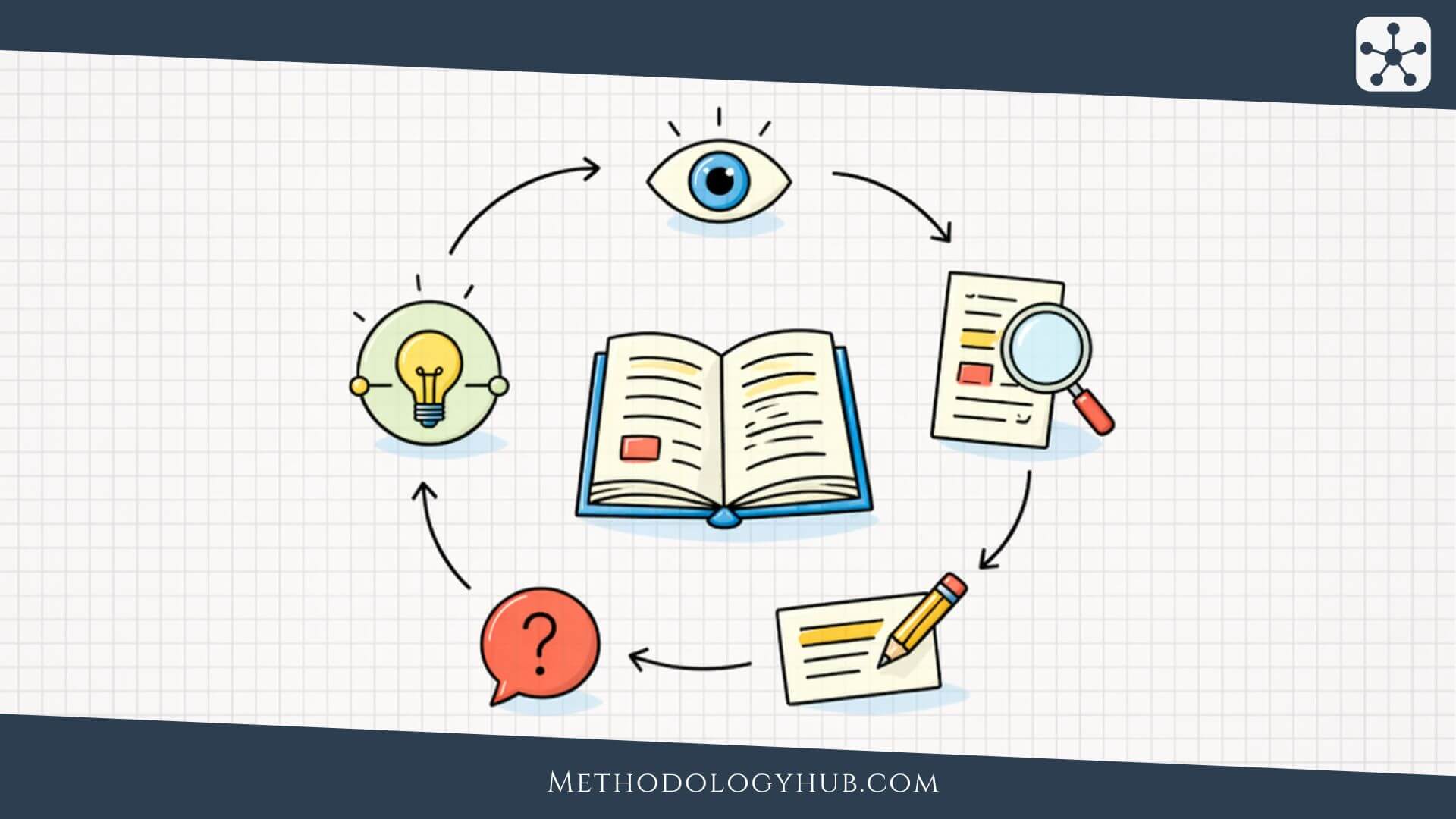
Reading Strategies are the deliberate ways readers approach a text so they understand more, remember more, and waste less effort while working through it. A reading strategy is not just a school trick or a worksheet routine. It is a choice about how you will deal with the material in front of you, whether that means slowing down, previewing structure, asking questions, testing claims, marking patterns, or cutting through a chapter fast enough to see what deserves your full attention.
This article explains what reading strategies are, how they help study more efficiently, where the main strategies work best, where they can fall apart, and how to choose the right one for the job.
What are reading strategies?
Reading strategies are repeatable ways of approaching a text so that comprehension does not depend on hope, mood, or sheer persistence. They shape what you notice, what you ignore, where you slow down, when you question the author, and how you turn a finished page into something you can still use later.
That matters more than it sounds. A lot of people think they have a concentration problem when the real problem is that every text is being attacked in exactly the same way. They read a dense journal article the way they read a simple overview. They skim a chapter that needed careful unpacking. They underline too much, question too little, and finish with the uneasy sense that they were present for the reading but do not quite own it.
In practice, the best reading strategies match the material. A textbook chapter with headings, summaries, and review questions invites a different approach from a research article, a speech, a legal document, or a poem. A piece that needs evaluation calls for one kind of attention. A piece that needs speed calls for another. When reading goes badly, the problem is often not laziness. It is mismatch.
What good reading strategies need to do
A good reading strategy does at least four jobs. It helps you get oriented before the reading becomes heavy. It helps you separate main ideas from background detail. It gives you a way to notice confusion before you reach the bottom of the page. And it leaves you with something usable after the first pass, whether that is a margin note, a summary, a set of questions, or a clearer sense of what to reread.
That is why reading strategies are not decoration. They are not there to make a page look academic. They change how much thinking happens during the reading itself. Without a strategy, readers often drift into one of two unhelpful habits. They either glide over difficult material and mistake recognition for understanding, or they move painfully slowly through every line and still fail to see the structure of the argument. Neither habit is efficient. Neither habit gives much control.
How reading strategies help learning
People often talk about reading as if the benefit is automatic. You read the page, so you have done the learning. Sometimes that is true for easy material. Often it is not. Reading strategies help because they make the reading more active, more selective, and more deliberate while the text is still in front of you.
This matters because reading is doing two jobs at once. One job is basic intake. You have to get through the words and keep the line of thought intact. The second job is harder. You have to decide what matters, what connects, what seems shaky, and what should stay with you after the text is closed. Weak reading habits usually solve only the first problem. They get you to the end. They do not always help you build anything durable on the way.
A stronger strategy reduces that problem by giving the reading some shape. Maybe you preview first, so you are not stepping into the chapter blind. Maybe you ask questions before you read, which makes the material easier to organise. Maybe you annotate sparingly, which forces you to make choices. Maybe you summarise the section in your own words, which exposes the parts you still cannot explain. Whatever the method, the strategy does not replace comprehension. It supports it.
Good reading is not the same as slow reading
One common mistake is to assume that careful reading always means reading every line with the same weight and patience. Sometimes that is necessary. Often it is not. Good readers change pace. They skim to find the shape of a piece, slow down for dense parts, pause at turning points, and move quickly through repetition or obvious setup. That flexibility is part of what makes reading strategies useful.
Students sometimes resist this because fast reading can feel irresponsible and slow reading can feel virtuous. But speed by itself tells you very little. You can race through a chapter and miss the point. You can crawl through it and still miss the structure. The better question is whether your pace matches the job. Reading strategies help with that adjustment.
Strategy helps when it changes your behaviour
A reading strategy is only useful if it changes what you actually do. A label on its own does nothing. A student can say they used active reading and still leave a page covered in meaningless highlighting. Someone can say they used SQ3R and still never come back to the review step. The value is in the moves, not in the name.
That is why it helps to judge reading strategies by delayed usefulness as well as immediate comfort. When you finish a section, can you say what it argued? Can you spot the part that deserves rereading? Can you explain it without looking? Can you tell the difference between the author’s main claim and the examples used to support it? If the answer is no, the reading may have happened, but the strategy did not do enough work.
Active Reading
Active reading is one of the most broadly useful reading strategies because it stops the text from staying one-sided. Instead of letting the page wash over you, you respond to it. You mark what the author is doing, note where the argument changes, ask questions in the margin, connect ideas across sections, and flag the places that feel strong, weak, surprising, or unclear.
That sounds simple, but it shifts the whole reading experience. A passive reader often keeps moving because the sentences feel familiar enough. An active reader interrupts that comfort. They ask what the paragraph is doing. They notice whether a definition is central or incidental. They catch the moment a claim is asserted without much support. They also notice when they have reached the end of a section without being able to say what it was for.
Active reading works especially well for textbooks, essays, articles, and assigned chapters where the goal is not just exposure but real understanding. It is also useful for readers who tend to drift, because it creates small tasks inside the reading itself. If you are looking for the main claim, the support, the limitation, and the unanswered question, you are far less likely to slide through five pages on autopilot.
The danger is overdoing it. Some readers annotate every line and end up with a page that looks busy but says very little. Active reading is not about marking more. It is about noticing more. A short margin question can be more useful than six highlighted sentences in a row. A single note about the paragraph’s function can be more useful than underlining the whole thing.
Used well, active reading makes the text feel less slippery. You are no longer hoping that understanding will appear at the end. You are building it in motion, one section at a time.
Critical Reading
Critical reading is one of the most important reading strategies once the job moves beyond basic understanding. Critical reading asks whether the text deserves your agreement, not just whether you can follow it. That means looking at claims, evidence, assumptions, omissions, framing, and logic.
In ordinary reading, it is easy to confuse clear writing with a strong argument. A polished piece can still hide weak evidence, convenient definitions, selective examples, or quiet leaps in reasoning. Critical reading slows that process down. It asks what the author is taking for granted. It asks whether the evidence actually fits the claim. It asks what alternative explanation has been ignored or pushed aside.
This strategy matters most in essays, opinion pieces, research articles, policy writing, and any text that is trying to persuade you of something. But it also matters in everyday study reading. Students sometimes think critical reading begins only when they disagree. In fact, it often matters even more when the text feels sensible, because that is when weak assumptions can slide past without much resistance.
A useful test: if you had to explain why the text is persuasive or unpersuasive without using the word “good,” could you do it?
Critical reading is not cynical reading. The goal is not to attack every paragraph. The goal is to weigh the argument properly. Sometimes that means noticing strength. A careful definition, a fair acknowledgment of limits, or strong evidence deserves to be recognised too. Critical reading should make your judgments sharper, not automatically harsher.
- Claim: what is the author really asking you to accept?
- Support: what evidence, examples, or authorities are carrying the argument?
- Limit: where does the text quietly narrow, hedge, or protect itself?
The method can feel slower at first because you are no longer reading only for content. You are reading for construction. But once that habit develops, it becomes easier to separate solid claims from impressive surface.
SQ3R Method
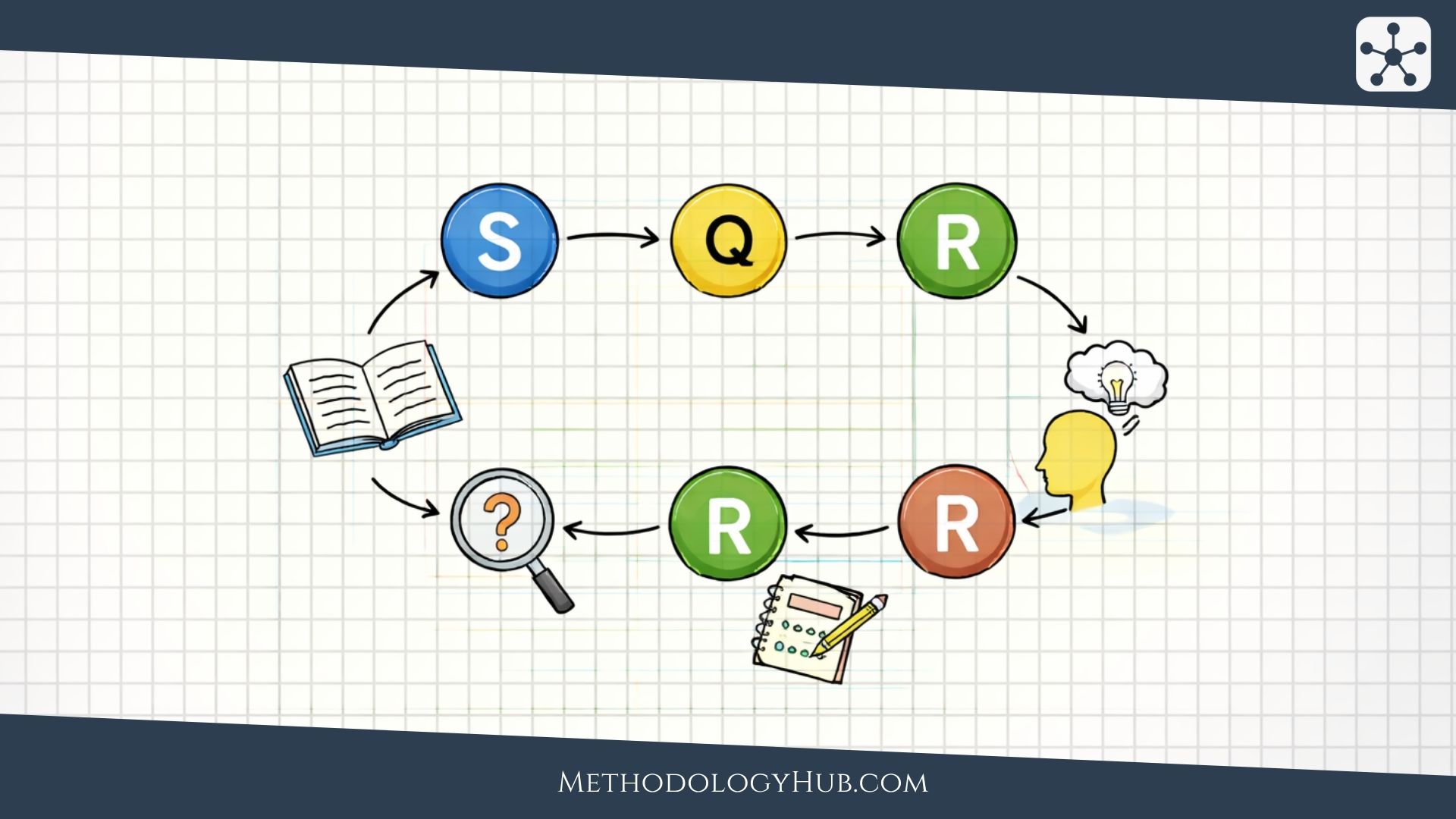
SQ3R is one of the classic reading strategies for study-heavy material because it turns a chapter into a sequence of deliberate steps: survey, question, read, recite, review. It is especially useful when you are dealing with textbooks or assigned reading that is packed with headings, diagrams, summaries, and bold terms.
The strength of SQ3R is that it prevents blind reading. Instead of starting at line one and hoping the structure reveals itself later, you first survey the chapter. That quick scan gives you a map. Then you turn headings into questions, which gives the reading a job. Once you read, you are looking for answers. Once you recite, you test whether the answers are really yours or still belong to the page. The review step ties the whole thing together before too much time passes.
For many students, SQ3R feels slightly formal at first. That is fair. It is structured. But the structure is the point. Long chapters can create the illusion of progress while comprehension stays shallow. SQ3R breaks that spell because it keeps asking you to pause and retrieve, not just continue.
The main weakness of SQ3R appears when readers treat it mechanically. If the questions are too vague, the recitation is skipped, or the review never happens, the method loses much of its value. It also feels a bit heavy for very short texts, where a lighter strategy may be enough.
Still, for dense chapters and exam reading, SQ3R remains one of the most practical reading strategies because it builds retrieval into the process instead of leaving it for later.
PQRST
PQRST is another staged reading method, usually broken into preview, question, read, summarise, and test. It resembles SQ3R, but the final rhythm feels slightly different. Where SQ3R leans heavily on recitation and review, PQRST puts more emphasis on building a clean summary and then testing what stuck.
That makes PQRST useful for readers who need a bit more structure than ordinary active reading but want something that feels slightly more direct than SQ3R. It works well for textbook sections, study guides, revision reading, and chapters where you know you will need to remember concepts rather than simply recognise them later.
The preview stage gives you the outline. The question stage creates a reason to keep reading with attention. The read stage gathers the material. The summarise stage forces compression, which is where a lot of understanding either hardens or falls apart. The test stage then tells the truth. If you cannot answer your own questions or explain the section without the book, the reading is not finished.
- Preview is for orientation, not detail.
- Question is for focus, not busywork.
- Summarise is for compression in your own words.
- Test is for honesty about what actually stayed with you.
PQRST is less useful when the text is highly interpretive or literary, because those pieces do not always break neatly into factual prompts and recall checks. But for study reading, it is one of the steadier reading strategies available because it keeps you moving between intake and retrieval all the way through.
Skimming Techniques
Skimming techniques are often misunderstood because people hear “skimming” and assume it means careless reading. Good skimming is not careless. It is selective. It is a deliberate way of finding the structure, purpose, and useful sections of a text before deciding where full attention belongs.
That makes skimming one of the most practical reading strategies when time is limited or the material is uneven. Many academic readings contain a mix of core ideas, setup, background, repetition, and detail that matters only if the section turns out to be central to your task. Skimming helps you sort that out quickly.
Useful skimming usually means reading the title, abstract or introduction, headings, topic sentences, transition points, conclusion, and any visual or typographic signals that reveal the structure. In a journal article, that might mean checking the abstract, introduction, method overview, and conclusion before deciding which sections deserve close study. In a chapter, it might mean scanning headings, opening paragraphs, end-of-section summaries, and highlighted terms.
What skimming should not become is random eye movement. If your attention is jumping without a plan, you are not skimming well. You are just hurrying. Good skimming still has a purpose. You are trying to answer concrete questions: What is this text about? How is it organised? Where is the real argument? Which parts matter for my task?
That is why skimming is often best used as a first pass rather than the only pass. It tells you where the serious reading should happen. It is especially useful before seminars, when sorting sources for research, or when deciding whether a long reading is actually relevant.
REAP Method
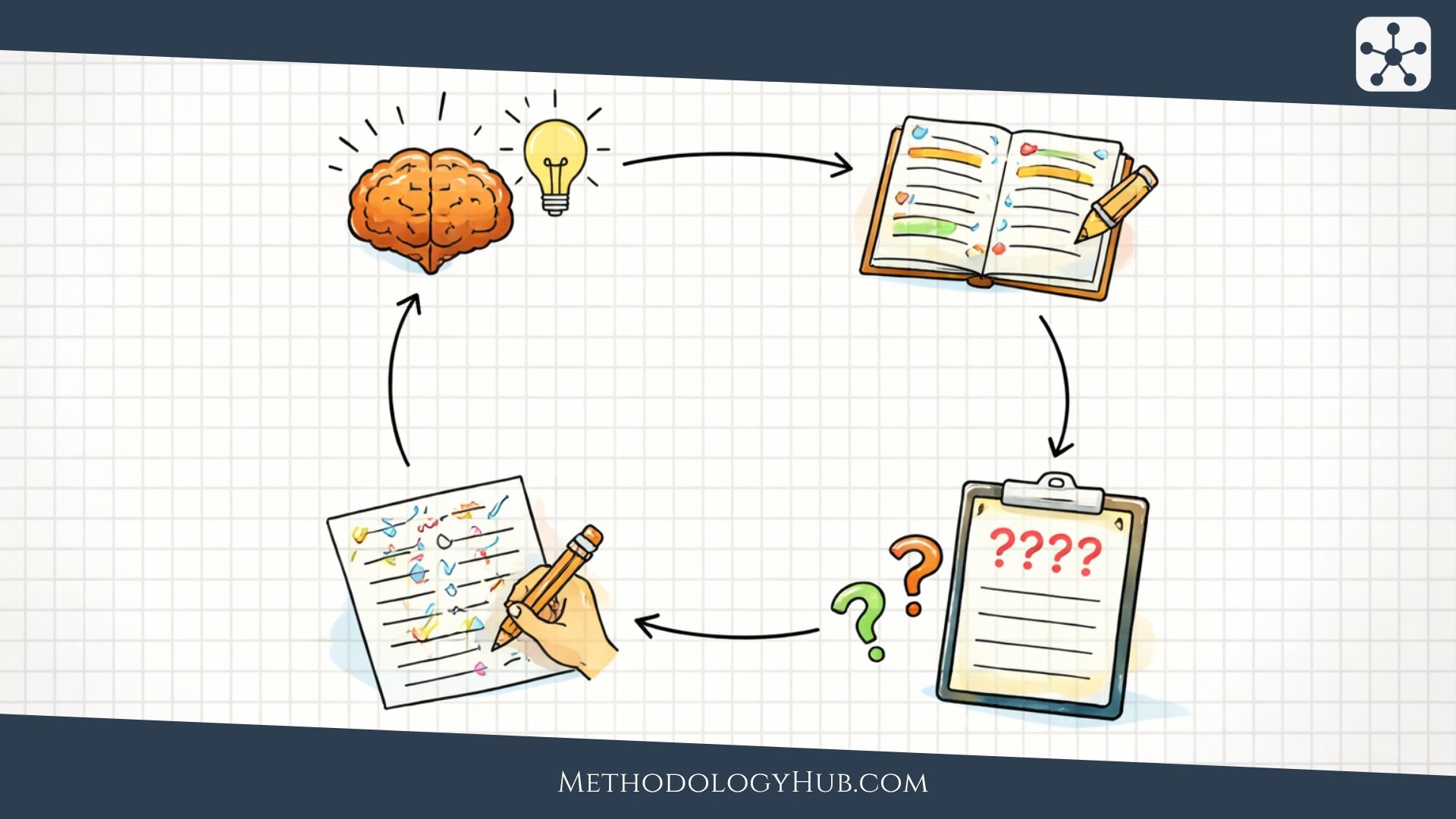
The REAP Method is a reading strategy built around a simple but demanding sequence: read, encode, annotate, ponder. Its real value lies in the middle steps. Instead of letting the text sit in the author’s wording, REAP pushes you to translate meaning into your own language and then react to it.
That makes REAP especially helpful for students who read a page, feel that it made sense at the time, and then discover they cannot explain it two minutes later. Encoding interrupts that problem. When you restate the main point in your own words, weak understanding becomes obvious. Annotation then adds another layer by asking you to mark connections, questions, reactions, or confusions instead of merely copying lines that sound important.
The final step, ponder, is where the method becomes more than a note-taking trick. Pondering means thinking about what the section means, how it connects to previous material, whether it raises objections, and why it matters. That is the part that makes REAP one of the more thoughtful reading strategies rather than just a memory aid.
REAP works well for concept-heavy reading, class preparation, and sections that need a strong grasp of meaning rather than a vague impression. It is slower than skimming and usually more personal than SQ3R or PQRST. That is exactly why some readers find it useful. It turns the text into something they have to process, not merely pass through.
The weakness, of course, is time. REAP is not what you use when you have forty pages to triage before lunch. It is what you use when the reading matters enough to deserve real processing.
Close Reading Techniques
Close reading techniques are used when the wording itself matters. Instead of reading mainly for the broad message, you attend to diction, tone, repetition, syntax, imagery, pattern, structure, and small shifts in emphasis. This is one of the reading strategies most associated with literature, but it also matters in speeches, historical documents, philosophical writing, legal language, and any text where detail changes interpretation.
Close reading is slow on purpose. That is not a flaw. It is what allows the reader to notice the work being done by apparently small choices. A repeated word may alter the mood. A contrast may sharpen an argument. A missing definition may matter just as much as an explicit one. A shift from certainty to caution may reveal the text’s real position.
This method is especially useful when a text is compact, layered, or rhetorically charged. It is much less useful when you are simply trying to get a first overview of a long chapter. That is an important distinction. Readers sometimes use close reading everywhere and then wonder why progress collapses. The strategy is powerful because it is selective.
One warning: if every sentence is highlighted and every phrase is circled, the page may look intense while the analysis stays shallow.
- Word choice can signal tone, judgment, or emotional pressure.
- Pattern can reveal what the text keeps returning to.
- Structure can show where the real turn or emphasis sits.
Close reading also benefits from rereading. The first pass usually gives you the surface sense. The second pass starts to reveal structure and pattern. Later passes can test an interpretation against the actual wording. That is why this strategy is less about speed and more about pressure. You keep pressing on the language until the text gives a little more back.
For essays, exams, or seminar discussion, close reading is often where strong interpretation begins. It anchors your point in what the text is actually doing, not merely in the impression it left behind.
Summarization Techniques
Summarization techniques are among the most revealing reading strategies because they force a hard question: can you reduce the text without distorting it? A strong summary keeps the main point, the line of thought, and the important distinctions while stripping away repetition, padding, and secondary detail.
That is harder than students often expect. Weak summaries usually fail in one of two ways. They either become tiny copies of the original, still leaning on the author’s phrasing, or they become so vague that the actual argument disappears. Good summarization sits in the middle. It is shorter, but not hollow. It is simpler, but not flattened.
Summarization works well after active reading, SQ3R, PQRST, or close reading because by that point you have already done some processing. It is especially helpful for revision. A reader who can summarise a section accurately is usually much closer to owning it than a reader who can only recognise it when they see it again.
There are several good ways to summarise. You can write a one-sentence gist, then expand to three or four sentences if needed. You can summarise paragraph by paragraph, then compress the whole section. You can explain the text to an imagined reader who has not seen it. All of those approaches work because they force selection and rephrasing.
The weakness is that summarising can be faked. If you glance back every few words, copy key phrases, and tidy them up, the result may look fine while the learning stays thin. A real summary should feel slightly effortful because it asks you to rebuild the meaning from memory and judgment.
For revision, discussion prep, and exam study, summarization techniques are often where reading becomes portable. Instead of carrying the whole chapter around in your head, you carry the shape of it.
How to choose the right reading strategy
Choosing between reading strategies starts with the task, not with the trendiest method. Before picking one, ask what the text is asking of you. Do you need a fast overview? Do you need durable recall? Do you need interpretation? Do you need evaluation? Do you need to survive a dense chapter without getting lost in it?
Once you ask those questions, the choice becomes clearer. If you need engagement and steady attention, active reading is often the best starting point. If you need judgment, read critically. If you need chapter control and built-in retrieval, SQ3R or PQRST can work well. If you need speed, skim first and then return to the core sections. If you need deep language analysis, use close reading. If you need to leave the text with something portable, summarization or REAP may be the stronger option.
It also helps to be honest about your real weak point. Some readers lose focus halfway through. Some get to the end and cannot explain the argument. Some remember details but miss the main line. Some can follow a text but never question it. The right strategy is often the one that corrects your most common failure, not the one that sounds most impressive in theory.
Another useful rule is to stop treating reading as one single act. Many strong readers use a sequence. They skim first, then read actively, then summarise. Or they survey a chapter, question it, read selectively, and test themselves afterward. The best reading strategies often work in combination because different stages ask for different kinds of attention.
Common mistakes with reading strategies
Most problems with reading strategies do not come from choosing the wrong named method once. They come from flattening any method until it becomes decorative. The reading still gets done. The strategy just stops carrying any real weight.
Using the strategy label without doing the work
This happens all the time. A reader says they used active reading, but the page shows blanket highlighting and no real questions. They say they used SQ3R, but they never recited or reviewed. They say they read critically, but all they wrote was “good point” three times. The name of the strategy is not the strategy. The move is the strategy.
Reading every text with the same pace
Not every text deserves the same speed. Some pieces need close pressure. Some need fast sorting. Some need only a careful section or two. Readers who refuse to vary pace often end up either exhausted or shallow, sometimes both.
Marking too much and deciding too little
Over-highlighting is the most familiar version of this mistake, but it is not the only one. Long margin notes can do it too. So can endless copied extracts. The problem is not quantity by itself. The problem is that the marks never force choice. A useful strategy helps you decide what matters and why.
Treating recognition as understanding
A section can feel familiar the second time you see it. That does not mean you own it. Many readers mistake that warm feeling of recognition for real comprehension. Retrieval steps, summaries, and self-testing matter because they puncture that illusion quickly.
Never combining strategies
Some readers keep hunting for one perfect method when the smarter answer is often a sequence. Skim, then read actively. Survey, then question, then summarise. Close read one paragraph, not the entire chapter. Reading strategies are often strongest when they are used at the right stage rather than forced to do every job alone.
Conclusion
Reading strategies matter because they change what kind of thinking happens while you read. They can sharpen attention, expose confusion earlier, make retrieval easier, and stop a long text from turning into an unstructured blur. They can also fail if they are used mechanically or only for appearance. That is why the real question is not whether you have heard the names. It is whether the strategy changes what you do on the page.
For most readers, the best answer is not to pledge loyalty to one method forever. It is to get better at matching strategy to material. Use active reading when attention is slipping. Read critically when claims need testing. Use SQ3R or PQRST for chapter-based study. Skim when you need the shape before the detail. Use REAP when you need real processing in your own words. Use close reading when the language itself carries the meaning. Use summarization when you need a clean version of the argument that can survive after the book is closed.
Once that shift happens, reading stops feeling like a test of endurance and starts feeling more manageable. You spend less time rereading pages that never really landed and more time building understanding on purpose. That is the quiet strength of good reading strategies. They do not make difficult texts magically easy. They make your approach to them far less random.