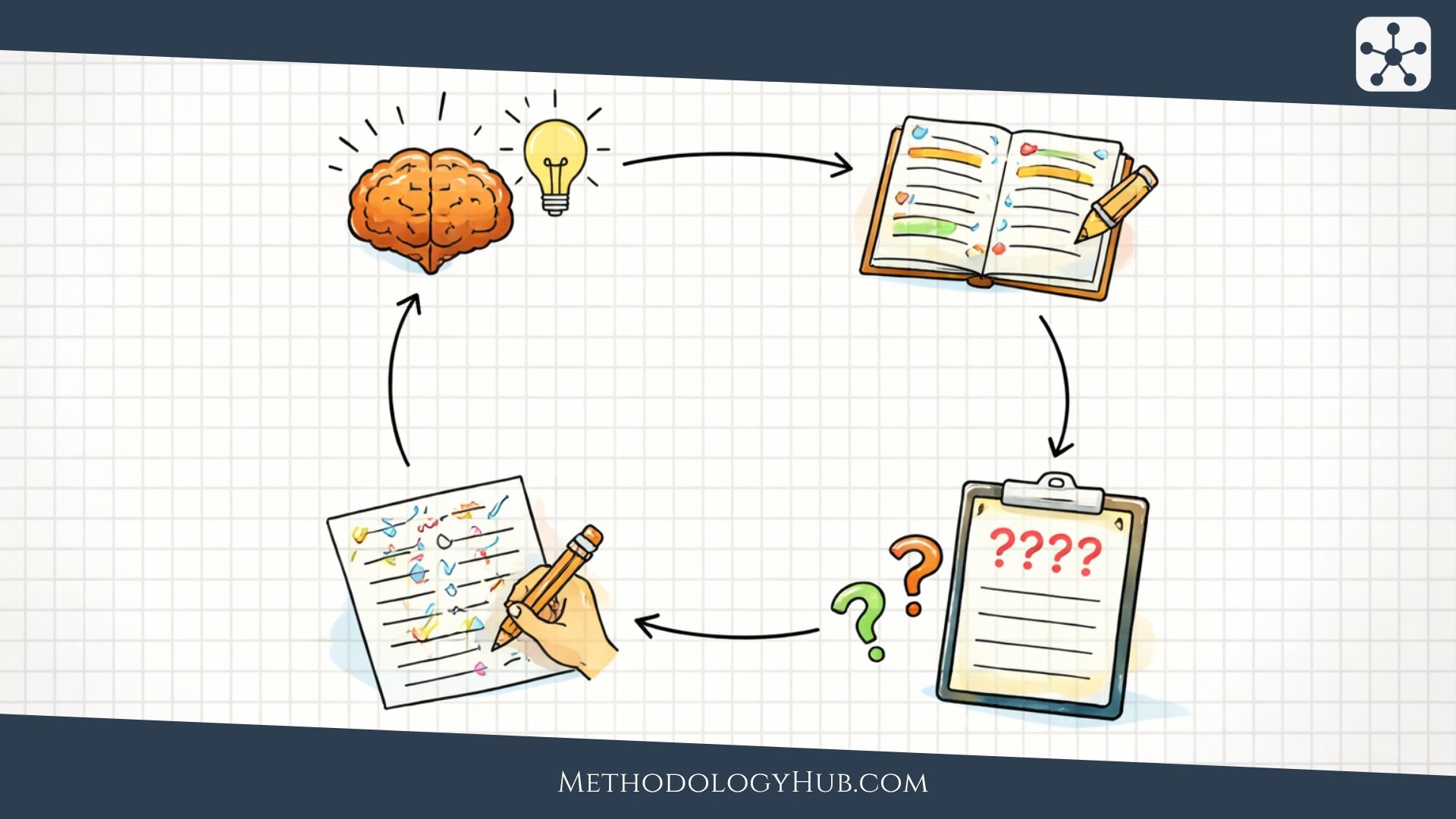
Blurting Method is a study method and retrieval practice built around one simple move: close your notes and try to write out what you can remember. It sounds almost too basic to matter. In practice, it can be one of the fastest ways to see what you actually know, what only feels familiar, and what is still missing.
This article explains what the Blurting Method is, why it works, how to use it step by step, where it helps most, and which mistakes make it less useful than it should be.
What Is the Blurting Method?
The Blurting Method is a way of studying that asks you to recall information before you review it. You read a topic, put the material away, and then write down everything you can remember in your own words. After that, you compare your blurts with your notes and mark what you missed, confused, or forgot.
That sequence matters. Many students spend hours rereading because the material still looks familiar on the page. Blurting removes that safety net for a moment. It forces you to find out whether the information is actually in your memory or whether it only feels familiar because it is right in front of you.
Blurting Method definition
The Blurting Method is a form of active recall. Instead of reviewing information passively, you try to retrieve it from memory and put it into words. That retrieval effort is the point. It tells you what is solid, what is shaky, and what never really stuck in the first place.
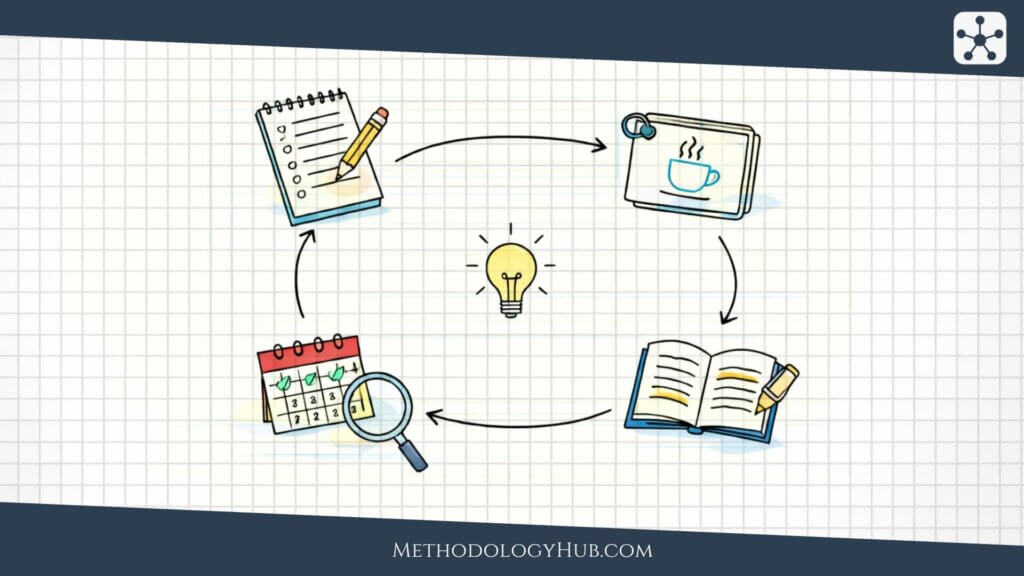
In practice, the Blurting Method usually involves four moves:
- study a short section first
- close the source material
- write out what you remember without looking
- check your notes and fill in the gaps
The method is simple, but it is not random. Good blurting has structure. You work with a manageable chunk of material, give yourself a real recall attempt, and then use the results to decide what needs more attention next.
How to Use the Blurting Method
The Blurting Method is simple in theory, but a good session still needs a bit of structure. If the topic is too broad, the writing turns chaotic. If the session is too long, focus drops. If you skip the comparison stage, you miss the whole point. The method works best when you keep it clear, contained, and honest.
The goal is not to create polished revision notes. The goal is to test what you can retrieve, check that against the original material, and then use the gap between the two to decide what to do next. In other words, blurting is less about producing something neat and more about producing something useful.
Start with a small, defined chunk of material
Choose one section, one topic, one process, or one argument. Do not begin with an entire unit unless the material is already very familiar. Smaller chunks are easier to manage, easier to repeat later, and much easier to diagnose. When a session is too broad, it becomes hard to tell whether the problem is memory, understanding, or simple overload.
A narrow focus also makes improvement more visible. If you blurt one small area today and the same area again tomorrow, you can actually see whether recall is getting stronger. That is much harder to notice when you are trying to tackle half a textbook in one sitting.
For example, in biology you might blurt one chapter section on cell transport. In history, you might focus only on the causes of one war or one reform movement. In literature, you could blurt the argument of one critic, the themes of one scene, or the role of one character in a chapter.
A good test: if the topic is so large that you do not know where to begin, it is probably too large for one blurting round.
Review briefly, then put the material away
Before you start writing, give yourself a short refresher. This is not the main study session. It is only a quick pass to bring the material back into view. Read the section once, look over your notes, or scan the key ideas. Then close everything and remove the support.
This part matters because some students either skip the review completely or stay in it for too long. If you do not refresh the material at all, the session can become random. If you spend too long reviewing, the blurting stage becomes less honest because the information is still sitting too comfortably in short-term memory.
A brief review is enough to set the target. After that, the real work starts when the notes disappear.
Close your notes and write from memory
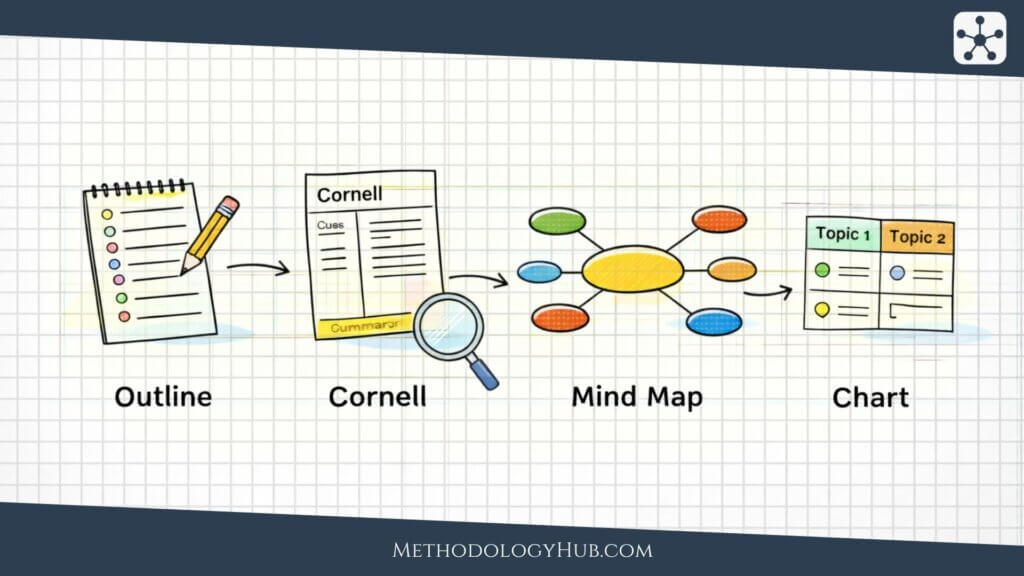
Once the source material is out of sight, start writing what you can remember. Use full sentences, bullet points, arrows, rough diagrams, mini timelines, formulas, or a mixture of them. The format is not the important part. What matters is that the page reflects what your memory can produce without help.
Try to write continuously rather than stopping every few seconds to judge yourself. A blurting page is not supposed to look polished. In fact, the more you start editing and tidying while you write, the less useful the session becomes. Blurting is a memory task, not a writing task. Messy is fine. Broken phrases are fine. Half-finished thoughts are fine. The page only needs to capture what came back and what did not.
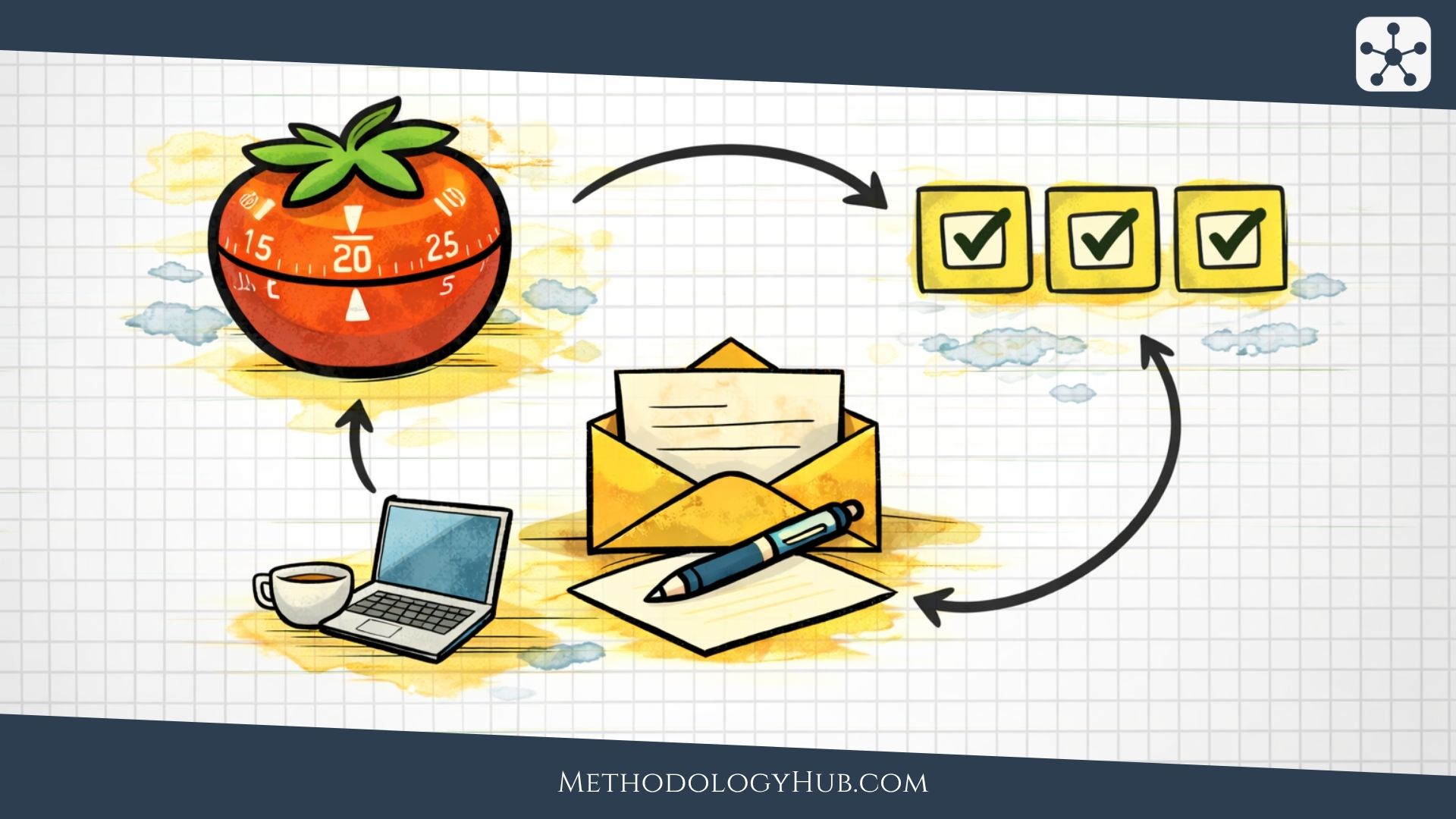
Some students also find it helpful to set a short timer so they do not drift into overthinking. That can keep the session brisk and stop it from turning into ordinary note-making.
Useful mindset: write as if you are emptying your memory onto the page before it slips away. Speed helps more than neatness.
Check your blurts against the original material
After the recall phase, open your notes, textbook, slides, or flashcards and compare them with what you wrote. This is where the method becomes practical. Without this step, blurting only tells you that recall felt easy or hard. With this step, you can see exactly what was missing, what was vague, and what was wrong.
Look for different kinds of problems, not just blank spaces. Maybe you remembered the right idea but used weak wording. Maybe you forgot a key term. Maybe you reversed two steps in a process. Maybe you knew the overall argument but left out the example that makes it convincing. Those details matter, because they show where understanding is thin rather than completely absent.
A simple colour code can help here:
- green: remembered accurately
- yellow: partly remembered or too vague
- red: missing, confused, or incorrect
Restudy selectively instead of restarting everything
Once you have marked the gaps, resist the temptation to go straight back through the whole topic from the beginning. That often feels productive, but it can waste time. A better move is to focus first on the parts that broke down. The blurting page has already shown you where the weakness is, so let that guide the next stage.
This is one of the biggest advantages of the method. It helps you study more precisely. Instead of treating all information as equally shaky, you can give more attention to the definitions, examples, steps, or arguments that did not hold up under recall.
For many students, this is the point where revision starts to feel less repetitive. You are no longer just moving your eyes over the same material again. You are responding to specific problems that the session uncovered.
Repeat the cycle after a break
The first blurting round shows you the current state of your memory. The second round is often where progress becomes visible. Come back later the same day, the next day, or after a slightly longer gap and try again without looking. You will usually notice that some details return more easily, while others remain stubbornly weak.
That contrast is useful. It tells you which parts are settling into memory and which ones still need more attention. It also stops revision from being based on guesswork. Instead of thinking, “I think I know this now,” you have a repeated test of whether the material is actually becoming easier to retrieve.
Do not expect perfection on round one. The value of blurting is often in the return. A later session shows whether the weak spots are shrinking.
Keep your weak points visible
Do not throw away your messy pages as soon as the session is over. They are useful records of recurring problems. If the same definition, date, formula step, or example keeps disappearing from memory, that tells you something important. It often makes more sense to track those weak points separately than to keep rereading the entire topic.
You can do this in a very simple way. Circle the repeated trouble spots, collect them on a separate page, or turn them into flashcards later. The point is not to build a complicated system. The point is to make sure the same weakness does not keep hiding inside a larger pile of notes.
Over time, those patterns can tell you a lot about how you learn. Some students forget terminology first. Others remember terms but lose examples. Others know the pieces but keep missing the sequence. Blurting helps make those habits visible, which means your revision can become more tailored and more realistic.
How to Blurt More Effectively
The Blurting Method is already useful on its own, but it gets better when it is part of a wider revision routine. The key is not to pile on random study hacks. The key is to combine blurting with habits that solve specific problems, such as forgetting too quickly, repeating the same mistakes, or failing to apply knowledge under exam conditions.
A small adjustment often helps more than a whole new system.
Pair blurting with spaced repetition
This is usually the most helpful upgrade. After your first blurting session, schedule a second round later, then another after a longer gap. That pattern turns one honest test into a repeated memory workout.
Turn gaps into questions
When the same weak point keeps showing up, rewrite it as a direct question for yourself. That gives you a cleaner target next time. Instead of vaguely knowing that “respiration” keeps going wrong, you can ask, “What are the stages of aerobic respiration in order, and what happens in each one?”
Explain your blurts out loud
After writing from memory, try saying the material out loud as if you had to teach it. Speaking exposes fuzzy understanding in a different way from writing. A sentence that looked acceptable on paper can sound much less convincing when you have to explain it clearly without support.
Track the mistakes that keep returning
Some errors are one-off slips. Others repeat themselves across sessions. Those repeated misses matter most. They usually point to a concept you do not fully understand, a distinction you keep mixing up, or a weak memory cue that needs extra work.
How Does the Blurting Method Work?
The Blurting Method works by forcing information out of your head without the safety net of your notes. Instead of checking whether something looks familiar, you test whether it is actually available in memory. That difference is more important than it sounds. A page can look clear when it is open in front of you, but that does not always mean you could explain the idea, write it down, or use it in an exam.
This is why blurting feels different from passive revision. It does not ask whether you have seen the material before. It asks whether your brain can bring it back on its own. In that sense, the method works like a more honest mirror. It shows what is really there, what is shaky, and what disappears the moment the prompt is gone.
It pushes memory into active retrieval
At the centre of the method is active recall. That means bringing information back into mind without being shown the answer first. This matters because memory usually gets stronger when it is used, not when it is only exposed to the same material again and again. Passive review can create familiarity, but familiarity is slippery. You can recognise a term and still be unable to define it properly when you are under pressure.
Blurting changes that. It makes recall do the work. That extra effort can feel uncomfortable at first, but the difficulty is part of the reason the method is useful. When retrieval takes effort, you get a clearer sense of the real condition of your memory.
Why this matters: A smooth revision session can be misleading. Blurting is valuable precisely because it shows you where the smoothness was fake.
It makes weak spots visible
Another reason the method works is that it exposes gaps very quickly. Those gaps are not always dramatic. Sometimes you remember the main point but lose the supporting detail. Sometimes you know the definition but cannot explain the process behind it. Sometimes you can recall pieces of a topic, but not the order, logic, or connection between them.
That is useful because weak understanding is much easier to fix when you can actually see it. Passive revision often hides those problems. Blurting brings them into the open. It gives you a more exact picture of what your memory can and cannot do at that moment.
It also helps separate two different problems that students often mix together: forgetting and shallow understanding. Forgetting means the information does not come back at all. Shallow understanding means something comes back, but only in a thin, incomplete, or badly connected form. Blurting helps reveal both.
It gives feedback while the topic is still fresh
The method also works because it creates fast feedback. After a blurting attempt, the topic is still active in your mind, which makes it easier to notice what broke down. You are not relying on a vague feeling about whether revision “went well.” You have a visible record of what your memory could produce and where it started to struggle.
This is one of the biggest reasons students find the method useful over time. It turns revision from something foggy into something concrete. Instead of treating all material as equally difficult, you begin to see patterns. Certain details vanish first. Certain concepts stay weak. Certain explanations never quite come out cleanly. Once those patterns are visible, your studying becomes much more deliberate.
The real benefit: blurting does not only show what you know. It shows where your understanding becomes thin, hesitant, or incomplete.
It helps information hold together more firmly
When you repeatedly bring information back from memory, it tends to become easier to access later. Ideas that were once loose fragments start to hold together more clearly. You stop relying so much on the original page or explanation and start building a version of the topic that feels more your own.
That does not mean blurting magically fixes everything in one session. It usually works through repeated effort. The value of the method is that each attempt gives your brain another chance to retrieve, organise, and strengthen the material. Over time, that can lead to recall that feels quicker, more stable, and more usable.
This is also why blurting is often better for durable learning than revision methods that only produce a short burst of confidence. Confidence is easy to create. Reliable recall is harder. Blurting helps close that gap.
Blurting Method for Different Subjects
The Blurting Method is flexible, but it does not look exactly the same in every subject. The core idea stays the same: retrieve first, check second. What changes is the format of the blurts and the kind of detail you are trying to recover.
This matters because students sometimes assume a good method must look identical across subjects. It does not. A blurting session for chemistry should not look exactly like one for history, and neither should look exactly like one for language learning.
Content-heavy subjects
Blurting is especially useful for subjects like biology, psychology, law, medicine, or history, where you need to remember a lot of linked information. In these cases, bullet-point blurts, rough outlines, and quick diagrams can work well because they let you rebuild a topic from memory in a manageable way.
Here, blurting helps you see whether you know isolated facts only or whether you can reconstruct a topic in the right order and with the right connections.
Essay-based subjects
For subjects like literature, politics, philosophy, or sociology, the Blurting Method can be used to recall arguments, themes, examples, counterpoints, and essay plans. Instead of writing every fact you remember, you might blurt a thesis, three main points, supporting evidence, and one counterargument.
That makes the method useful for more than memorisation. It also helps with structure. If you cannot rebuild the logic of an argument from memory, you probably do not know the material as well as you think.
Problem-solving subjects
Blurting can still help in maths, physics, accounting, or chemistry, but on its own it is usually not enough. In these subjects, you often need to recall procedures, recognise question types, and apply steps accurately under pressure. A blurting page can help you recover definitions, formula conditions, common mistakes, and worked-process steps.
Still, it should usually be paired with actual problem practice. Remembering the steps is not the same as executing them correctly.
Language learning
In language study, blurting works well for grammar rules, vocabulary groups, sentence patterns, and themed word banks. You might blurt all the vocabulary you remember from one topic or write as many example sentences as you can using a target structure.
The method is less about perfect grammar in the first round and more about making recall visible. Accuracy can be checked afterward.
Common Mistakes with the Blurting Method
The Blurting Method is simple enough to start quickly, but it is also easy to weaken without noticing. Most problems come from changing the method into something safer and easier, which usually means something closer to passive review again.
That is worth paying attention to. Blurting only works as blurting if you actually give memory a chance to fail before you look at the answer.
Picking too much material at once
Trying to blurt a full chapter, an entire lecture week, or a huge reading list often turns the session into a mess. You end up with scattered recall, vague notes, and no clear idea which parts were weak. Smaller chunks produce better feedback and make repetition easier.
Turning blurting into copying
Some students glance back at the page every few lines, tell themselves they are only checking one detail, and slowly drift into guided rewriting. At that point, the method changes. You are no longer testing recall. You are feeding yourself answers while pretending not to.
If you need to check, finish the recall attempt first. Even an incomplete page is more useful than a page that looks complete only because the source stayed half-open beside you.
Reviewing too quickly
Another common mistake is rushing through the comparison stage. Students notice a few missing points, tell themselves they will remember them next time, and move on. That wastes some of the value of the session. The check stage is where you diagnose the problem clearly.
Take the extra minute to mark exactly what was missing, not just that something was missing.
Never coming back to the topic later
One strong blurting session can help, but one session rarely settles a topic for good. If you never return after the first attempt, the method loses much of its force. Retrieval becomes more useful when it happens again after some forgetting has had time to set in.
Judging the session by how neat the page looks
Blurting pages are often untidy. They contain arrows, fragments, false starts, and missing bits. That is normal. A neat page is not proof of strong learning, and a messy page is not proof of weak learning. The real question is whether the page shows what you could retrieve without help.
Advantages and Limitations of the Blurting Method
The Blurting Method has a lot going for it. It is cheap, flexible, easy to start, and brutally clear about what you know. For many students, that clarity is the main reason it works. It cuts through the false confidence that can build up during passive review.
At the same time, it is not a complete study system by itself. Like most good methods, it does one job especially well and needs support elsewhere.
Main benefits of the Blurting Method
- It gives fast feedback: you see memory gaps straight away.
- It is easy to repeat: no special app or setup is required.
- It encourages active study: you do more than look at information.
- It helps with confidence: recall usually feels less frightening after repeated practice.
Where blurting is weaker on its own
Blurting is less effective when the task depends heavily on performance rather than recall alone. In maths, for example, you still need to solve problems. In essay writing, you still need to build a coherent response under timed conditions. In languages, you still need listening, speaking, and usage practice.
That does not make the method weak. It just means it should be used for the part it handles well.
Who benefits most from the Blurting Method
The method tends to help students who already have some exposure to the material and need a sharper way to revise it. It is especially useful in the middle and later stages of study, when the goal shifts from first exposure to reliable retrieval.
For completely new material, a short period of learning usually needs to come first. Blurting works best when there is something there to retrieve.
Conclusion
The Blurting Method works because it asks a simple question that many revision routines avoid: what can you remember when the page is gone? That question can feel uncomfortable at first, especially if you are used to revision methods that create a quick sense of control. Still, that discomfort is often useful. It shows the difference between material that feels familiar and material that you can actually retrieve on your own. Once you see that difference clearly, revision becomes much less vague.
That is one of the main strengths of the method. It turns studying into feedback instead of guesswork. Rather than assuming you know a topic because you have looked at it several times, you get a more honest picture of what is sticking, what is fading, and what never became clear in the first place. That makes your next study session more focused, because you are no longer treating every part of the topic as equally secure or equally weak.
Used well, the Blurting Method can make revision shorter, sharper, and more deliberate. It helps you spend less time circling material you already know and more time working on the parts that actually need attention. It also gives you a clearer sense of progress. When you return to a topic and find that more comes back than last time, the improvement is visible. That kind of progress is usually more meaningful than the false confidence that comes from rereading the same pages again and again.
The method is not perfect, and it does not replace every other kind of study. You may still need practice questions, flashcards, essay planning, worked examples, or discussion, depending on the subject. Even so, blurting works well as a core checkpoint inside a wider revision routine. It helps you find the real gaps before the exam does. In that sense, its value is not only that it helps you remember more. It also helps you study with more intention and less illusion.
FAQs on the Blurting Method
What is the Blurting Method?
The Blurting Method is a study technique where you review a topic, put the material away, and then write out everything you can remember from memory before checking your notes.
Why does the Blurting Method work?
It works because it relies on active recall. Instead of recognising information on the page, you have to retrieve it yourself, which makes weak areas easier to spot and easier to improve.
How long should a blurting session be?
A blurting session is usually most useful when it stays focused. For many students, 15 to 30 minutes on one clear section of material works better than a long, unfocused session.
Can the Blurting Method be used for all subjects?
It can be adapted to most subjects, but the format changes. It is especially strong for recall-heavy topics and works best in problem-solving subjects when combined with actual question practice.
Is the Blurting Method better than rereading?
For checking what you can really remember, yes. Rereading can feel productive, but it often creates familiarity without testing recall. Blurting is usually better at revealing what is still weak.
What should I do after blurting?
After blurting, compare your page with the original material, mark what was missing or inaccurate, and then repeat the topic later. The review stage is what turns the session into targeted revision.