A motivation letter is one of the most common documents in academic applications, but it is also one of the most misunderstood. Many applicants treat it like a place to sound passionate, list achievements, and hope that enthusiasm will carry the rest. In practice, strong motivation letters usually work in a quieter way. They explain why a particular opportunity fits your academic path, what in your background supports that application, and what direction the opportunity makes possible.
This article focuses on motivation letters in academic settings: university admission, scholarships, master’s programmes, and PhD applications.
What Is a Motivation Letter?
A motivation letter is a formal piece of writing that explains why you are applying for an academic opportunity and why you are a strong fit for it. In higher education, that opportunity might be a bachelor’s programme, a scholarship, a master’s degree, a PhD position, a research internship, or an exchange semester. The letter gives the selection committee something that grades, transcripts, and a CV cannot provide on their own: a readable explanation of your purpose.
That is why a motivation letter matters. It is not there to make you sound impressive in a general way. It is there to help the reader understand how your background, interests, and future plans connect to one specific opportunity. A good letter turns scattered information into a focused case. It explains not only what you have done, but why those experiences matter and why this next step makes sense now.
What a motivation letter is meant to do
At its core, a motivation letter is a short argument about fit. You are showing that the programme, scholarship, or institution makes sense for your academic path, and that your own background makes you a credible candidate. That is the real job of the genre. Many weak letters lose sight of this and fall back on generic enthusiasm, broad praise, or repeated CV points.
A strong motivation letter usually does several things at once. It states the application clearly, presents the most relevant background, shows why the opportunity itself matters, and gives the reader a visible sense of where you want to go next. In other words, it turns personal motivation into a structured academic application.
When a motivation letter is required
Motivation letters are especially common in academic and scholarship contexts. Universities use them to understand your interest, readiness, and academic direction. Scholarship committees use them to judge purpose, commitment, and likely future impact. PhD programmes often read them as evidence of research maturity and intellectual fit.
- university admission: to understand your subject interest and academic potential
- scholarship applications: to judge merit, direction, and likely use of support
- master’s applications: to connect prior study with a more focused next step
- PhD applications: to show research readiness, thematic focus, and fit with the department
- research programmes or internships: to explain why your interests and experience match the opportunity
Motivation letter vs personal statement
The border between a motivation letter and a personal statement is not always perfectly fixed. Some institutions use the terms loosely, and some ask for one while describing something closer to the other. Even so, a personal statement often allows more room for life story, self-reflection, or formative personal experience. A motivation letter usually stays more directly focused on the opportunity itself and on the reasons the application makes academic sense.
That is a useful distinction to keep in mind. A motivation letter should still sound human, but it usually works best when it is selective, purposeful, and tied closely to the opportunity in front of you. The reader should come away with a clear answer to one central question: why does this application make sense?
What Makes a Strong Academic Motivation Letter?
The strongest motivation letters do not work because they sound dramatic. They work because they are clear, specific, and controlled. The reader does not need to guess what the applicant wants, what qualifies them, or why the programme matters. A good letter makes those things visible without overexplaining them.
This is where motivation letters borrow a great deal from academic writing more broadly. Even though the genre is more personal than an essay or lab report, it still depends on structure, relevance, evidence, and purposeful development. A weak motivation letter often sounds vague because it relies on claims that are never supported. A strong one sounds credible because every part of it points back to fit.
Clear purpose
A strong motivation letter has a visible purpose from the beginning. The reader should quickly understand what you are applying for and what your main reason for applying is. That does not mean the opening must be dramatic or original. In fact, a simple opening is often more effective than an overdesigned one. Clarity usually creates a better first impression than performance.
Purpose also needs to remain visible throughout the letter. Each paragraph should support the same larger case. If one paragraph presents your background, another explains the opportunity, and another shows future direction, they should still feel like parts of one application rather than separate points stitched together.
Specific and relevant examples
Generic claims are one of the fastest ways to weaken a motivation letter. Phrases like “I am passionate,” “I am hardworking,” or “this programme is excellent” do not do much on their own. They only become meaningful when they are connected to something concrete. Specific examples create credibility because they show where your motivation comes from and what it has led you to do.
That does not mean the letter should become crowded with detail. It means the detail you do include should do real work. A research project, a thesis topic, a particular course, a competition, an internship, or a volunteer experience can all help if they are tied clearly to the application instead of appearing as loose decoration.
Strong structure and paragraph flow
A good letter should feel easy to follow. The reader should be able to see where the application begins, how the background supports it, why the institution fits, and what future direction the letter points toward. Structure matters because even good content loses force when it appears in the wrong order or when paragraphs repeat the same job.
This is also why paragraph control matters so much. In a short document, every paragraph needs a reason to exist. One paragraph may introduce the application, another may present the strongest background, another may explain programme fit, and another may show future goals. If two paragraphs are doing the same work, the letter often becomes flatter rather than stronger.
Academic tone without sounding robotic
A motivation letter should sound professional, but it should not sound mechanical. Many applicants swing too far in one direction. Some write in a way that is too casual and conversational. Others try to sound formal by using stiff or inflated language that does not feel natural. Strong letters usually sit in the middle. They sound thoughtful, calm, and purposeful.
The easiest way to get the tone right is to focus on precise meaning rather than on “sounding academic.” If the letter is clear, relevant, and well structured, it will usually sound serious enough. Most of the time, awkward formality makes the writing less persuasive, not more.
Evidence of fit instead of empty enthusiasm
One of the clearest differences between average and strong letters is the way they handle fit. Weak letters declare that the applicant is excited, interested, or inspired. Strong letters show why the opportunity fits by naming specific courses, themes, methods, values, research strengths, or institutional features that connect to the applicant’s background and goals.
That kind of fit is persuasive because it feels earned. The reader can see that the application is not generic. It has been shaped for a real opportunity, with real reasons behind it.
Strong letters are revised, not improvised
Many applicants imagine the motivation letter as a spontaneous personal document, but strong letters are usually built through revision. The first version often contains too much background, too many generic phrases, or too little connection between experience and fit. Revision is where the letter becomes sharper. It removes repetition, strengthens specificity, and makes the central case easier to follow.
This matters because weak letters often fail before grammar becomes an issue. The real problem is usually that the writer has not chosen the right material or shaped it carefully enough. In practice, the difference between a weak letter and a strong one is often not talent. It is selection, structure, and revision.
What to Include in a Motivation Letter
One of the hardest parts of writing a motivation letter is deciding what belongs in it. Most applicants have more material than the final letter can hold. That is why selection matters so much. A motivation letter becomes stronger not when it includes everything, but when it includes the right things in the right proportion.
The easiest way to think about content is to ask a practical question: what does the committee need to know in order to understand why this application makes sense? Once you frame the letter that way, it becomes easier to separate useful material from filler.
Academic background
Your academic background is usually one of the core parts of the letter. That may include your degree, key coursework, thesis topic, final project, research training, or school subjects that shaped your interest in the field. The point is not to repeat the transcript. The point is to interpret the parts of your background that support the application most strongly.
In many cases, one or two well-chosen examples are enough. A focused explanation of a research project or a set of relevant courses often does more work than a full list of everything you have studied.
Relevant achievements and experience
A motivation letter often benefits from one or two experiences outside regular coursework, especially when they strengthen your fit. These might include internships, assistantships, competitions, conferences, volunteer work, student organisations, or independent projects. What matters is relevance. The experience should not appear only because it sounds impressive.
A good test is simple: does this example make the academic case clearer? If it helps explain your readiness, your interests, or your future direction, it belongs. If it only adds noise, it probably does not.
Reasons for choosing the programme, scholarship, or institution
A strong letter should show that you understand the opportunity itself. This is where many weak applications become generic. Instead of saying that the university is prestigious or the programme is excellent, explain what in it connects to your interests. That may be a course structure, a research strength, a method, a faculty area, an interdisciplinary approach, or the mission of the scholarship.
This part works best when it clearly links back to your background. The point is not only to praise the institution. It is to show why the opportunity and your own path belong together.
Academic interests and future goals
Most motivation letters should also look forward. The reader usually wants to know what the opportunity is meant to support. At university level, that future may still be broad. At master’s level, it often becomes more focused. At PhD level, it usually needs to sound more research-specific. The exact level of detail changes, but some sense of direction is almost always useful.
Future goals do not need to sound grand. In fact, letters often become less convincing when the writer makes promises that feel too large or too vague. A realistic goal is usually stronger than an impressive-sounding one.
Why you are a strong fit
Fit is not a separate decoration added at the end of the letter. It is the thread that should run through the whole document. The strongest letters make that fit visible at several levels: your background prepares you for the opportunity, the opportunity matches your interests, and the next stage of your development naturally grows from both.
That is why strong fit usually sounds calm. It does not rely on saying “I am the ideal candidate.” It shows the connection through the way the letter is built.
What to leave out
Some content weakens a motivation letter even when it is true. Long life stories, generic compliments, repeated CV points, exaggerated emotion, and irrelevant achievements usually take up space without adding much value. The same is true of vague self-descriptions that are never supported by evidence.
- avoid repeating information that is already obvious from the CV
- avoid praise that could be sent to any institution
- avoid turning the letter into a personal autobiography
- avoid unsupported claims such as “I am very passionate” or “I am the ideal candidate”
- avoid including achievements that do not strengthen the application
It is usually better to say less and say it more clearly. A focused letter respects the reader’s time and improves the force of every paragraph that remains.
Structure of a Motivation Letter
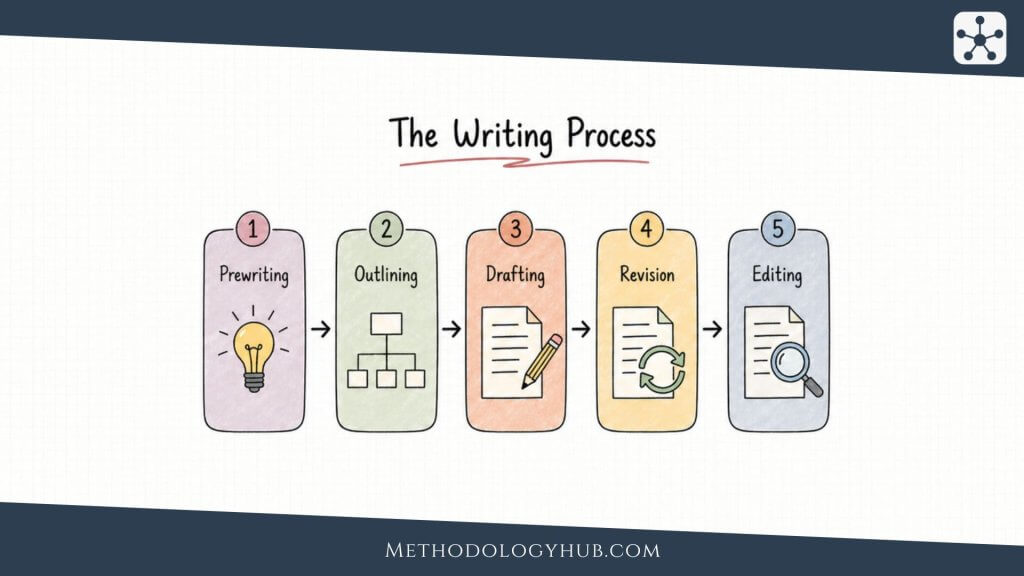
The structure of a motivation letter matters because it determines whether the reader can follow your application easily. Even good content can lose force when it is badly arranged. A strong structure gives the letter a clear path: application, background, fit, future direction, and a calm closing.
There is no single rigid formula that fits every academic application, but most good letters follow a recognisable pattern. The exact balance may shift with the type of opportunity, yet the basic logic remains surprisingly stable.
Opening and first paragraph
The first paragraph should establish the purpose of the letter early. The reader should quickly know what you are applying for and what your central motivation is. This does not mean the opening has to be clever. In fact, simple openings often work best. A clear beginning is usually more effective than a dramatic one.
A good opening often includes the name of the programme, scholarship, or position along with one or two sentences that frame your interest. It can also briefly indicate the background or goal that makes the application meaningful. What matters most is that the opening creates direction.
Building the middle of the letter
After the opening, the letter usually moves into the background that supports your application. This section should focus on the experiences that matter most. If you are applying for a master’s programme, that may mean prior study, key modules, and a thesis or final project. If you are applying for a PhD, it may mean research experience, analytical skills, and a more clearly defined intellectual direction.
The important thing is to stay selective. One well-explained example often does more work than several rushed ones. The reader should not only see what you have done, but what that work suggests about your readiness for the next step.
Showing fit with the programme or institution
At some point in the body, the letter needs to answer the question of why this opportunity now. This is where many letters become too vague or too repetitive. The strongest approach is usually concrete. Instead of saying that the programme is excellent, explain what features of it genuinely connect to your interests, goals, or previous work.
That connection is often the part of the letter the committee remembers most clearly. It shows whether your application is thoughtful or generic.
Plan before you draft
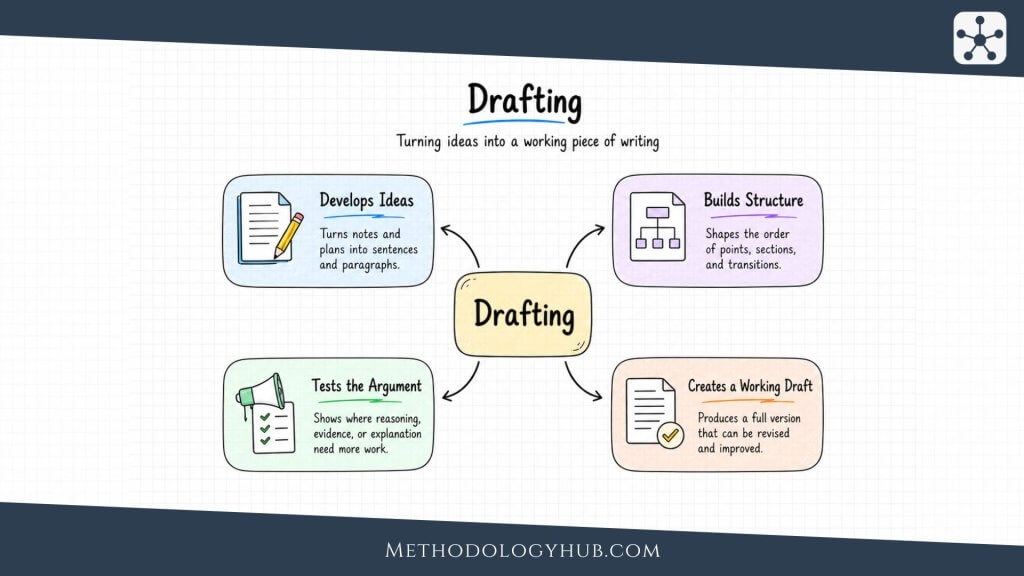
Structure usually improves when you plan the letter before you write the full version. You do not need a detailed formal outline, but you should know what each paragraph is meant to do. This makes it easier to keep the letter focused and prevents you from repeating the same point in different places.
A simple plan is often enough: opening, strongest background, fit, future direction, closing. Once that route is clear, the draft becomes easier to control.
Revise before you send
A motivation letter is short enough that revision matters a great deal. Generic wording, repeated points, vague praise, and weak transitions become visible very quickly in a short text. Before sending the letter, it helps to read it once for structure, once for specificity, and once for tone and errors.
A useful final question is this: if someone read only this letter, would they understand why I am applying, why I fit, and where I hope this opportunity will lead? If the answer is no, the letter probably still needs work.
Ideal length and paragraph structure
Most academic motivation letters are fairly short, often around one page or roughly 400 to 800 words depending on the application. That makes paragraph structure especially important. In many cases, four or five focused paragraphs are enough. If the letter becomes too long, it often means the writer has not selected carefully enough.
Paragraph control matters because the genre depends on concentration. Each paragraph should add something distinct. If two paragraphs do the same job, the letter usually becomes flatter rather than stronger.
Motivation Letter for the University
A university motivation letter usually appears at the earliest academic stage in this article, which means the reader is often looking more for readiness and potential than for highly specialised experience. The applicant is not expected to sound like a researcher already. They are expected to show a real subject interest, some evidence that this interest has developed, and a convincing reason for applying now.
This changes the balance of the letter. At bachelor’s level, academic potential matters more than advanced expertise. The strongest letters usually show that the student has begun to take the subject seriously through school subjects, projects, independent reading, competitions, debate, volunteering, or other early academic experiences.
What universities usually want to see
Admissions readers at this level often want to understand three things. First, why this student wants to study the subject. Second, whether the student has shown enough preparation or seriousness to thrive in the programme. Third, whether the application feels thoughtful rather than generic. The letter does not need to prove everything. It needs to make a good academic case for readiness.
This is why subject motivation usually matters more than performance. A technically polished letter can still feel weak if it never explains where the interest comes from or what direction the applicant wants to develop.
What to emphasise in a bachelor’s application
The most useful material at this level often comes from school-based or early academic experience. Relevant coursework, a school project, an essay competition, a reading interest, an academic club, or a small independent project can all help. The key is to explain what the experience shows, not only that it happened.
Because applicants at this stage are earlier in their path, the letter usually does not need to sound highly specialised. It should sound promising, focused, and intellectually curious.
How personal the letter should be
A university motivation letter can include personal background, but only when it helps explain the academic application. Personal detail is useful when it gives context to your interest in the subject or the direction you want to take. It becomes less useful when it turns into an autobiography.
The letter should still feel academic in purpose. Even when you mention personal motivation, the point is to connect it back to study, fit, and future development.
Example of a motivation letter for university admission
Dear Admissions Committee,
I am applying to the BA in International Relations because I want to study how political decisions, migration, and social change shape one another across borders. During secondary school, I became especially interested in this field through history and politics courses, where I found myself drawn not only to major events but also to the institutions and ideas behind them. That interest grew further during a school research project on migration policy in Europe, which introduced me to the difficulty of balancing legal frameworks, human rights, and national priorities.
Alongside my coursework, I took part in debate activities and a student-led current affairs group, both of which helped me become more confident in analysing public issues from more than one perspective. These experiences made me realise that I do not want to study politics only as a series of events. I want to understand the deeper structures that shape international cooperation, conflict, and policy decisions.
I am particularly interested in your programme because of its combination of political theory, international history, and policy analysis. I am also drawn to the emphasis on critical discussion and comparative approaches, which I believe would help me move from general interest to more disciplined academic study. For me, this degree would not only be the start of university education, but the beginning of a more serious intellectual engagement with global political issues.
In the long term, I hope to work in international policy or public affairs, especially in areas connected to migration and cross-border cooperation. I believe your programme would give me the analytical foundation and broad perspective needed for that path. Thank you for considering my application.
Sincerely,
Anna Novak
How this university example is built
- In the opening, I state the application clearly: the reader knows immediately which programme I am applying for and what broad academic interest drives the application.
- Here I am showing previous experience: I use school subjects and one concrete research project to explain where the interest comes from instead of simply saying that I have always been passionate.
- Here I am showing development: the debate activities and current affairs group are not listed as decoration; they are used to show how the interest became more serious and analytical.
- Here I am explaining fit: I mention specific features of the programme and connect them to the kind of academic growth I need.
- Here I am mentioning long-term goals: the final paragraph looks forward without pretending that everything is already fixed. It shows direction, which is usually enough at bachelor’s level.
- The conclusion works because it closes the case: it reinforces fit and thanks the committee without adding a completely new point.
Motivation Letter for a Scholarship
A scholarship motivation letter usually has a slightly different pressure from a standard admissions letter. In addition to academic quality, scholarship committees often want to understand the larger significance of the application. They may care about contribution, responsibility, long-term impact, leadership, values, or the conditions that make support especially meaningful.
This does not mean the tone should become dramatic or overly moral. It means the letter should make visible why the support matters and how you are likely to use it well. A good scholarship letter usually shows both preparation and responsibility.
What scholarship committees usually look for
Different scholarships value different things, but most committees want some combination of merit, motivation, direction, and credible future potential. They often ask, either directly or indirectly, what kind of student or future professional the applicant is becoming and why the scholarship would make a meaningful difference.
That is why scholarship letters often need a little more than programme fit. They may also need evidence of contribution, resilience, social commitment, or a clear sense of how the funded study connects to wider goals.
Academic merit and future potential
A scholarship letter should usually include a strong sense of academic preparation. This may include grades, key coursework, research experience, projects, or distinctions, but the same rule still applies: details matter most when they are interpreted. The committee wants to see what your record suggests about your future, not only what the record contains.
Potential often becomes visible through direction. A student who can explain where their work is heading usually sounds more convincing than one who only repeats that they are motivated and hardworking.
Motivation, goals, and expected impact
Scholarship committees often respond to letters that show purpose beyond immediate personal advancement. That may mean explaining how your studies connect to public service, research contribution, professional practice, community development, or work in an underserved area. The exact shape depends on the scholarship itself, but the wider point is similar: the support should lead somewhere meaningful.
This does not require exaggerated promises. It requires a plausible connection between the funded study and what you hope to do with it.
Explaining need when relevant
Some scholarships ask applicants to discuss financial need, while others focus almost entirely on merit or mission. If financial context is relevant, it should be explained clearly and calmly. There is no need to make it dramatic. What matters is helping the committee understand why the support would make a practical difference and how it would allow you to make fuller use of the opportunity.
Need works best when it remains connected to the academic case rather than becoming a separate emotional appeal.
Example of a motivation letter for a scholarship
Dear Scholarship Committee,
I am applying for the Future Health Leaders Scholarship to support my master’s studies in public health. My academic work has increasingly focused on health inequality, especially the gap in preventive care between urban and rural communities. During my undergraduate degree in health sciences, I worked on a research project examining barriers to vaccination access in low-resource areas. That experience strengthened both my academic interest in public health systems and my desire to work on questions of access and prevention.
In addition to my coursework, I have volunteered with a community health outreach initiative that provides basic health education and support to families with limited access to primary care information. This experience made the practical side of public health more visible to me. It also showed me that effective public health work depends not only on medical knowledge, but on communication, trust, and policy design.
I am seeking this scholarship because it would allow me to focus more fully on my studies and field-based training during the master’s programme. Financial support would reduce the amount of paid work I would otherwise need to take on and would make it easier for me to participate in research and applied practice opportunities that are central to my academic goals. For that reason, the scholarship would not only support my education in a general sense. It would directly shape the quality and depth of the training I am able to pursue.
In the long term, I hope to work in public health policy, with a particular focus on preventive care access in underserved communities. I believe this scholarship would support not only the next stage of my academic development, but also the work I hope to contribute later in practice. Thank you for considering my application.
Sincerely,
Leila Rahman
How this scholarship example is built
- In the opening, I identify the funded purpose clearly: I say what the scholarship is for and connect it immediately to a field of study.
- Here I am showing previous experience: the research project and community outreach work give the committee evidence of commitment and preparation.
- Here I am showing the scholarship’s practical importance: I explain how the funding would affect the quality of my studies, not only that it would be helpful.
- Here I am linking support to future contribution: the long-term goal gives the scholarship a visible direction beyond personal advancement alone.
- Here I am mentioning need in a controlled way: I explain the financial dimension calmly and keep it tied to the academic case.
- The conclusion works because it brings together purpose and responsibility: it leaves the committee with a sense that the support would be used well.
Motivation Letter for a Master’s Programme
A master’s motivation letter usually sits between the broader tone of undergraduate admission and the sharper research focus of doctoral application. At this stage, the committee is often looking for stronger subject direction. The applicant is no longer beginning from zero. They are expected to show how previous study has led toward a more focused next step.
This means the letter usually needs a clearer academic centre. It should explain how your prior coursework, projects, thesis, or practical experience prepared you for advanced study in this specific area, and why this programme is the right place to continue that development.
What matters most in a master’s application
Master’s admissions readers often look for subject fit, preparation, and direction. They want to see that the applicant is not only interested in the field in a broad sense, but ready to study it at a more advanced level. That usually means a stronger emphasis on disciplinary grounding than in a bachelor’s letter.
The letter therefore works best when it shows development. It should feel as if the application grows naturally from previous study and points toward a more refined academic or professional path.
Academic preparation and subject fit
This is often the core of the master’s motivation letter. The committee will usually want to see what in your undergraduate studies, projects, internships, or final research prepared you for this programme. A good letter names that preparation clearly and then interprets it. It explains what you learned, how your interests sharpened, and why you are now ready for more advanced work.
This is also where applicants often benefit from a concrete academic example. A thesis topic, capstone project, methodology course, or internship connected to the field can help the letter feel grounded.
Why this specialisation
Many master’s programmes are more specialised than undergraduate degrees, so the letter should usually make that specialisation visible. The reader wants to know why this particular field, pathway, or concentration makes sense for you now. That question matters even more when your previous degree was broader.
A strong answer often connects a past experience with a future academic need. Instead of saying that the programme interests you, explain what in your past work led you to seek this specific type of advanced study.
Career direction and postgraduate goals
A master’s letter also benefits from a visible next step. That future may be academic, professional, or a mixture of both. What matters is that the programme seems to lead somewhere real. The committee does not need a life plan. It does need a sense of direction.
That direction often makes the whole letter sound more coherent. Once the reader can see where the master’s degree is supposed to lead, your earlier preparation and your programme fit become easier to understand as part of the same application logic.
Example of a motivation letter for a master’s programme
Dear Admissions Committee,
I am applying for the MSc in Environmental Policy because I want to deepen my understanding of how environmental regulation is shaped by political, economic, and institutional constraints. During my undergraduate degree in political science, I became increasingly interested in environmental governance through courses on public policy and European regulation. My final thesis, which examined local responses to climate adaptation policy in coastal municipalities, showed me how difficult it can be to turn environmental goals into workable policy at the implementation level.
In addition to my academic work, I completed an internship with a regional sustainability office, where I assisted with background research on waste reduction initiatives and public communication strategies. That experience made clear to me that environmental policy requires both analytical rigour and an understanding of how institutions actually function in practice. It also confirmed that I want to continue working at the intersection of environmental issues and public decision-making.
I am particularly interested in your programme because of its combination of policy analysis, environmental governance, and applied research training. The opportunity to study policy design alongside implementation challenges is especially important to me, as it connects directly to the questions that emerged during my thesis work. I also value the programme’s interdisciplinary approach, which I believe would help me build a stronger framework for understanding environmental policy beyond a single disciplinary lens.
In the long term, I hope to work in environmental policy research or public-sector advisory work, with a focus on climate adaptation and local implementation. I believe your master’s programme would provide the theoretical depth and practical perspective needed for that path. Thank you for considering my application.
Sincerely,
Jonas Meyer
How this master’s example is built
- In the opening, I define the academic focus clearly: the reader knows which programme I am applying for and what subject question drives the application.
- Here I am showing previous academic experience: the undergraduate courses and thesis topic explain how my interests developed in a concrete way.
- Here I am bringing in practice-based experience: the internship supports the academic case because it deepens the same field of interest.
- Here I am explaining programme fit: I connect the programme’s structure and interdisciplinary design to specific questions that emerged from my earlier work.
- Here I am mentioning long-term goals: the future direction is focused enough to sound real, but not so rigid that it sounds forced.
- The conclusion works because it closes the line of development: undergraduate study, internship experience, programme fit, and future goals all point in the same direction.
Motivation Letter for a PhD
A PhD motivation letter usually requires the highest level of academic focus. Unlike a bachelor’s or many master’s applications, the committee is often looking not only for strong general preparation, but for visible research readiness. The applicant is expected to show a more developed intellectual direction, stronger evidence of prior academic work, and a more precise explanation of fit with the department, project, or supervisor.
That does not mean the letter has to become overly technical. It does mean it usually needs more precision than other types. At doctoral level, broad enthusiasm is rarely enough on its own.
What makes a PhD motivation letter different
The main difference is depth. A strong PhD letter often needs to show that the applicant has moved beyond general admiration for a field and has begun to think in questions, methods, debates, or unresolved problems within it. The committee wants to see not only desire, but readiness for sustained independent work.
This is why the tone is often more scholarly. The letter should still be readable and human, but it should also sound like it belongs to someone prepared for research.
Research interests and academic direction
The letter should make your research direction visible. That does not always mean presenting a full project plan, but it does mean naming the topics, questions, or areas you want to pursue. A vague interest in “research” or in a broad discipline is rarely enough. The committee wants to see what kind of intellectual path you are actually proposing.
Specificity matters here because it helps the reader judge fit with the department and with potential supervision.
Previous research experience
PhD letters usually become stronger when they include evidence of prior research work. This may include a master’s thesis, publications, conference papers, archival work, fieldwork, lab experience, assistantships, or advanced coursework. The point is not only to say that you have done research. It is to show what that experience taught you and how it prepared you for doctoral work.
The best examples often combine experience with reflection. They show how prior research sharpened the applicant’s interests or methods rather than simply listing accomplishments.
Why this supervisor, lab, or department
Fit becomes even more important at PhD level. The letter should explain why this department, research group, or supervisor is a logical match for your interests. Specificity matters here more than almost anywhere else in the genre. Generic praise makes a weak impression. Clear academic alignment makes a strong one.
This is also where careful reading pays off. Departments can usually tell very quickly when an applicant has written a generic letter and inserted a name at the last minute.
Long-term research goals
It also helps to show what the PhD is building toward. That may be an academic career, research-intensive professional work, specialist policy contribution, or scholarship in a particular area. The goal does not need to sound grand. It needs to sound real and proportionate to the preparation already shown in the letter.
At doctoral level, the future matters because it helps the committee see the PhD not as a vague aspiration, but as the next part of a research trajectory.
Example of a motivation letter for a PhD
Dear Members of the Selection Committee,
I am applying for the PhD position in Modern European History because I want to continue my research on postwar migration and local identity formation. My master’s thesis examined municipal archives and oral history interviews to analyse how displaced communities were represented in regional policy debates during the 1950s. Through that project, I became increasingly interested in the relationship between memory, administration, and belonging, particularly in cases where official policy language failed to reflect lived experience.
That research gave me a strong foundation in archival analysis, source comparison, and qualitative historical interpretation. It also made clear to me that the questions I was asking could not be fully resolved within the scope of a master’s thesis. In particular, I would like to investigate more closely how local administrative records shaped the social visibility of migrant communities in the postwar period and how those records interacted with public memory over time.
I am especially interested in pursuing this work within your department because of its strengths in migration history, archival methodology, and the social history of postwar Europe. I also see a close connection between my interests and Professor Martin’s research on local state formation and displaced populations. The possibility of developing my project in a department where both methodological guidance and thematic expertise are so well aligned is one of the main reasons I am applying.
In the long term, I hope to contribute to scholarship on migration, memory, and local governance through sustained historical research and teaching. I believe the doctoral training offered by your programme would provide the intellectual environment and supervision needed for that work. Thank you for considering my application.
Sincerely,
Elena Petrova
How this PhD example is built
- In the opening, I define the research direction immediately: the letter does not stay at the level of a broad discipline, but names a field and problem area.
- Here I am showing previous research experience: the master’s thesis, methods, and source materials give the committee evidence of readiness.
- Here I am showing how the project develops: the second paragraph explains what remains unresolved and why doctoral work is the logical next step.
- Here I am explaining fit with the department: I connect my interests to both departmental strengths and a potential supervisor’s work.
- Here I am mentioning long-term goals: the closing paragraph shows scholarly direction without making unrealistic claims.
- The conclusion works because it closes the academic case: it brings together research focus, fit, and future contribution in a calm way.
Conclusion
A motivation letter is a short text, but it carries a lot of weight because it is often the clearest place where an applicant can turn a record into a readable academic case. Grades, transcripts, and CVs show what you have done. The motivation letter shows why it matters, how it connects, and where it is leading.
That is why strong motivation letters usually depend on process as much as on wording. They improve when you choose material carefully, plan the structure before drafting, and revise generic claims until they become specific and credible. In practice, the difference between a weak letter and a strong one is often not talent. It is selection, clarity, and control.
If there is one principle worth keeping in mind from start to finish, it is this: a motivation letter should make your application feel coherent. The reader should be able to see why this opportunity suits your background, why your background prepares you for it, and what direction the opportunity supports next. Once that line becomes visible, the letter usually becomes much more convincing.
- Be clear about the purpose of the application.
- Choose the most relevant material instead of the most material.
- Use structure to guide the reader from background to fit to future direction.
- Revise generic claims until they become specific and credible.
Those habits matter more than trying to sound impressive. Over time, they make your writing easier to trust, easier to read, and much more effective in academic applications.
FAQs on How to Write a Motivation Letter
What is a motivation letter?
A motivation letter is a formal document that explains your academic or professional background, goals, and reasons for applying to a program, scholarship, or job. It complements your CV by connecting your achievements to your future aspirations. Research published in the Journal of Career Development (2021) confirms that well-structured motivation letters significantly improve selection outcomes when they demonstrate purpose, clarity, and alignment with institutional values.
How long should a motivation letter be?
Most motivation letters should be between 350 and 450 words, ideally fitting on one page. The European Graduate Admissions Council recommends concise letters that maintain logical flow and a clear argument without repetition. Brevity and focus increase reader engagement and retention by more than 40%, according to comprehension studies in Written Communication (2020).
What should I include in a motivation letter?
A strong motivation letter includes: (1) an engaging introduction stating your purpose, (2) body paragraphs highlighting relevant background and skills, (3) a clear link between your experiences and the opportunity, and (4) a confident conclusion. Research by the University of Edinburgh (2021) found that applicants who connected personal motivation to institutional missions were 28% more likely to receive positive feedback.
What is the difference between a motivation letter and a cover letter?
A cover letter focuses on how your skills meet job requirements, while a motivation letter explains why you are passionate about a field, program, or project. The Harvard Business Review notes that motivation letters are used primarily in academic and research contexts, emphasizing goals and personal growth rather than employment fit alone.
How do I start a motivation letter?
Begin with a direct and personalized statement of intent. Avoid clichés like “I am writing to express my interest.” Instead, open with a line that links your background to the opportunity, such as “My research in environmental policy inspired my application to your master’s program in sustainability.” Clarity at the beginning increases reader engagement by up to 35%, according to a 2023 study in the Journal of Applied Linguistics.
What tone should I use in a motivation letter?
Use a professional, confident, and respectful tone. Avoid overly formal phrasing or emotional exaggeration. According to linguistic analysis by Cambridge University Press (2021), readers respond best to clear, sincere language supported by evidence rather than superlatives or self-promotion.
Can I reuse the same motivation letter for multiple applications?
You should adapt each letter to reflect the specific program or organization. Generic motivation letters are easily recognized and less effective. Admissions research by Times Higher Education (2023) found that personalized letters had a 50% higher success rate compared to template-based submissions.