
Lab report writing is all about showing what you did, why you did it, what you found, and what those findings actually mean. A good lab report is not just a record of an experiment. It is a clear, structured explanation that lets another person understand your process and evaluate your conclusions.
This article explains what a lab report is, how it is structured, what each section should include, and what strong lab report examples look like. To make everything easier to follow, we will use one simple experiment throughout the article: which cookie survives the longest when dunked in milk. It is easy to picture, easy to measure, and surprisingly useful for showing how a real lab report comes together.
What Is a Lab Report?
A lab report is a structured piece of scientific or technical writing that explains an experiment from beginning to end. It tells the reader what question was investigated, how the experiment was carried out, what results were collected, and how those results should be interpreted. In simple terms, a lab report turns practical work in the lab into a clear written record.
This is what makes a lab report different from a casual write-up or a quick classroom summary. A proper lab report is not just a story about what happened. It is a disciplined account of the experiment, written in a way that helps the reader follow the logic of the work and judge whether the conclusions make sense.
Lab report definition
The easiest way to define a lab report is this: it is a formal report that documents an experiment and explains its outcome. In most subjects, that means the writer has to describe the aim, method, results, and discussion in a clear order. The exact section names may vary by instructor or discipline, but the main purpose stays the same.
A strong lab report usually answers four basic questions:
- What was being tested?
- How was it tested?
- What happened?
- What do the results mean?
That sounds simple, but each question matters. If the aim is unclear, the report feels directionless. If the method is vague, the experiment cannot be properly understood or repeated. If the results are messy, the reader cannot tell what was found. If the discussion is weak, the whole report may feel unfinished even when the experiment itself was done well.
Using our cookie example, a lab report would not just say that one cookie lasted longer in milk than another. It would explain the purpose of the test, the materials used, the dunking procedure, the recorded times, and the possible reasons why one cookie broke down faster. That is what turns a fun experiment into a real lab report.
Lab Report Format
Lab report format refers to the way the report is organised and presented on the page. This includes the order of sections, the use of headings, the layout of tables and figures, and the small technical choices that make the report easier to read. In other words, format is not the same thing as content. It is the framework that helps the content make sense.
This matters more than students sometimes expect. A lab report can contain solid observations and accurate data, but still feel weak if the structure is messy or the sections are out of order. Readers expect consistency. They want to know where to find the aim, where to look for the procedure, and where the interpretation begins.
That is why most lab report formats follow a recognisable sequence. Teachers, departments, and disciplines may vary in the exact labels they use, but the overall logic stays surprisingly stable. The report moves from context to method, from method to findings, and from findings to interpretation.
The standard lab report format
A standard lab report format usually includes the following parts:
- Title Page
- Abstract
- Introduction
- Methods and Materials
- Experimental Procedure
- Results
- Discussion
- Conclusion
- References
- Appendices
Not every lab report will include all of these sections in exactly this form. Some shorter reports leave out the abstract. Some combine methods and procedure into one section. Some do not need appendices. But this list reflects the format most students are expected to understand.
Using the cookie experiment, the format might begin with a title page such as Comparison of Cookie Stability During Milk Immersion, followed by a short abstract, an introduction explaining why the experiment matters, a methods section describing the dunking test, and then the results and discussion. Even a playful experiment becomes easier to understand when it follows a formal lab report format.
What teachers and departments may change
One of the confusing things about lab reports is that two instructors can ask for slightly different versions and both can be correct. One may ask for a combined Methods section. Another may want Materials and Procedure separated. One may require a title page. Another may not. One may ask for a conclusion separate from the discussion, while another may expect both ideas in the same section.
This is normal. Lab report format is partly shaped by discipline. Biology, chemistry, physics, psychology, and engineering often overlap in broad structure, but they do not always present information in exactly the same way. That is why the first rule is always to check your assignment instructions before making assumptions.
Still, the variation is usually smaller than it first appears. Even when the section names change, the reader still expects the same basic things: background, method, results, interpretation, and proper documentation.
Structure of a Lab Report
The structure of a lab report is the set of sections that together explain the experiment from beginning to end. If format is the overall layout, structure is the sequence of parts that carry the scientific meaning. Each section has its own job, and a strong lab report works because those jobs stay clear.
This is where many students make avoidable mistakes. They understand the experiment itself, but they are less sure about what belongs in each section. The result is overlap. Background appears in the methods. Interpretation slips into the results. The conclusion repeats the discussion without adding anything useful. Understanding structure solves a lot of these problems before they grow.
Below are the most common sections you will see in a lab report. Not every assignment will require all of them, but together they represent the standard structure students are most often expected to follow.
Title Page
The title page gives the report its formal identity. It usually includes the title of the experiment, the writer’s name, course or module details, instructor name, and submission date. Some departments also require student number, lab group, or institutional information.
A good title should be specific enough to tell the reader what was tested. It does not need to be dramatic. It needs to be clear. For our example, a title like Comparison of Cookie Stability During Milk Immersion works much better than something vague like Lab Report on Cookies.
The title page may feel like a simple administrative detail, but it sets the tone. A precise title makes the report sound more focused before the reader even reaches the abstract.
Abstract
The abstract is a short summary of the entire lab report. It usually explains the aim of the experiment, the method in very brief form, the main results, and the overall conclusion. The abstract gives the reader a snapshot of the whole report without going into full detail.
This section is usually written last, even though it appears near the beginning. That makes sense because you can only summarise the report properly once the report actually exists. In a short classroom lab report, the abstract may be omitted, but in longer or more formal reports it is common.
For the cookie experiment, the abstract might briefly state that three cookie types were tested for how long they remained intact when submerged in milk, that survival time was recorded across repeated trials, and that one type showed greater structural stability than the others.
Introduction
The introduction explains the background of the experiment and shows why the investigation was worth doing. It usually introduces the topic, gives any necessary scientific context, states the aim or research question, and often ends with a research hypothesis.
The introduction is not the place to report results or describe every detail of the procedure. Its job is to prepare the reader for the experiment. It should answer a simple question: what is this experiment about, and what is being tested.
In the cookie example, the introduction might explain that biscuits and cookies absorb liquid at different rates depending on texture and composition, then move toward the aim of testing which cookie survives the longest in milk under controlled conditions.
Methods and Materials
The methods and materials section explains what was used and how the experiment was set up. It usually lists or describes the equipment, materials, and key conditions of the test. This gives the reader the practical foundation of the experiment before the step-by-step procedure is described in full.
Depending on the instructor, this section may be combined with the procedure or kept separate. When it is separate, the writer usually names the materials first and then explains the process in the next section.
For the cookie experiment, this section might include the cookie types, the brand of milk, the measuring tools, the timer, the number of trials, and the controlled conditions such as milk temperature and dunking depth.
Experimental Procedure
The experimental procedure describes exactly how the experiment was carried out. This section should be clear enough that another person could repeat the process in the same basic way. That is one of the most important ideas in lab report writing: the procedure should not feel mysterious or incomplete.
The procedure usually includes the steps followed, the order in which they happened, and any controlled conditions that mattered. It should be specific enough to be useful, but not padded with irrelevant details.
In our example, the procedure would describe how each cookie was immersed in milk, how long it remained submerged before structural failure, how the failure point was defined, and how many trials were repeated for each cookie type. Without that detail, the results would be much harder to trust.
Results
The results section presents what the experiment found. This is where the data belongs. Results may be shown in sentences, tables, graphs, or a combination of these. The focus should stay on what was observed and measured.
A common mistake is to start explaining the meaning of the data too early. In a strong lab report, the results section presents the findings clearly, but saves deeper interpretation for the discussion. This keeps the report organised and makes the analysis easier to follow later.
For the cookie experiment, the results might include the survival time of each cookie across trials, the average survival time, and perhaps a simple bar chart showing which cookie remained intact the longest.
Discussion
The discussion section explains what the results mean. This is where the writer interprets the findings, connects them back to the aim or hypothesis, and considers how reliable they are. If the results section answers “what happened,” the discussion answers “so what.”
A good discussion does more than repeat the data in words. It examines patterns, explains possible reasons, considers whether the research hypothesis was supported, and reflects on limitations or possible sources of error. This is one of the most important sections because it shows whether the writer can think critically about the experiment.
In the cookie example, the discussion might argue that thicker or denser cookies survived longer because they absorbed milk more slowly, while also noting that small differences in dunk angle or surface cracks may have affected the outcome.
Conclusion
The conclusion gives a short closing statement about the experiment and its findings. In some lab reports, this is a separate section. In others, it is folded into the discussion. When it appears separately, it usually restates the aim, gives the main takeaway, and briefly indicates whether the research hypothesis was supported.
A good conclusion is short and focused. It should not introduce brand-new evidence or repeat the whole discussion. Its job is to leave the reader with a clear final understanding of what the experiment showed.
For our cookie experiment, the conclusion might simply state which cookie survived the longest in milk and whether the original prediction was correct.
References
The references section lists the sources used in the report. Depending on the assignment, this may include textbooks, research articles, lab manuals, or other scientific material that informed the background or interpretation. The citation style depends on the course requirements.
Not every short lab report uses many external sources, but when sources are included they should be cited properly. Accurate referencing is part of academic discipline. It shows where information came from and helps the reader verify the material if needed.
Even a simple experiment may still require references if the introduction draws on outside information about absorption, material structure, or experimental design.
Appendices
Appendices are used for extra material that supports the report but would interrupt the main flow if placed in the body. This may include raw data tables, sample calculations, additional figures, or full observation notes.
The appendix is useful because it keeps the main report readable while still preserving detail. Readers who want the extra material can check it, while the main discussion stays focused on the core findings.
In the cookie example, an appendix might contain the full trial-by-trial timing sheet or extra notes about breakage patterns that were not central enough to include in the results section itself.
Further Reading
Some lab report structures include a short further reading section, though this is less common than the other parts. When it is required, it usually points readers toward books, articles, or resources related to the experiment or broader topic.
This section is usually more likely in extended reports, teaching materials, or reports designed for wider learning rather than simple classroom submission. Many student lab reports will not need it at all.
Still, it is useful to recognise the section name if you see it in assignment instructions. It is one of those optional components that appears in some formats and disappears in others.
How to Write a Lab Report Introduction
The introduction of a lab report explains what the experiment is about and why it matters. It gives the reader enough background to understand the investigation, then moves toward the aim, research question, and hypothesis. A good introduction does not try to say everything. It does just enough to prepare the reader for the experiment that follows.
This is where many students either write too little or far too much. Some introductions are so short that the reader has no idea why the experiment was done. Others turn into mini essays full of broad background that never connects clearly to the actual test. A strong lab report introduction stays focused on the experiment.
In our running example, the reader does not need a full cultural history of cookies and milk. They need a clear explanation that different cookies may absorb liquid differently depending on texture and composition, and that this experiment tests which cookie remains intact the longest when dunked in milk under controlled conditions.
What to include in the introduction
A lab report introduction usually includes four core elements:
- background: the scientific or practical context of the experiment
- aim: what the experiment is trying to find out
- research question: the specific question being tested
- hypothesis: the predicted outcome, if one is required
These elements work best in a natural order. The introduction often begins with a broad but relevant background statement, then narrows toward the specific experiment. After that, it usually states the aim and ends with a hypothesis or prediction.
This structure helps because it mirrors the reader’s needs. First they need context, then they need direction. If the introduction jumps straight into the prediction without giving any background, it can feel abrupt. If it stays too long in the background, it can feel unfocused.
Background, aim, and hypothesis
The background section should be relevant and selective. It is there to explain the scientific idea behind the experiment, not to fill space. In some reports, this may be one short paragraph. In others, especially more advanced reports, it may be a bit longer. The key is always relevance.
The aim should be direct. It tells the reader exactly what was tested. A vague aim weakens the whole report because it makes the results and discussion harder to judge. In the cookie experiment, a clear aim would be to compare how long different cookie types remain structurally intact when submerged in milk.
The hypothesis is the prediction made before the experiment. Not every lab report requires one, but many do. A good hypothesis is specific and testable. It should not sound like a guess pulled from nowhere. It should follow naturally from the background.
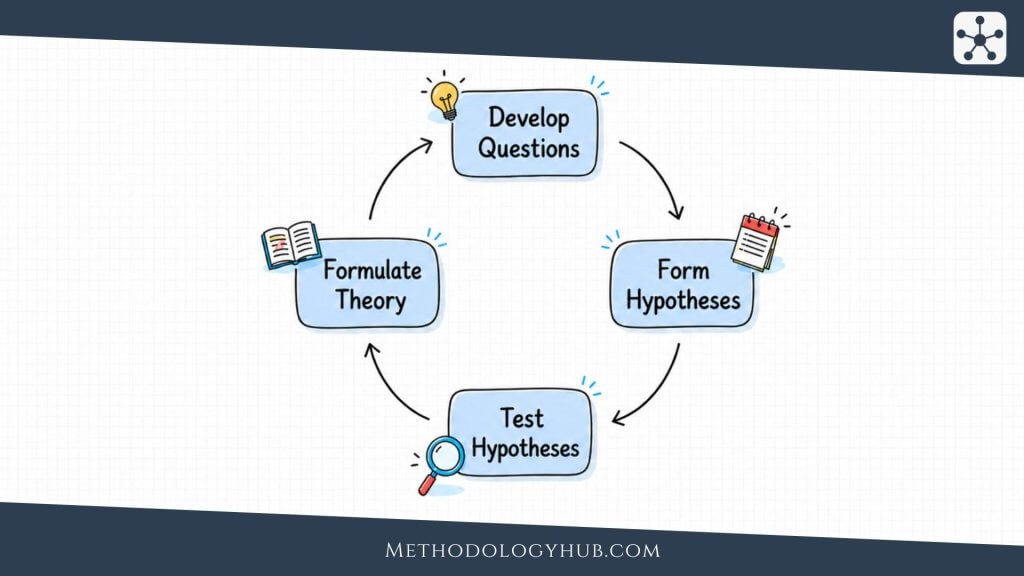
For example, if the background suggests that denser cookies absorb liquid more slowly, the hypothesis might be that the densest cookie will survive the longest when dunked in milk. That works much better than a casual prediction like “one cookie will probably do better.”
Lab report introduction example
Here is a simple example based on our cookie experiment:
Cookies differ in texture, thickness, and ingredient composition, which may affect how quickly they absorb liquid. When a cookie is submerged in milk, its structure begins to weaken as the liquid moves into the biscuit. The rate of breakdown may depend on how dense or porous the cookie is. The aim of this experiment was to compare the structural stability of three cookie types during milk immersion. The research question was: which cookie survives the longest when dunked in milk under controlled conditions? It was hypothesised that the densest cookie would remain intact for the longest time because it would absorb milk more slowly than the other samples.
This example works because it does not wander. It gives relevant background, states the aim, asks a clear question, and ends with a specific prediction. It sounds like part of a lab report, not like an essay introduction trying to impress the reader.
How long should the introduction be?
The introduction should be long enough to orient the reader, but short enough to stay focused. In many student lab reports, one or two solid paragraphs are enough. More advanced reports may need more detail, especially if the topic is more technical or the experiment depends on theory the reader needs to understand first.
A useful rule is this: include everything the reader needs in order to understand the purpose of the experiment, but cut anything that does not help with that job. If a sentence does not support the background, aim, research question, or hypothesis, it may not belong there.
That is especially important in simple experiments like ours. If you are writing about cookies in milk, the introduction should still sound academic, but it should not pretend the experiment is more complex than it is. Clear and proportionate writing usually sounds stronger than inflated writing.
How to Write the Methods Section
The methods section explains how the experiment was carried out. Its job is to show the reader what materials were used, what steps were followed, and what conditions were controlled. A good methods section is detailed enough that another person could understand the procedure clearly and, in principle, repeat the experiment.
This is one of the most important sections in a lab report because it supports the credibility of the results. If the method is unclear, the findings become much harder to trust. The reader needs to know how the experiment was done before they can judge what the results actually mean.
In our cookie experiment, the methods section should not just say that cookies were dunked in milk. It should explain which cookies were tested, how much milk was used, how the dunking was timed, what counted as “failure,” and how many trials were run for each sample. That level of detail is what turns a vague description into a real method.
What to include in methods and materials
The methods section often begins with materials. This includes the equipment, substances, or samples used in the experiment. Depending on the assignment, these may be listed briefly or worked into a paragraph. What matters most is that the reader can see what was used and under what conditions.
Typical materials information might include:
- sample types or substances tested
- measurement tools
- containers or apparatus
- quantities, volumes, or sizes
- controlled conditions such as temperature
For the cookie experiment, that might include three cookie types, 200 mL of milk per trial, a stopwatch, identical cups, and milk kept at the same temperature. These details may sound small, but they matter because they affect how the experiment can be understood and repeated.
How to describe the experimental procedure
After the materials, the methods section usually explains the procedure. This is the step-by-step account of what was done. The goal is not to create suspense or tell a story. The goal is to document the process clearly and in the right order.
A strong experimental procedure usually explains:
- how the experiment was set up
- what was done in each trial
- what was measured or observed
- how many times the test was repeated
- what conditions were kept the same
In the cookie experiment, the procedure would need to explain how each cookie was fully submerged, when the timer started, how structural failure was defined, and how the process was repeated for all cookie types. If any of those details are missing, the reader may not be able to interpret the results properly.
Variables, controls, and replication
A strong methods section usually makes the variables of the experiment easier to understand, even if the report does not label them in a very formal way. The reader should be able to see what was changed, what was measured, and what was kept constant.
In simple terms, this usually means:
- independent variable: what was changed
- dependent variable: what was measured
- controlled variables: what was kept the same
In our example, the independent variable is the type of cookie. The dependent variable is the time taken until structural failure. Controlled variables might include the amount of milk, milk temperature, dunking depth, and method of timing. If these controls are not consistent, differences in the results become harder to interpret.
Replication matters too. Repeating the experiment more than once helps reduce the influence of one unusual result. A methods section should make it clear how many trials were performed and whether averages were later calculated. That gives the results more weight and makes the report feel more scientifically careful.
Lab report methods example
Here is a simple methods example based on the cookie experiment:
Three cookie types were tested: chocolate chip cookies, sandwich cream biscuits, and oat biscuits. For each trial, 200 mL of whole milk at 8°C was poured into an identical clear plastic cup. One cookie was fully submerged in the milk, and a stopwatch was started immediately. Structural failure was defined as the point at which the cookie broke into two or more visible pieces while submerged. The time to failure was recorded in seconds. Each cookie type was tested in five separate trials. The volume and temperature of the milk, cup size, dunking depth, and timing method were kept constant across all trials.
This example works because it is specific. The reader can see what materials were used, how the test was run, what counted as failure, and how consistency was maintained. It is not overloaded with unnecessary wording, but it includes the details that matter.
How to Write the Results Section
The results section shows what the experiment found. Its job is to present the data clearly and accurately, without drifting into full interpretation too early. In a strong lab report, the results section answers a simple question: what happened when the experiment was carried out?
This section matters because it gives the reader the evidence on which the discussion will later depend. If the results are unclear, incomplete, or badly organised, the discussion becomes weaker as well. Good lab reports make the data easy to follow before they begin explaining what the data means.
In our cookie experiment, the results section would not argue why one cookie survived longer than another just yet. It would show the recorded survival times, identify the main pattern, and present that information in a clean and readable form.
What belongs in results
The results section should include the findings of the experiment in a direct and organised way. Depending on the task, this may include raw observations, processed data, averages, calculations, tables, graphs, or short explanatory sentences that help the reader see the main pattern.
What belongs here is the evidence itself, not the full interpretation. That means the section should focus on what was observed and measured rather than why the outcome happened. In many student lab reports, this boundary is one of the hardest things to get right.
The results section often includes:
- measured values or observations
- averages or summary statistics, if required
- tables for clear comparison
- graphs or charts where patterns are easier to see visually
- brief sentences highlighting the main findings
In the cookie experiment, this might mean reporting the survival time for each cookie across five trials, calculating the average survival time, and showing those averages in a simple table or bar chart.
What does not belong in results
Students often weaken the results section by mixing in discussion too early. This usually happens when they start explaining reasons, evaluating the experiment, or linking the findings to the hypothesis before the reader has fully seen the data.
The results section is not the place for:
- detailed explanation of why the pattern occurred
- long comments on limitations or errors
- broad interpretation of what the experiment proves
- repetition of the full method
A little guidance for the reader is useful, but the focus should stay on reporting. A sentence such as “Cookie C had the highest average survival time” belongs in results. A sentence such as “Cookie C likely survived longer because of its denser internal structure” belongs in discussion.
Tables, graphs, and figure captions
Results are often easier to understand when data is presented visually. Tables help the reader compare values directly. Graphs help the reader see patterns quickly. The best choice depends on the kind of information you have.
A table is useful when the exact numbers matter. A graph is useful when the overall comparison matters more. In many lab reports, both can work together. The table presents the detailed values, while the graph gives the reader a clearer visual impression of the trend.
Whatever visual you use, it should be labelled properly. That means:
- a clear table or figure number
- a descriptive title or caption
- units where needed
- axes labelled clearly in graphs
For the cookie experiment, a table might list average survival time in seconds for each cookie type, while a bar chart could compare those averages visually. If the graph has no labels or the table has no units, the reader has to work too hard to understand the results. Good presentation saves them that effort.
How to report findings clearly
The results section should not just drop a table onto the page and hope the reader understands it. It should also include short, direct sentences that highlight the most important findings. These sentences should be factual and restrained.
For example, instead of writing several lines of dramatic commentary, it is usually better to say something simple such as: The sandwich cream biscuit showed the longest average survival time, while the chocolate chip cookie showed the shortest. This gives the reader a clear guide without moving too far into interpretation.
A good rule is to report the pattern first, then let the discussion explain it later. That keeps the section clean and makes the overall lab report more coherent.
Lab report results example
Here is a simple example of how the results section could look for the cookie experiment:
The survival time of each cookie type was recorded across five trials. The sandwich cream biscuit had the highest average survival time, followed by the oat biscuit, while the chocolate chip cookie had the lowest average survival time.
| Cookie Type | Average Survival Time (seconds) |
|---|---|
| Chocolate Chip Cookie | 11.4 |
| Oat Biscuit | 16.8 |
| Sandwich Cream Biscuit | 21.2 |
Table 1. Average survival time of three cookie types during milk immersion.
This works because it gives both a sentence-level summary and a simple table. The reader can immediately see the main pattern and the exact values. The section still remains focused on reporting, not explaining.
How to Write the Discussion Section
The discussion section explains what the results mean. This is the part of the lab report where the writer moves from reporting findings to interpreting them. A strong discussion does not just repeat the data in sentence form. It shows what the findings suggest, whether the hypothesis was supported, and what limitations may affect the conclusions.
This section matters because it reveals how well the writer understands the experiment. A lab report with clear results but a weak discussion can still feel unfinished. The reader wants to know not only what happened, but also how those findings should be understood.
In our cookie experiment, the discussion would not simply repeat that one cookie lasted 21.2 seconds and another lasted 11.4. It would explain why that difference may have happened, whether the outcome matched the original prediction, and what weaknesses in the design may have influenced the result.
How to interpret your results
Interpreting results means moving beyond observation and into meaning. The first step is usually to identify the main pattern as clearly as possible. After that, the discussion explores what could explain that pattern.
In many lab reports, a good discussion begins by linking the results back to the aim or research question. The writer then explains whether the findings support the hypothesis and what the likely explanation is. This is where scientific reasoning becomes visible.
For the cookie experiment, the interpretation might suggest that the sandwich cream biscuit survived longer because its structure was denser and less porous, which slowed down the absorption of milk. That kind of explanation belongs in the discussion because it interprets the data instead of merely presenting it.
Expected vs actual findings
The discussion should usually address whether the results matched the original hypothesis. If they did, the writer should explain how the findings support that prediction. If they did not, the writer should not panic. Unexpected results are still useful, and in many cases they lead to the most interesting discussion.
A strong discussion does not force the data to fit the prediction. It responds honestly to what happened. If the hypothesis was only partly supported, say that clearly. If the results were surprising, explain why that may have happened. Scientific writing becomes more credible when it is honest about complexity rather than trying to sound perfectly right.
In our example, if the prediction was that the oat biscuit would survive longest but the sandwich cream biscuit actually lasted longer, the discussion should address that difference directly. It could suggest that the sandwich biscuit’s outer layers created more resistance to liquid than expected. That kind of response shows thoughtfulness rather than failure.
Sources of error, limitations, and improvements
One of the most valuable parts of the discussion is the reflection on limitations. No experiment is perfect, especially in classroom conditions. A good lab report acknowledges this without pretending that the whole experiment was useless. The goal is to show realistic scientific judgment.
Common discussion points include:
- possible measurement error
- small sample size or limited trials
- variation in the materials used
- uncontrolled conditions
- ways the method could be improved
In the cookie experiment, possible limitations might include slight differences in cookie size, small cracks that existed before immersion, or tiny inconsistencies in how the cookies were lowered into the milk. These details matter because they may have affected survival time.
Good improvement points should be specific. Instead of writing “the experiment could be improved,” it is much better to say that future trials could use cookies of identical mass, automated immersion depth, or a larger number of repetitions. Specific improvements show that the writer understands how method affects reliability.
Lab report discussion example
Here is a short discussion example based on the cookie experiment:
The results showed that the sandwich cream biscuit had the highest average survival time during milk immersion, while the chocolate chip cookie had the lowest. This supports the general hypothesis that denser cookies would remain intact for longer. One likely explanation is that the sandwich biscuit had a more compact outer structure, which slowed liquid absorption and delayed breakdown. By contrast, the chocolate chip cookie appeared more porous and fragmented more quickly once submerged. However, the experiment had several limitations. Small differences in cookie thickness and pre-existing surface cracks may have affected the time to failure. In addition, the number of trials was limited. Future studies could improve reliability by increasing the sample size and using a more standardised immersion method.
This example works because it does several things at once. It identifies the pattern, links it to the hypothesis, offers a reasonable explanation, acknowledges limitations, and suggests improvements. That is the shape most discussion sections need.
How to Write the Abstract and Conclusion
The abstract and conclusion are short sections, but they do important work in a lab report. The abstract gives the reader a quick overview of the whole experiment, while the conclusion gives the final takeaway after the discussion is complete. Both sections should be clear, focused, and much shorter than the main body of the report.
Students often find these sections awkward because they seem simple, yet they are easy to get wrong. A weak abstract becomes too vague or too long. A weak conclusion either repeats the discussion without purpose or introduces new information that should have appeared earlier. Strong lab reports avoid both problems by treating these sections as summaries with a very specific job.
In our cookie experiment, the abstract would briefly summarise the aim, method, main result, and overall conclusion. The conclusion would then close the report by stating which cookie survived the longest in milk and whether the original hypothesis was supported.
What to include in an abstract
The abstract is a short summary of the entire lab report. In many reports, it appears near the beginning, but it is usually written last. That makes sense because you can only summarise the experiment properly once the full report already exists.
A good abstract usually includes:
- the aim: what the experiment investigated
- the method: how the test was carried out in brief
- the main result: the most important finding
- the conclusion: what the finding suggests overall
The abstract should be compact. It is not the place for a full explanation of theory, a detailed method, or a long discussion of limitations. It should help the reader understand the report at a glance.
In a short student lab report, the abstract may be omitted if the instructor does not require it. In longer reports, it is often expected and should be treated carefully because it is often the first real section the reader sees.
Lab report abstract example
Here is a simple abstract example based on the cookie experiment:
This experiment investigated which of three cookie types remained structurally intact for the longest time when submerged in milk. Chocolate chip cookies, oat biscuits, and sandwich cream biscuits were tested across five trials under controlled conditions, and the time to structural failure was recorded. The sandwich cream biscuit showed the highest average survival time, while the chocolate chip cookie showed the lowest. These findings suggest that cookie density and structure may influence resistance to liquid absorption during milk immersion.
This works because it is brief but complete. It tells the reader what was tested, how it was tested, what was found, and what the finding suggests. It does not try to become a mini discussion.
What to include in a conclusion
The conclusion is the final section that closes the report. Its job is to restate the main finding and bring the experiment to a clear end. In some reports, the conclusion appears as its own section. In others, it is blended into the end of the discussion. If your assignment asks for a separate conclusion, keep it short and purposeful.
A strong conclusion usually includes:
- the aim of the experiment in brief
- the main finding
- whether the hypothesis was supported
- the final takeaway from the report
The conclusion should not introduce brand-new data, fresh explanation, or a long list of limitations. Those belong earlier. The conclusion works best when it sounds final, clear, and proportionate to the size of the report.
In our example, the conclusion should not suddenly start exploring new ideas about biscuit engineering. It should simply state what the experiment showed and close the report with control.
Lab report conclusion example
Here is a simple conclusion example based on the cookie experiment:
This experiment compared the structural stability of three cookie types during milk immersion. The sandwich cream biscuit had the highest average survival time, while the chocolate chip cookie had the lowest. The results therefore supported the prediction that a denser cookie would remain intact for longer. Overall, the experiment suggests that cookie structure can influence resistance to liquid absorption under controlled conditions.
This conclusion works because it is focused and final. It reminds the reader of the aim, states the main result, refers back to the hypothesis, and ends with a clear overall point. It does not overstate what the experiment proved.
Lab Report Examples
Lab report examples are useful because they show what each section looks like in practice. Reading advice is helpful, but most students understand lab reports much faster when they can see how the parts actually sound on the page. That is especially true for sections like the introduction, methods, results, and discussion, where the boundaries can feel abstract until you see them in a real example.
To keep everything consistent, the examples below all use the same simple experiment: which cookie survives the longest when dunked in milk. It is a straightforward example, but that is exactly why it works. The structure becomes easy to see because the experiment itself is easy to understand.
The goal here is not to give you a perfect universal template that fits every class without changes. The goal is to show what a clear lab report example looks like section by section, so you can adapt the model to your own subject and assignment.
Lab report title page example
A title page should be clear and informative. It usually includes the experiment title, your name, course details, instructor, and submission date.
Comparison of Cookie Stability During Milk Immersion
Student Name
Course Name
Instructor Name
Date of Submission
This title works because it tells the reader exactly what was tested. It sounds formal without being overcomplicated.
Lab report abstract example
This experiment investigated which of three cookie types remained structurally intact for the longest time when submerged in milk. Chocolate chip cookies, oat biscuits, and sandwich cream biscuits were tested across five trials under controlled conditions, and the time to structural failure was recorded. The sandwich cream biscuit showed the highest average survival time, while the chocolate chip cookie showed the lowest. These findings suggest that cookie structure may influence resistance to liquid absorption during milk immersion.
This abstract is effective because it covers the aim, method, main result, and conclusion in a compact form.
Lab report introduction example
Cookies differ in texture, thickness, and ingredient composition, which may affect how quickly they absorb liquid. When a cookie is submerged in milk, its structure begins to weaken as liquid enters the biscuit. The rate of breakdown may depend on how dense or porous the cookie is. The aim of this experiment was to compare the structural stability of three cookie types during milk immersion. The research question was: which cookie survives the longest when dunked in milk under controlled conditions? It was hypothesised that the densest cookie would remain intact for the longest time because it would absorb milk more slowly than the other samples.
This example works because it gives relevant background, states the aim clearly, and ends with a testable hypothesis.
Lab report methods example
Three cookie types were tested: chocolate chip cookies, sandwich cream biscuits, and oat biscuits. For each trial, 200 mL of whole milk at 8°C was poured into an identical clear plastic cup. One cookie was fully submerged in the milk, and a stopwatch was started immediately. Structural failure was defined as the point at which the cookie broke into two or more visible pieces while submerged. The time to failure was recorded in seconds. Each cookie type was tested in five separate trials. The volume and temperature of the milk, cup size, dunking depth, and timing method were kept constant across all trials.
This methods example is specific enough that the reader could understand and repeat the experiment without needing to guess how it was done.
Lab report results example
The survival time of each cookie type was recorded across five trials. The sandwich cream biscuit had the highest average survival time, followed by the oat biscuit, while the chocolate chip cookie had the lowest average survival time.
| Cookie Type | Average Survival Time (seconds) |
|---|---|
| Chocolate Chip Cookie | 11.4 |
| Oat Biscuit | 16.8 |
| Sandwich Cream Biscuit | 21.2 |
Table 1. Average survival time of three cookie types during milk immersion.
This results example works because it reports the main pattern clearly and supports it with a simple table.
Lab report discussion example
The results showed that the sandwich cream biscuit had the highest average survival time during milk immersion, while the chocolate chip cookie had the lowest. This supports the general hypothesis that denser cookies would remain intact for longer. One likely explanation is that the sandwich biscuit had a more compact outer structure, which slowed liquid absorption and delayed breakdown. By contrast, the chocolate chip cookie appeared more porous and fragmented more quickly once submerged. However, the experiment had several limitations. Small differences in cookie thickness and pre-existing surface cracks may have affected the time to failure. In addition, the number of trials was limited. Future studies could improve reliability by increasing the sample size and using a more standardised immersion method.
This discussion example is useful because it interprets the findings, links them to the hypothesis, and acknowledges limitations without overclaiming.
Full lab report example template
Below is a short full template showing how the whole experiment could look when the sections are placed together. This is not the longest possible version, but it shows the structure clearly.
Title: Comparison of Cookie Stability During Milk Immersion
Abstract: This experiment investigated which of three cookie types remained structurally intact for the longest time when submerged in milk. Chocolate chip cookies, oat biscuits, and sandwich cream biscuits were tested across five trials under controlled conditions, and the time to structural failure was recorded. The sandwich cream biscuit showed the highest average survival time, while the chocolate chip cookie showed the lowest. These findings suggest that cookie structure may influence resistance to liquid absorption during milk immersion.
Introduction: Cookies differ in texture, thickness, and ingredient composition, which may affect how quickly they absorb liquid. When a cookie is submerged in milk, its structure begins to weaken as liquid enters the biscuit. The rate of breakdown may depend on how dense or porous the cookie is. The aim of this experiment was to compare the structural stability of three cookie types during milk immersion. The research question was: which cookie survives the longest when dunked in milk under controlled conditions? It was hypothesised that the densest cookie would remain intact for the longest time because it would absorb milk more slowly than the other samples.
Methods: Three cookie types were tested: chocolate chip cookies, sandwich cream biscuits, and oat biscuits. For each trial, 200 mL of whole milk at 8°C was poured into an identical clear plastic cup. One cookie was fully submerged in the milk, and a stopwatch was started immediately. Structural failure was defined as the point at which the cookie broke into two or more visible pieces while submerged. The time to failure was recorded in seconds. Each cookie type was tested in five separate trials. The volume and temperature of the milk, cup size, dunking depth, and timing method were kept constant across all trials.
Results: The sandwich cream biscuit had the highest average survival time at 21.2 seconds. The oat biscuit had an average survival time of 16.8 seconds, while the chocolate chip cookie had the lowest average survival time at 11.4 seconds.
Discussion: The results showed that the sandwich cream biscuit remained intact longer than the other samples, which supported the hypothesis that a denser cookie would survive longer during milk immersion. A likely explanation is that the biscuit’s more compact structure reduced the rate of liquid absorption. However, slight differences in cookie thickness and surface condition may have influenced the outcome. Future trials could increase reliability by testing more samples and standardising the immersion process further.
Conclusion: The experiment showed that the sandwich cream biscuit had the greatest resistance to breakdown during milk immersion. The findings supported the original prediction and suggest that cookie structure plays an important role in liquid absorption and stability.
This full lab report example is useful because it shows how the sections connect. Each part has a different function, but together they tell one clear scientific story from question to conclusion.
How to use lab report examples well
Examples are most useful when you learn from their structure rather than copying their sentences too closely. A good model can show you what belongs in a section, how much detail is appropriate, and how the tone should sound. It should not become something you paste over your own experiment with a few words changed.
The best way to use examples is to ask practical questions. What makes this introduction focused. Why does this methods section feel clear. How does the results section present data without drifting into discussion. How does the discussion stay connected to the evidence. These are the questions that turn examples into real improvement.
That is why section-by-section examples help so much. They make lab report writing feel less mysterious because they show how the structure works in a form you can actually see and adapt.
Conclusion
A strong lab report turns an experiment into a clear and structured piece of scientific writing. It shows what was tested, how the procedure was carried out, what the results were, and what those results mean. Once you understand the purpose of each section, lab report writing becomes much easier to manage.
The most important thing is to keep the boundaries between sections clear. The introduction sets up the experiment, the methods explain what was done, the results present the data, and the discussion interprets the findings. When each part does its own job well, the whole report feels more logical and more credible.
That is also why examples help so much. Seeing a simple experiment move from title page to conclusion makes the structure easier to understand and much easier to apply to your own subject. In the end, a good lab report is not about sounding complicated. It is about being clear, accurate, and disciplined from start to finish.
FAQs – How to Write a Lab Report
How do you start a lab report?
To start a lab report, begin with a descriptive title that reflects the focus of your experiment. Then write an introduction that provides background information, explains the scientific concept being investigated, states the purpose of the lab, and includes any hypotheses. A well-structured introduction helps the reader understand the experiment’s context and relevance, as recommended by many academic writing guides, including Purdue OWL.
What makes a good lab report?
A good lab report is clear, concise, and logically organized. It includes all essential sections – title, abstract, introduction, methods, results, discussion, and conclusion. High-quality reports use accurate data presentation (e.g., charts, tables), cite sources appropriately, and follow a consistent formatting style such as APA or MLA. According to the University of Manchester’s academic writing center, clarity, objectivity, and structure are key to an effective report.
How do you do a lab report write-up?
To write up a lab report, follow a structured approach: begin with the title and abstract, then include the introduction, materials and methods, results, discussion, and conclusion. Use past tense for procedures and results, and present tense for established facts. Each section should serve a specific purpose, as outlined in academic standards like those found in the ACS (American Chemical Society) or APA guidelines.
How do you write the results section of a lab report?
In the results section, you should present your data clearly without interpretation. Use visuals like tables, graphs, or charts to summarize findings, and accompany them with brief textual descriptions. Avoid explaining what the results mean – save that for the discussion. According to the University of Toronto’s lab writing guide, clarity and logical sequence are vital for this section’s effectiveness.
What should be included in the discussion section of a lab report?
The discussion interprets your findings and links them to your hypothesis and theoretical background. You should explain trends, anomalies, or patterns in the data, compare results with existing research, and discuss any experimental limitations. The discussion often concludes with suggestions for further investigation. According to many university writing centers, this section demonstrates your critical thinking and understanding of the scientific process.
How long should a lab report be?
Lab report length varies depending on the level of study and complexity of the experiment. For undergraduate science courses, reports are typically 4–10 pages. Institutions may have specific formatting or length requirements, so it’s best to follow your instructor’s rubric. Conciseness and clarity should always take priority over length, as noted in guidelines from the University of Wisconsin Writing Center.
Do I need to include references in a lab report?
Yes, referencing is essential in a lab report when you use information from textbooks, journals, or other external sources. Citations demonstrate academic integrity and help readers trace your research foundation. The APA Publication Manual (7th edition) emphasizes that all scientific writing should clearly acknowledge its sources through in-text citations and a reference list.