Qualitative document analysis is a research method for studying written, visual, digital, or institutional documents as qualitative data. Instead of treating documents as neutral containers of information, the researcher examines what they say, how they are written, who produced them, what purpose they serve, and how they connect to a wider setting.
In qualitative research, documents can help researchers understand language, rules, categories, decisions, histories, and everyday practices. A policy, meeting record, website page, handbook, email template, lesson plan, public notice, report, or social media post can all become evidence when the research question is about meaning and context.
Document analysis can stand alone or support other qualitative research methods. It can help explain what an organisation says it does, how a programme describes its aims, how a community records its concerns, or how written materials shape what participants can know or do.
What is Qualitative Document Analysis
Qualitative document analysis involves reading documents as data rather than simply using them as background information. The researcher studies the content of the document, but also pays attention to form, audience, language, context, and purpose.
A school policy, for example, may describe how student support is supposed to work. The researcher can analyse what kinds of problems the policy names, which responsibilities it assigns, what language it uses for students, and which situations are not mentioned. The document becomes evidence of an institutional way of framing support.
Qualitative document analysis definition
Qualitative document analysis is a method of collecting and analysing documents to understand meanings, categories, assumptions, practices, decisions, and social contexts. The documents may be printed, digital, public, private, formal, informal, textual, visual, or mixed in format.
The method is qualitative when the analysis focuses on interpretation rather than only counting words or categories. A researcher may count repeated terms, but the larger task is to explain what those terms do in the document and how they relate to the research question.
Documents as data, not just sources
A document can be used in two different ways. It can be a source of factual information, or it can be treated as data. In qualitative document analysis, the researcher usually treats the document as data. This means the wording, structure, omissions, labels, examples, and intended audience are all relevant.
For instance, a training handbook may list procedures, but it may also show what kind of worker the organisation expects, what counts as correct practice, and which kinds of judgement are left to staff. These features may not be visible if the document is read only for factual content.
What the researcher looks for
The researcher may look for repeated categories, key terms, explanations, contradictions, silences, tone, sequence, images, layout, and links between documents. They may also compare different versions of the same document over time.
A community report may describe safety, access, public space, and responsibility in a particular way. A later version may change the wording. Those changes can show how the topic was reframed.
Recommendation: ask not only what the document says, but what kind of reader, problem, and solution the document seems to imagine.
Documents and context
A document should be read in context. Who produced it? For whom? When? Under what conditions? Was it an official record, a public communication, a working draft, a form, a guide, or a response to a problem?
Context affects interpretation. A policy document written for legal compliance may use different language from a leaflet written for public understanding. A meeting note may omit conflict because its purpose is to record decisions, not disagreement.
What Counts as a Document?
A document is any recorded material that can be examined as part of a research study. Documents are not limited to formal reports or printed pages. They can include everyday written materials, digital records, public communications, visual materials, and forms used in routine practice.
The key question is not whether the material looks academic. The key question is whether it helps answer the research question. A notice on a wall, an email template, a checklist, or a webpage may be more useful than a polished annual report if the study concerns everyday communication.
Formal documents
Formal documents include policies, reports, minutes, strategic plans, manuals, contracts, official statements, guidance documents, and evaluation records. These documents often show how an organisation represents its work, responsibilities, and categories.
Formal documents can be useful, but they should not be read as a complete picture of practice. They may describe what should happen rather than what actually happens.
Everyday working documents
Everyday working documents include forms, checklists, templates, worksheets, schedules, lesson plans, intake sheets, staff notes, and internal instructions. These materials often show how work is organised in practice.
A checklist, for example, can show what a setting treats as worth recording. It can also show what is made invisible because it is not included as a category.
| Document type | Possible research use |
|---|---|
| Policy or guidance | Shows official categories, rules, responsibilities, and expected practice. |
| Form or checklist | Shows what information is collected, ignored, standardised, or made visible. |
| Website or leaflet | Shows how a service, topic, or group is explained to a public audience. |
Digital and online documents
Digital documents include websites, online help pages, posts, newsletters, digital forms, forum threads, PDFs, shared documents, and archived pages. These materials can show how information is presented, updated, circulated, or made searchable.
Online documents need careful handling. The researcher should record when the material was accessed, whether the page changed over time, and whether the data should be treated as public, private, or semi-public.
Visual and mixed documents
Some documents combine text, images, layout, icons, tables, and design. Posters, infographics, forms, presentation slides, maps, and brochures may communicate meaning visually as well as verbally.
In these cases, the researcher should not analyse only the words. Placement, size, colour, image choice, order, and visual emphasis may all shape how the document communicates.
When to Use Qualitative Document Analysis
Qualitative document analysis is useful when documents are central to the topic being studied. It fits research questions about language, representation, policy, organisational practice, decision records, public communication, historical change, and the way categories are created or repeated.
It is also useful when direct access to people or settings is limited. Documents may provide a trace of practice, decision-making, or public meaning when interviews or observation are difficult to arrange.
Studying how a topic is represented
Documents often show how a topic is framed. A public information page may describe a programme as support, improvement, prevention, opportunity, or responsibility. Each framing shapes how readers understand the issue.
A researcher studying student wellbeing might analyse university webpages, policy documents, orientation materials, and support forms. The documents can show how wellbeing is defined, who is expected to act, and which problems receive the most attention.
Studying policy and institutional categories
Policies, forms, and guidance documents often create categories that affect practice. They define who qualifies, what counts as evidence, which steps are required, and what language people must use to access support.
Document analysis can show how these categories are built. It can also show gaps between broad statements and practical instructions.
Recommendation: use document analysis when the wording, structure, circulation, or role of documents is part of the research problem.
Studying change over time
Documents can preserve traces of change. Earlier and later versions of a policy, report, handbook, or public statement can be compared to see how language, categories, priorities, or responsibilities shifted.
This can be useful in historical, organisational, educational, and community research. The researcher can ask which terms disappear, which new categories appear, and how explanations change.
When documents are not enough
Documents do not always show how people use them, interpret them, or work around them. A policy may state a procedure, but staff may follow it differently in practice. A leaflet may explain a service, but users may not understand it as intended.
For these questions, document analysis may be combined with interviews in qualitative research or observational research. The documents show one part of the setting. Other methods can show use, interpretation, or practice.
Building a Document Set
Building a document set means deciding which documents belong in the study and why. This step is similar to sampling, but the units are documents rather than people. The researcher needs a clear logic for inclusion and exclusion.
A weak document set is a pile of available files. A strong document set is selected because each document can help answer the research question.
Define the document boundaries
The researcher should define what counts as a relevant document. The boundary may be based on time period, organisation, topic, document type, audience, platform, or event. For example, a study may analyse all public guidance pages about student support published by one university during one academic year.
Boundaries help make the study manageable. They also help readers understand what the analysis includes and what it leaves outside.
Decide inclusion and exclusion criteria
Inclusion criteria explain why a document is part of the study. Exclusion criteria explain why similar documents are left out. A researcher might include public webpages aimed at students and exclude internal staff documents because the research question concerns public communication.
These decisions should be recorded. If the document set changes during the study, the reason should be explained.
Record document details
Each document should be logged with basic information. The log may include title, date, author or producing organisation, document type, source, URL or location, access date, version, audience, and notes on relevance.
A document log helps the researcher keep track of materials, especially when documents are digital and may change or disappear.
| Log item | Why it is useful |
|---|---|
| Title and document type | Helps organise policies, forms, reports, webpages, and other materials. |
| Date and version | Supports analysis of change and prevents version confusion. |
| Source or access point | Shows where the document came from and how it can be traced. |
Consider authenticity and completeness
The researcher should ask whether each document is authentic, complete, current, and appropriate for the study. A draft document may be useful, but it should not be confused with a final policy. A webpage may have been updated after the period being studied.
Completeness also is important. A single page taken from a longer manual may be hard to interpret without the surrounding document. If documents are partial, the researcher should record that limitation.
Prepare documents for analysis
Documents may need to be downloaded, copied, converted, scanned, anonymised, or organised in folders before analysis begins. The researcher may also create a clean working copy while preserving the original version.
Preparation should not remove relevant features. If layout, headings, images, or sequence are important, the researcher should keep a version that preserves them.
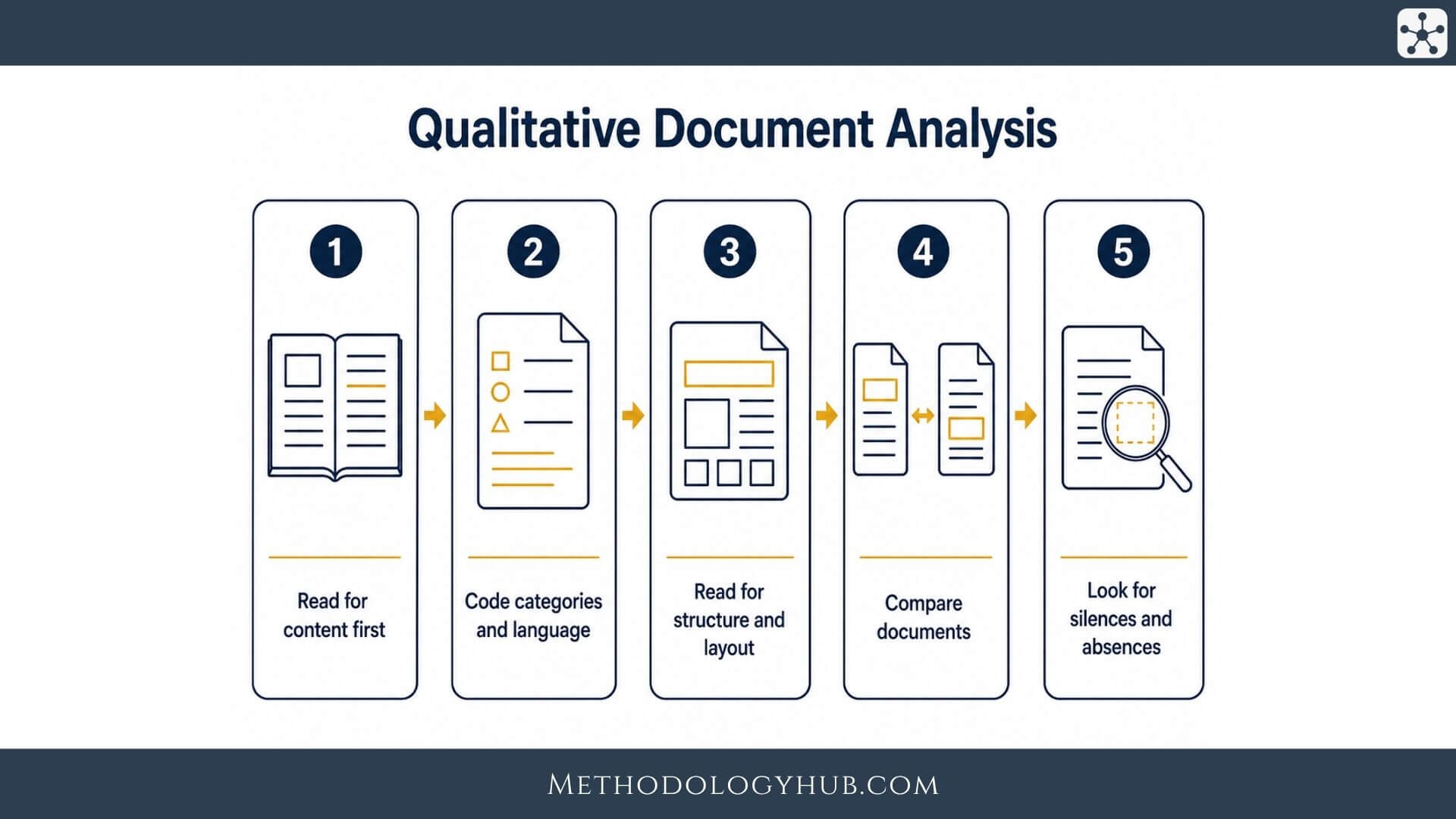
How To Conduct Qualitative Document Analysis
Analysing documents qualitatively means reading documents closely and systematically. The researcher moves between the document itself, the document set, the research question, and the context in which the materials were produced.
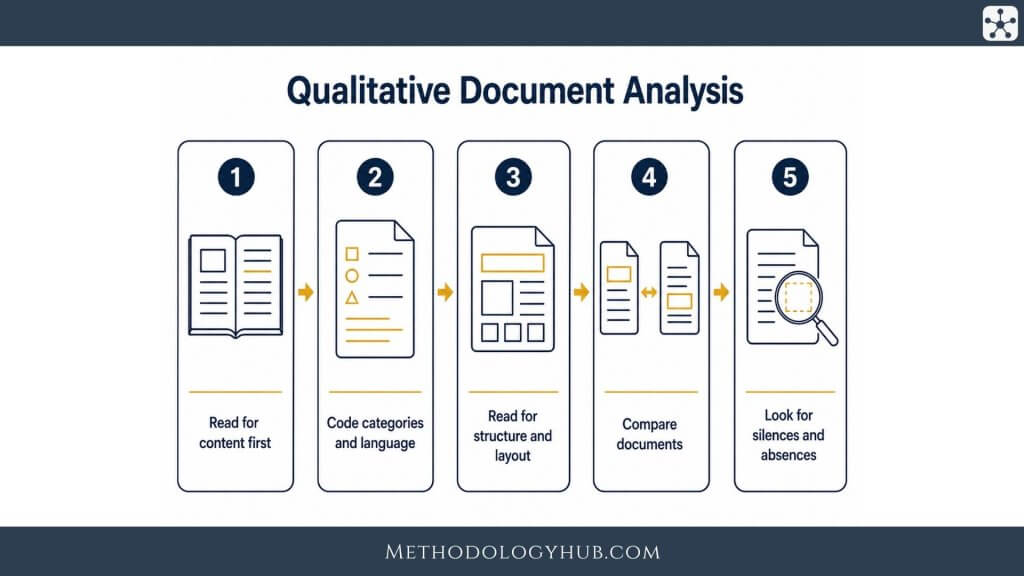
The process often includes several readings. A first reading may identify broad content. Later readings may focus on wording, categories, structure, omissions, images, tone, or comparison across documents.
Read for content first
The first reading usually asks what the document is about. What topics appear? What events, groups, rules, responsibilities, or problems are named? What does the document say should happen?
This reading gives the researcher a basic understanding before moving into deeper interpretation. It also helps identify sections that need closer coding.
Code categories and language
Coding can focus on categories, repeated terms, definitions, problem descriptions, proposed solutions, roles, responsibilities, and descriptions of people or groups. Codes may also mark tone, uncertainty, authority, or absence.
For example, a service leaflet may be coded for access, eligibility, responsibility, self-management, support, and referral. The researcher can then examine how those categories shape the reader’s understanding of the service.
Read for structure and layout
Documents communicate through structure. Headings, order, tables, bullet lists, forms, boxes, images, and placement can shape what appears central or secondary. A form that places financial details before personal needs may communicate a particular logic of assessment.
Visual layout should be included in the analysis when it affects meaning. Reducing every document to plain text may remove part of the evidence.
Recommendation: treat order as data. What appears first, last, boxed, repeated, or hidden in a footnote can shape how a document works.
Compare documents
Many document analysis projects compare several documents. The researcher may compare versions, organisations, audiences, time periods, or document types. Comparison can show repeated categories and differences in framing.
A public leaflet may describe a service as welcoming and simple. An internal procedure may describe the same service through eligibility checks and risk categories. The contrast can be analytically useful.
Look for silences and absences
Documents can be revealing because of what they do not mention. A policy may talk about responsibility without mentioning resources. A report may describe service users without including their own words. A form may collect one kind of identity information while ignoring another.
Silences should be interpreted carefully. Absence alone is not proof of intent. The researcher should connect absences to the document’s purpose, context, and wider document set.
Document Analysis with Interviews or Observation
Qualitative document analysis is often combined with interviews, observation, questionnaires, or field notes. Documents can show what is written, formalised, circulated, or archived. Other data can show how people interpret, use, resist, or ignore those documents.
This combination is useful because documents and practice do not always match. A procedure may be clear on paper but confusing in use. A public message may sound accessible but fail to answer the questions people actually have.
Documents and interviews
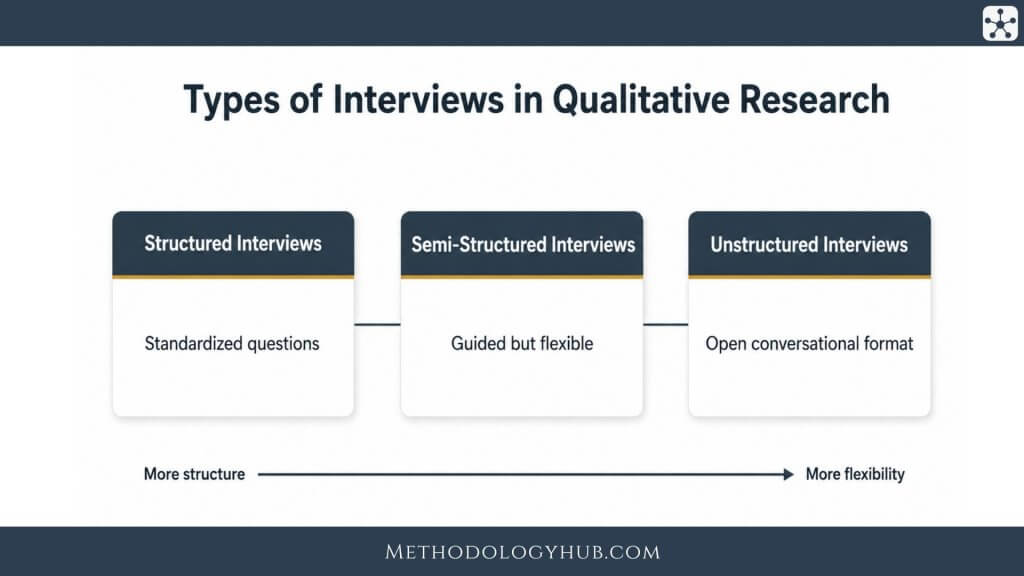
Interviews can help explain how participants understand documents. A researcher may analyse a policy and then ask staff how they use it. Participants may explain which parts are useful, which are ignored, and how the document fits daily work.
The researcher should not treat interviews as automatically more truthful than documents. Each data source shows a different part of the situation. The document records a formal version. The interview records a participant account.
Documents and observation
Observation can show how documents operate in practice. A researcher may observe whether a checklist is used during a meeting, whether a sign changes how people move, or whether a form shapes what staff ask.
This can be especially useful when documents are part of routine activity. The document is not only text. It may become a tool, instruction, barrier, record, or point of negotiation.
Documents and questionnaires
A questionnaire can ask participants to respond to a document. For example, respondents may read a leaflet and describe what is clear, confusing, missing, or useful. This can connect document analysis with participant interpretation.
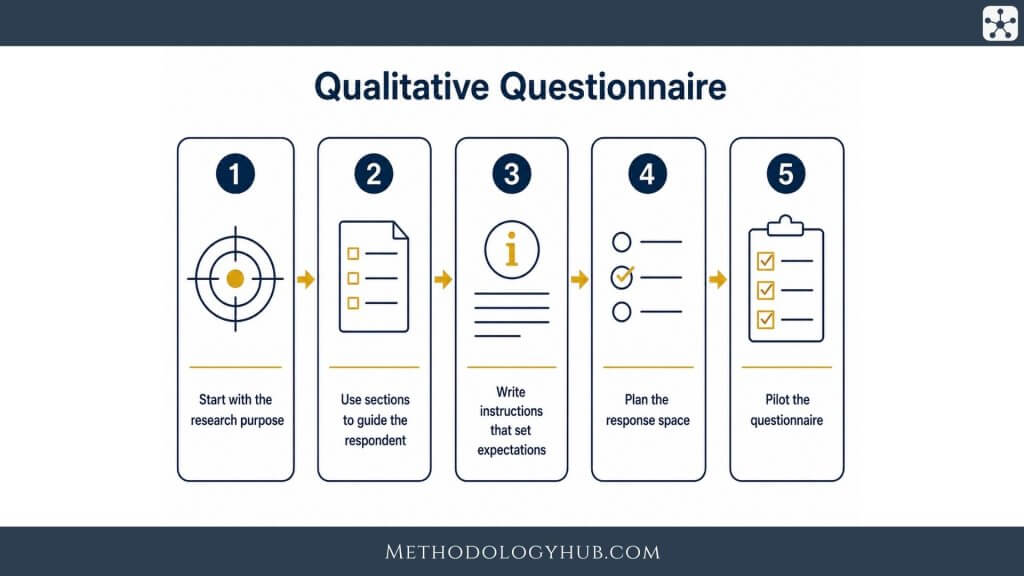
This design is useful when the researcher wants several written responses but does not need live follow-up. It can be linked to qualitative questionnaires or open-ended survey questions.
| Method paired with document analysis | What it can add |
|---|---|
| Interviews | Participant accounts of how documents are understood, used, or avoided. |
| Observation | Evidence of how documents appear in activity, space, and routine. |
| Questionnaires | Written responses from people who read, complete, or respond to documents. |
Avoid forcing agreement across sources
Different data sources may disagree. A document may describe a process as simple, while interviews describe it as confusing. Observation may show that staff skip steps that the document treats as required.
These differences can be important findings. The researcher should not force sources into agreement when the disagreement helps explain the setting.
Examples of Qualitative Document Analysis
Examples of qualitative document analysis show how the method can be used with different kinds of materials. The documents may be official, informal, public, internal, historical, or digital. The analysis depends on the question and the document set.
Example 1: Student support webpages
A researcher analyses student support webpages from several universities. The study looks at how support is described, which problems are named, what language is used for students, and how responsibility is assigned.
The analysis may show that some pages frame support as normal and accessible, while others frame it as something to use only when a student is already struggling. The documents provide evidence of public communication and institutional framing.
Example 2: Meeting minutes in a community project
A researcher studies meeting minutes from a community project over two years. The analysis examines which issues appear repeatedly, which decisions are recorded, how conflict is handled in the wording, and which voices are absent from the record.
The findings may show that practical concerns are recorded clearly, while disagreements are softened or removed. This does not mean conflict was absent. It may show how the minutes were written to create an official record of agreement.
Example 3: Forms used in a service process
A researcher analyses forms used to access a public service. The study examines what information the forms request, which categories applicants must fit, how instructions are worded, and where applicants are asked to provide evidence.
The analysis may show that the form shapes how people can present their situation. Some experiences may be easy to write into the form, while others may be difficult to express through the available boxes.
Example 4: Historical newsletters from an organisation
A researcher analyses newsletters from a local organisation across several decades. The study looks at changing language, recurring topics, images, and how members describe their role in the community.
The document set can show how the organisation’s public identity changed over time. It can also show which events were remembered, celebrated, or left out.
Example check: a strong document analysis example names the document set, the analytic focus, and what the documents can show.
Conclusion
Qualitative document analysis helps researchers study documents as meaningful social materials. It can show how topics are framed, how categories are created, how responsibilities are assigned, how language changes, and how official or public versions of practice are recorded.
A strong study needs a clear document set, transparent inclusion criteria, careful attention to context, and an analysis that examines more than surface content. Documents can be analysed alone, but they often become especially useful when compared with interviews, observation, questionnaires, or other field materials.
FAQs on Qualitative Document Analysis
What is qualitative document analysis?
Qualitative document analysis is a research method for studying documents as qualitative data. It examines content, wording, structure, purpose, audience, context, categories, and meaning rather than only extracting factual information.
What types of documents can be analysed qualitatively?
Documents can include policies, reports, minutes, forms, websites, leaflets, newsletters, handbooks, emails, guidance documents, posters, images, templates, checklists, and digital records.
How do you conduct qualitative document analysis?
To conduct qualitative document analysis, define the research question, build a document set, record inclusion criteria, create a document log, read documents closely, code content and language, compare documents, and interpret findings in context.
When should qualitative document analysis be used?
Qualitative document analysis should be used when documents are central to the research question, especially when studying representation, policy, categories, recorded decisions, public communication, organisational practice, or change over time.
Can document analysis be combined with interviews or observation?
Yes. Document analysis can be combined with interviews, observation, questionnaires, or field notes. Documents can show what is written or formalised, while other methods can show how documents are interpreted, used, or ignored in practice.