Sampling

Snowball Sampling - MethodologyHub.com

Snowball Sampling Explained: Uses, Steps, Examples

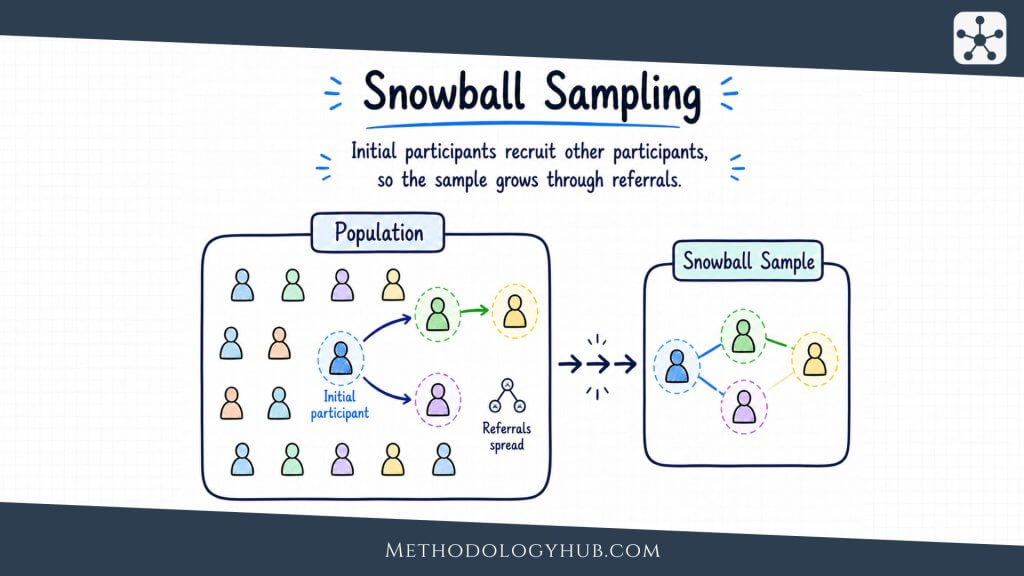
Snowball sampling is a non-probability sampling method in which existing participants help the researcher reach other people who fit the study criteria. Instead of beginning with a complete list of everyone in the population, the researcher begins with a small number of suitable contacts, asks them for referrals, and gradually builds the sample through those […]

Snowball Sampling Explained: Uses, Steps, Examples Read More »
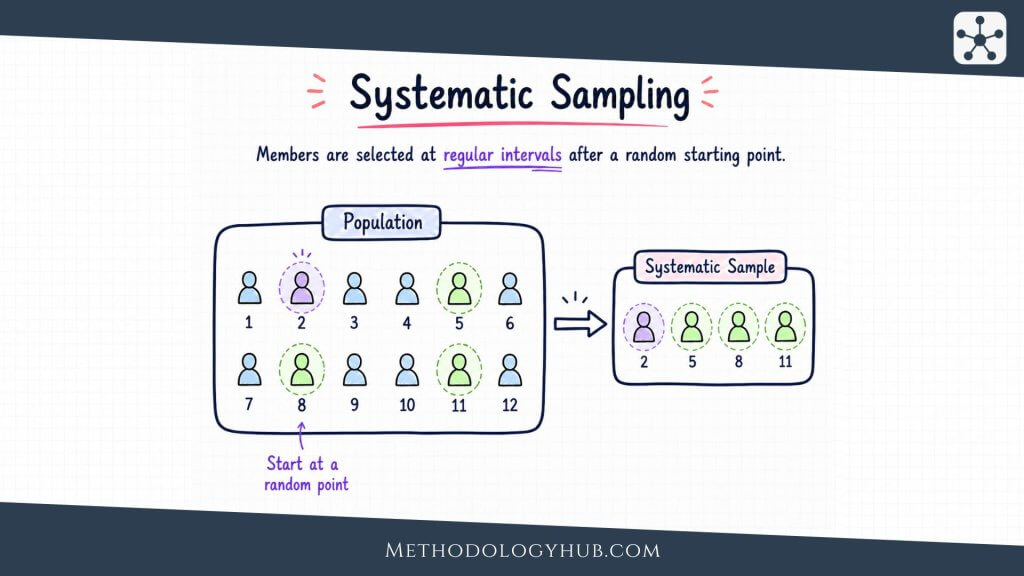
Systematic Sampling - MethodologyHub.com

Systematic Sampling: Definition, Steps, and Examples

Systematic sampling is a probability-based sampling method in which researchers select units from an ordered list at regular intervals after choosing a random starting point. Instead of drawing every case separately, the researcher decides on a sampling interval and then follows that interval through the sampling frame. The method is popular because it is easy

Systematic Sampling: Definition, Steps, and Examples Read More »

Cluster Sampling - MethodologyHub.com

Cluster Sampling Explained: Types, Steps & Examples

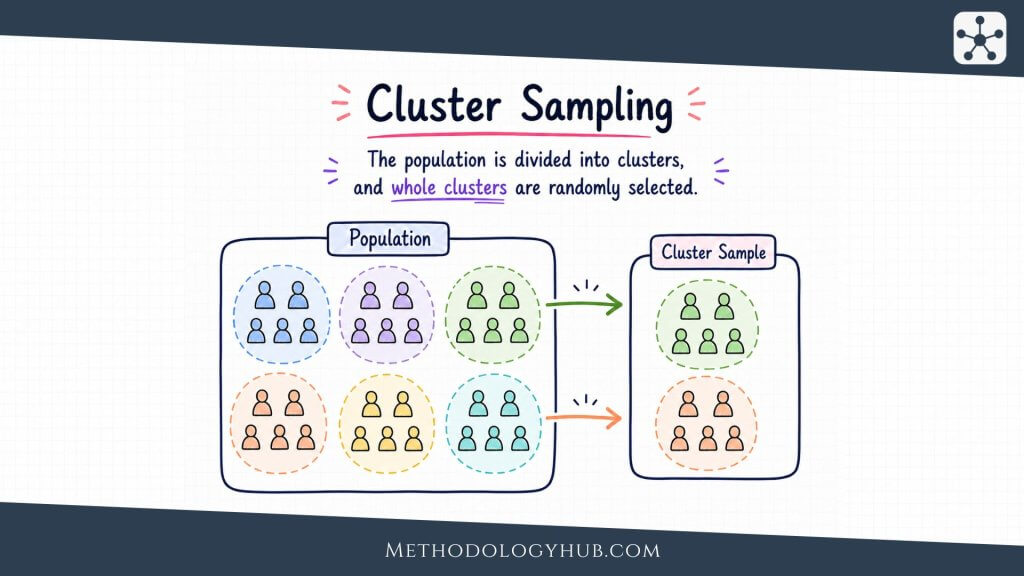
Cluster sampling is a probability-based sampling method in which researchers select groups first, rather than selecting every person, record, household, school, clinic, or observation directly from one long list. These groups are called clusters. Once clusters have been selected, the researcher collects data from all eligible units inside them or samples further within them. This

Cluster Sampling Explained: Types, Steps & Examples Read More »

Purposive Sampling Explained: Types, Uses and Examples

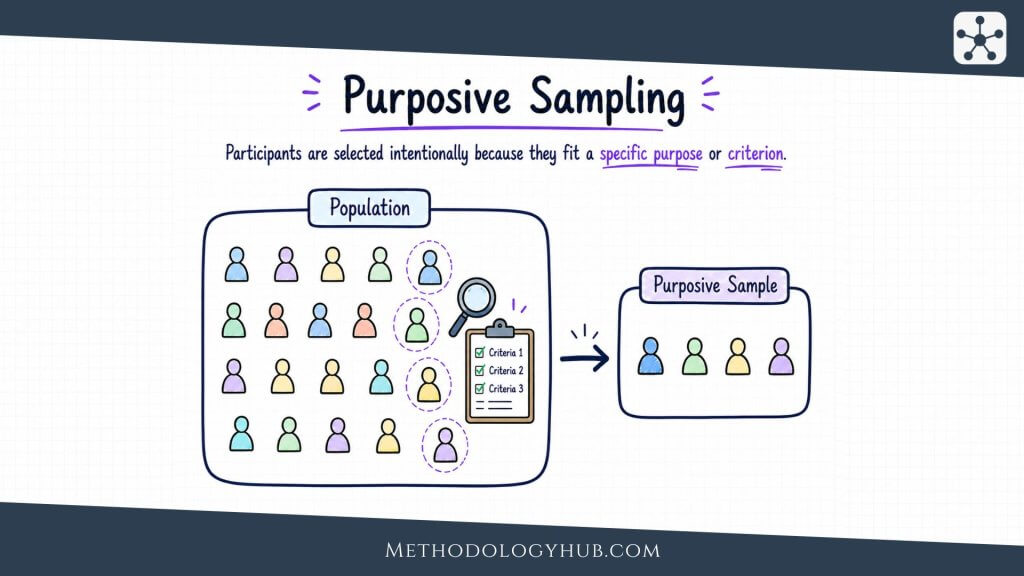
Purposive sampling is a non-probability sampling method in which researchers select people, cases, documents, events, sites, or records because they fit the purpose of the study. Instead of asking chance to decide who enters the sample, the researcher uses clear criteria to find units that can speak directly to the research question. This article explains

Purposive Sampling Explained: Types, Uses and Examples Read More »

Convenience Sampling - MethodologyHub.com

Convenience Sampling: Meaning, Uses, and Examples

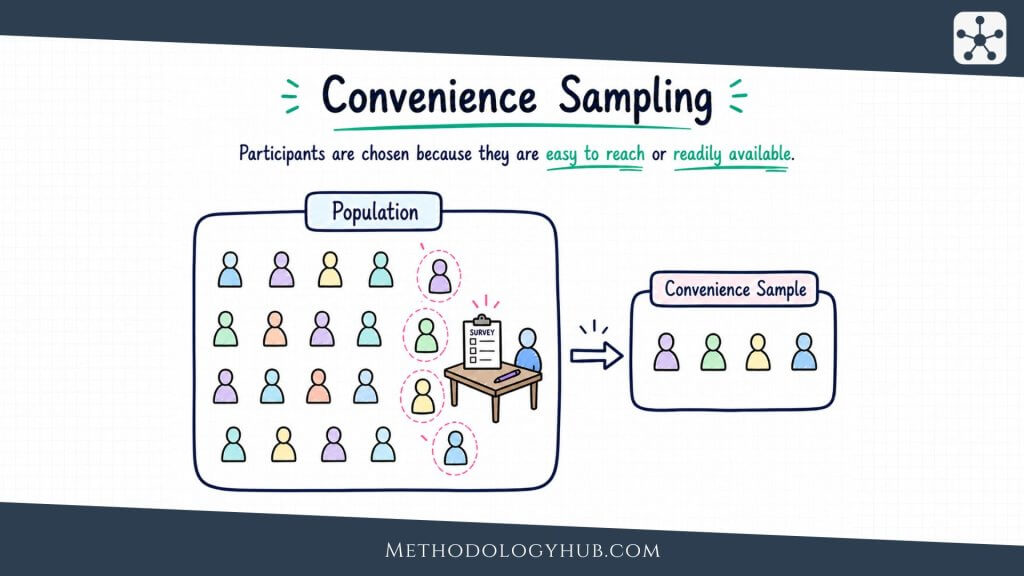
Convenience sampling is a non-probability sampling method in which people, cases, records, places, or observations are selected because they are easy for the researcher to access. Instead of drawing names from a complete list or using a chance-based procedure, the researcher works with the units that are available within a classroom, clinic, organisation, online group,

Convenience Sampling: Meaning, Uses, and Examples Read More »

Stratified Sampling - MethodologyHub.com

Stratified Sampling Explained: Types, Steps & Examples

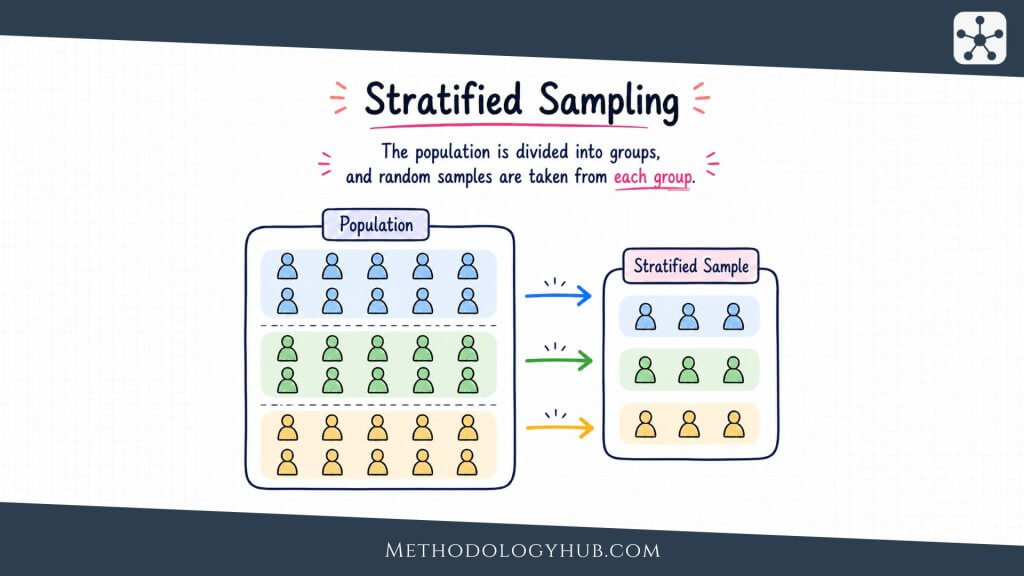
Stratified sampling is a probability-based sampling method in which a population is divided into meaningful subgroups before the sample is selected. These subgroups are called strata. Instead of drawing one sample from the whole population at once, the researcher draws a sample from each stratum, so that important groups are included in a planned way.

Stratified Sampling Explained: Types, Steps & Examples Read More »

Types of Sampling Methods - MethodologyHub.com

Sampling Methods: Types, Examples, and When to Use Each Method

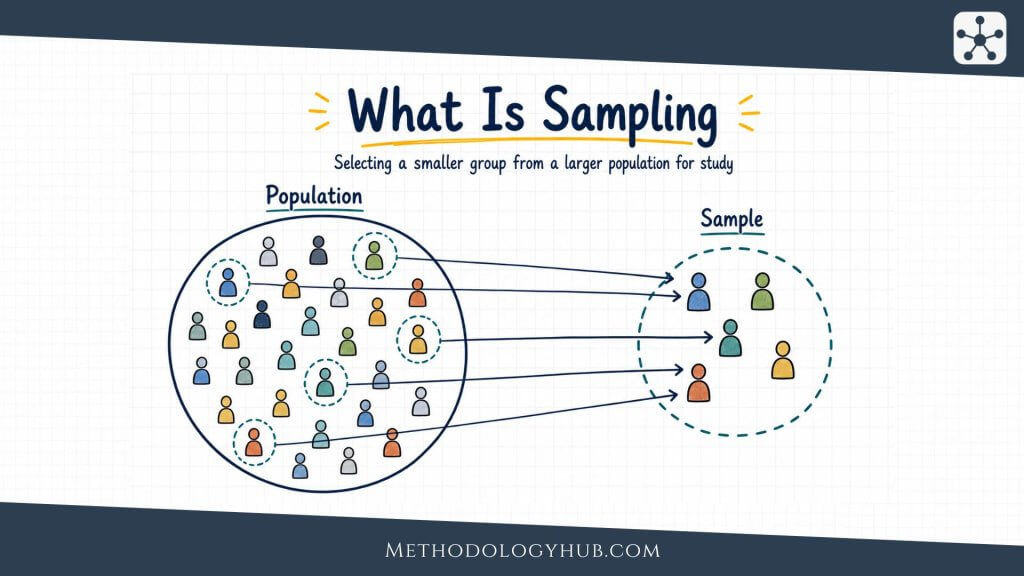
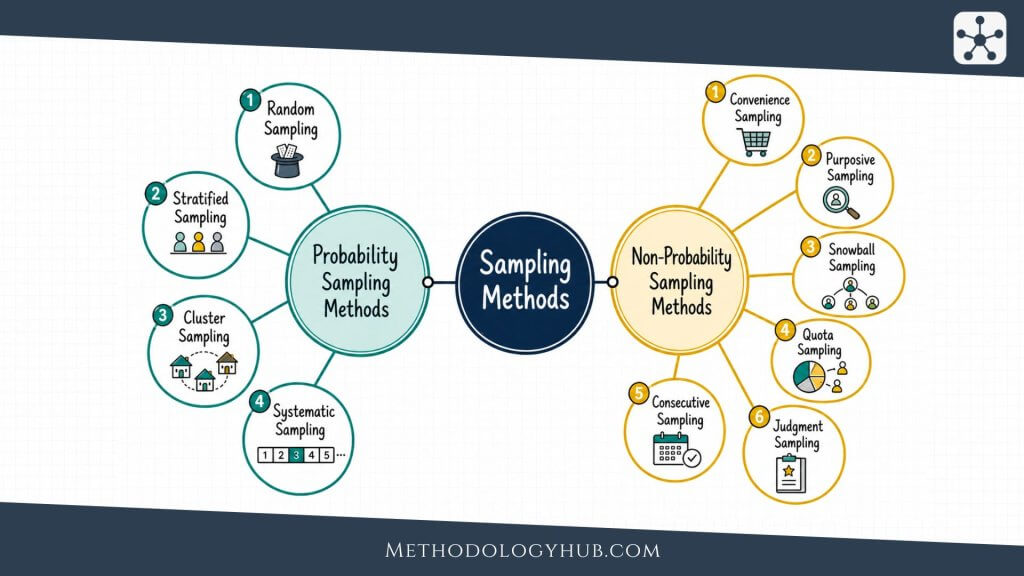
Sampling methods are the procedures researchers use to choose a smaller group from a larger population. In a well-planned study, sampling is not an afterthought. It decides who enters the study, whose experiences or measurements are represented, and how far the findings can reasonably travel beyond the people who were actually observed. This article explains

Sampling Methods: Types, Examples, and When to Use Each Method Read More »