Qualitative Research Methods

Naturalistic Observation - MethodologyHub.com

Naturalistic Observation

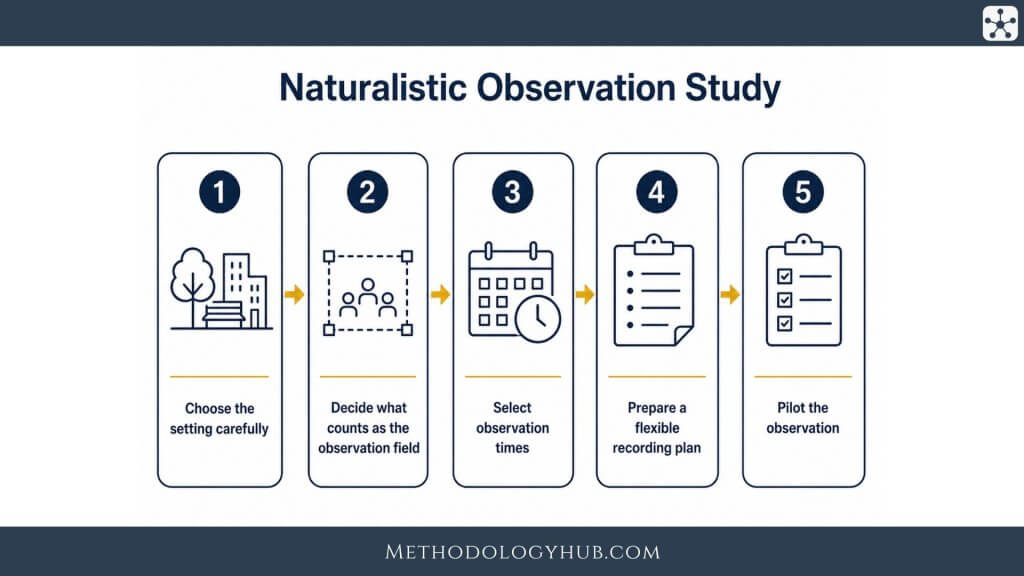
Naturalistic observation is an observational research method in which people, behaviour, interaction, and settings are studied where they normally occur. The researcher observes activity in its everyday environment rather than moving participants into a laboratory, artificial task, or highly controlled situation. The method is used in qualitative research when the setting itself is part of […]

Naturalistic Observation Read More »
Controlled Observation - MethodologyHub.com

Controlled Observation

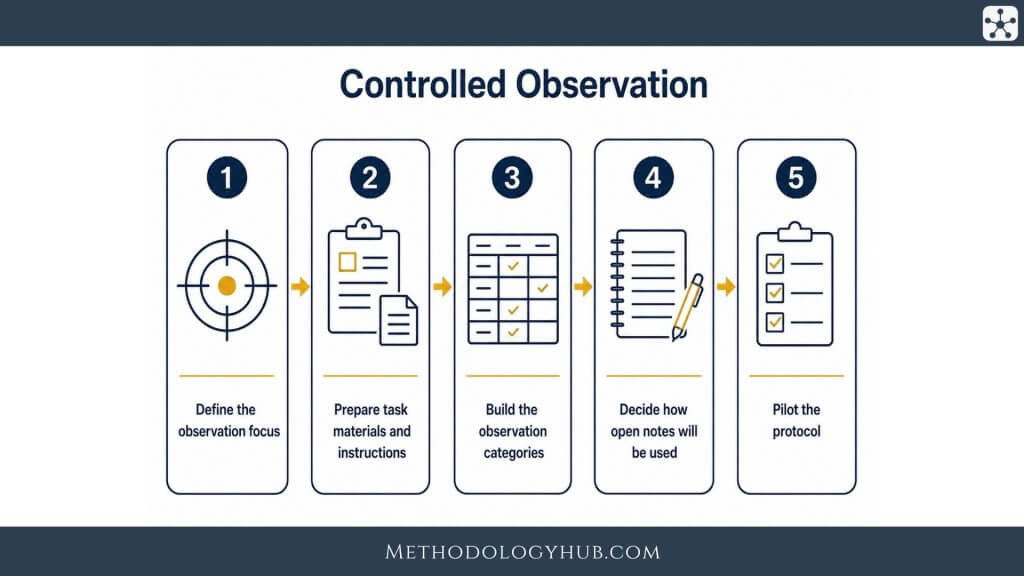
Controlled observation is an observational research method in which the researcher watches behaviour in a planned or arranged situation. The researcher may define the task, setting, timing, observation categories, instructions, or recording procedure before observation begins. The aim is to make the observation more consistent than it would be in a fully open natural setting.

Controlled Observation Read More »

Qualitative Observation - MethodologyHub.com

Qualitative Observation

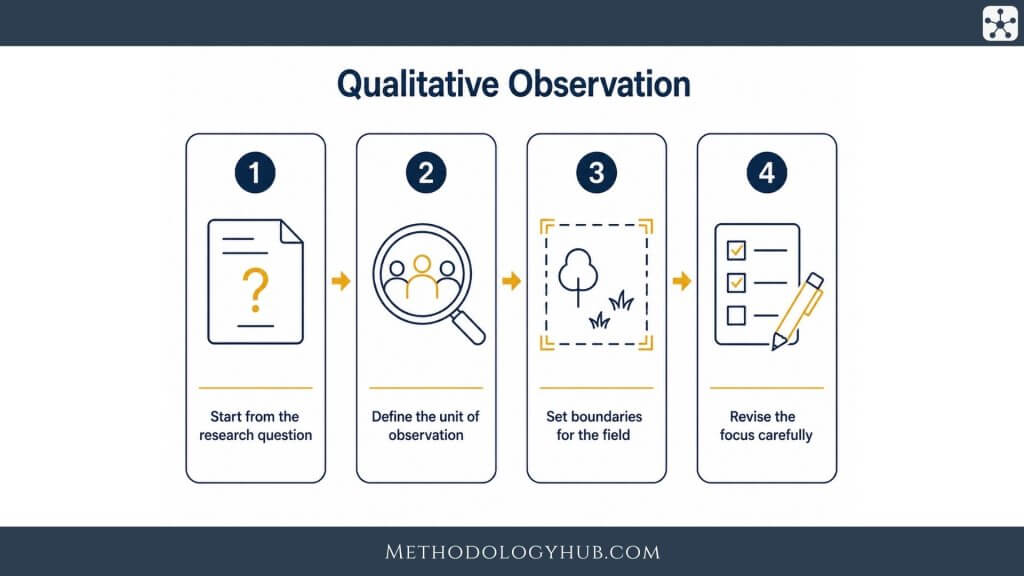
Qualitative observation is the use of observation to collect descriptive, contextual, and interpretive data about behaviour, interaction, settings, routines, and events. Instead of reducing everything to a count, the researcher records what happens, how it happens, where it happens, who is involved, and what the situation appears to mean in context. In qualitative research, observation

Qualitative Observation Read More »

Participant Observation - Research - MethodologyHub.com

Participant Observation

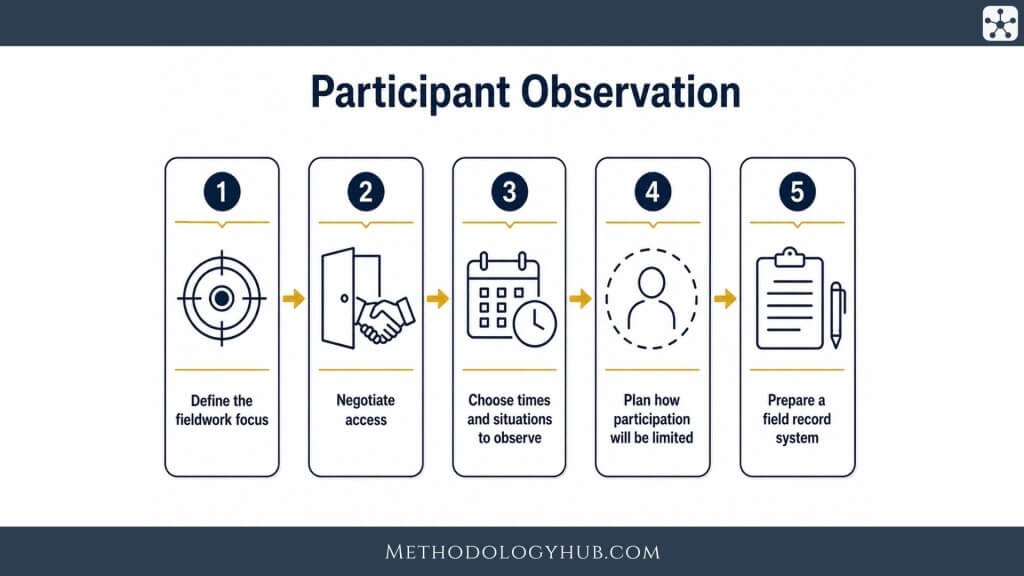
Participant observation is an observational research method in which the researcher studies a setting while taking part in it to some degree. Instead of watching only from the outside, the researcher enters the field, spends time with participants, joins selected activities, and records what is learned through presence, participation, conversation, and careful note-taking. The method

Participant Observation Read More »

Non-Participant Observation - MethodologyHub.com

Non-Participant Observation

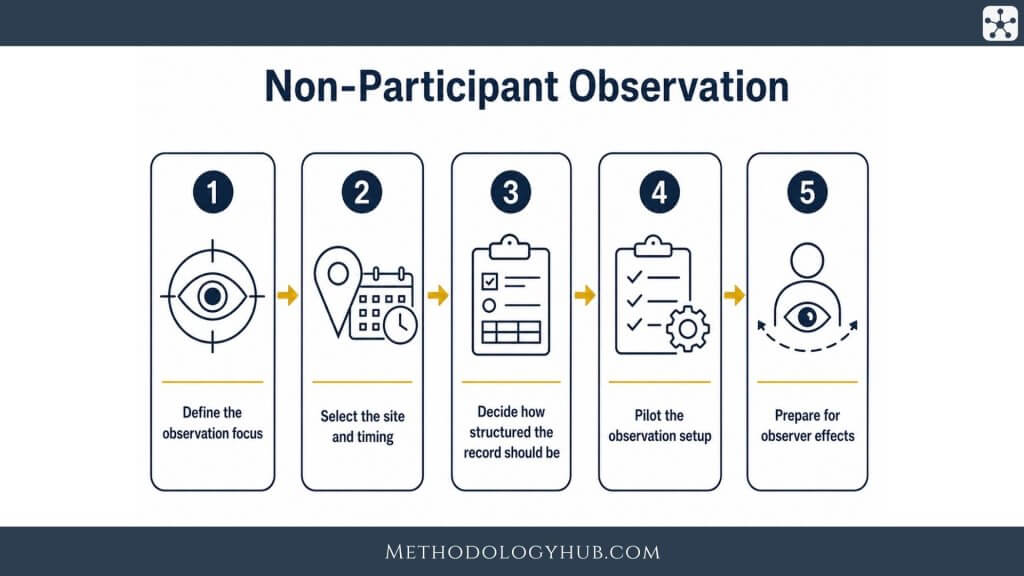
Non-participant observation is an observational research method in which the researcher watches a setting, activity, or interaction without joining the activity directly. The researcher remains outside the main action, records what happens, and analyses behaviour, sequence, space, roles, and context from a more distant observer position. This method is part of observational research and is

Non-Participant Observation Read More »

Observational Research

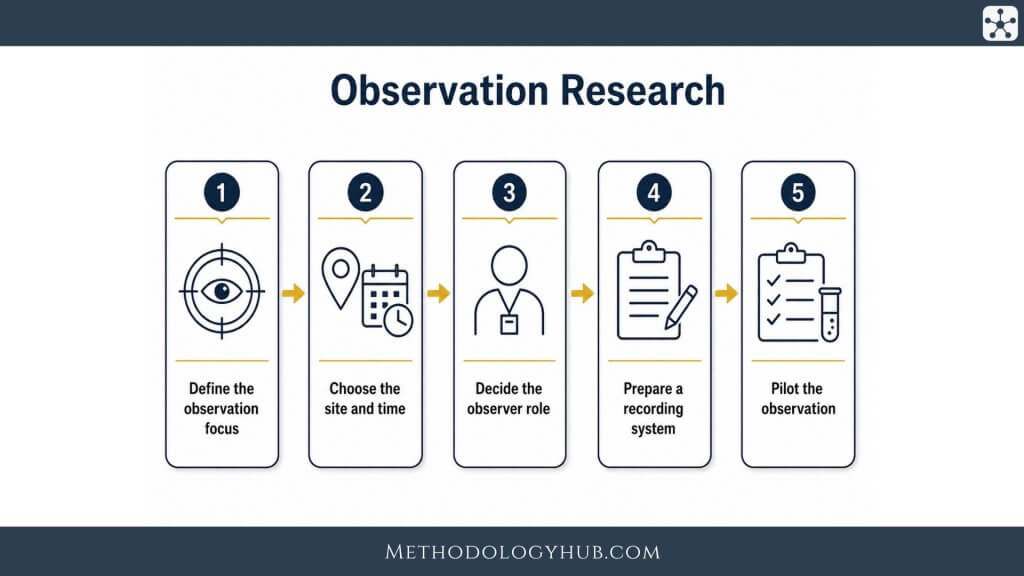
Observational research is a method of studying people, behaviour, interaction, routines, spaces, and events by watching and recording what happens in a setting. In qualitative research, observation is used when the researcher needs to understand practice in context rather than rely only on what participants say afterward. Observation has an important place in qualitative research

Observational Research Read More »

Semi-Structured Interviews

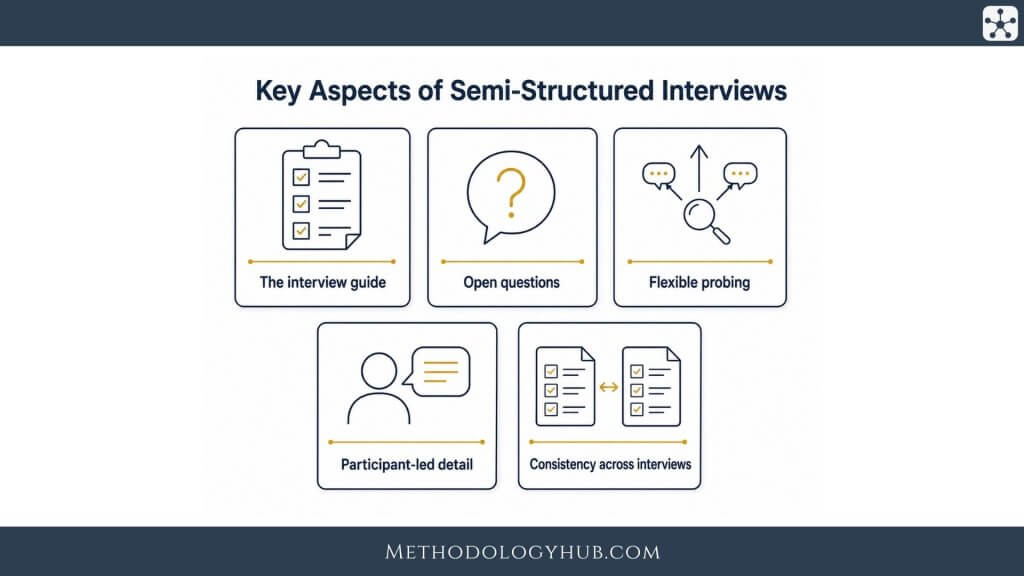
Semi-structured interviews are qualitative interviews that use a prepared interview guide while still allowing the interviewer to ask follow-up questions, change the order of topics, and explore answers in more depth. They sit between fixed-question interviews and open conversations. The researcher plans the main route, but the participant’s account can still shape how the interview

Semi-Structured Interviews Read More »

Unstructured Interviews

Unstructured interviews are qualitative interviews that use an open conversational format rather than a fixed list of questions. The researcher begins with a broad topic, listens closely to the participant’s account, and asks follow-up questions as the conversation develops. This format is used when the study needs depth, personal meaning, and participant-led detail. In qualitative

Unstructured Interviews Read More »

Focus Group in Qualitative Research - MethodologyHub.com

Focus Groups in Qualitative Research

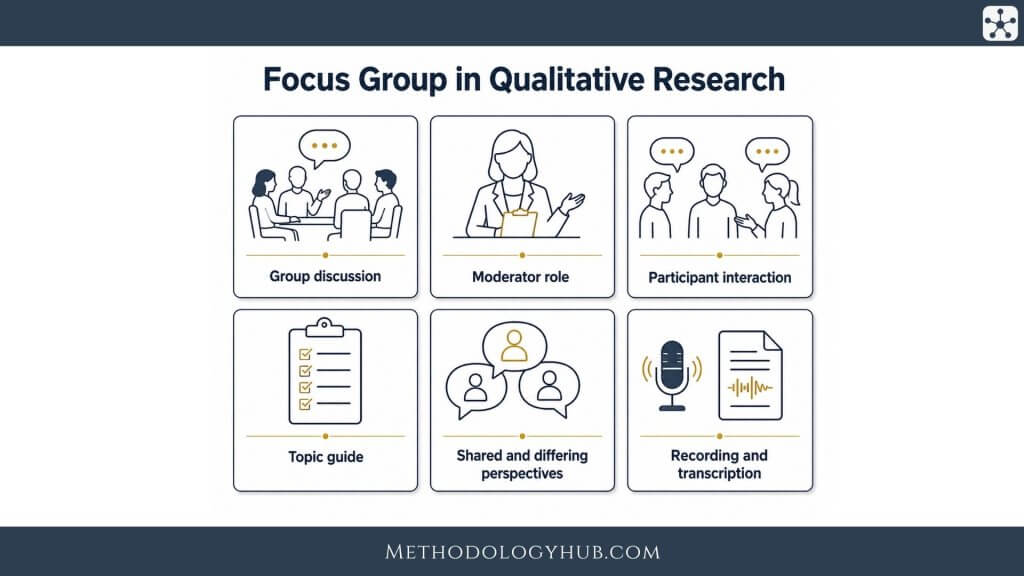
Focus groups in qualitative research are moderated group discussions used to understand how people talk about a topic together. Instead of collecting one private account at a time, a focus group brings several participants into the same conversation so the researcher can study shared views, disagreement, examples, group language, and interaction. In Qualitative Research, focus

Focus Groups in Qualitative Research Read More »

Core Qualitative Research Methods - MethodologyHub.com

Qualitative Research Methods explained

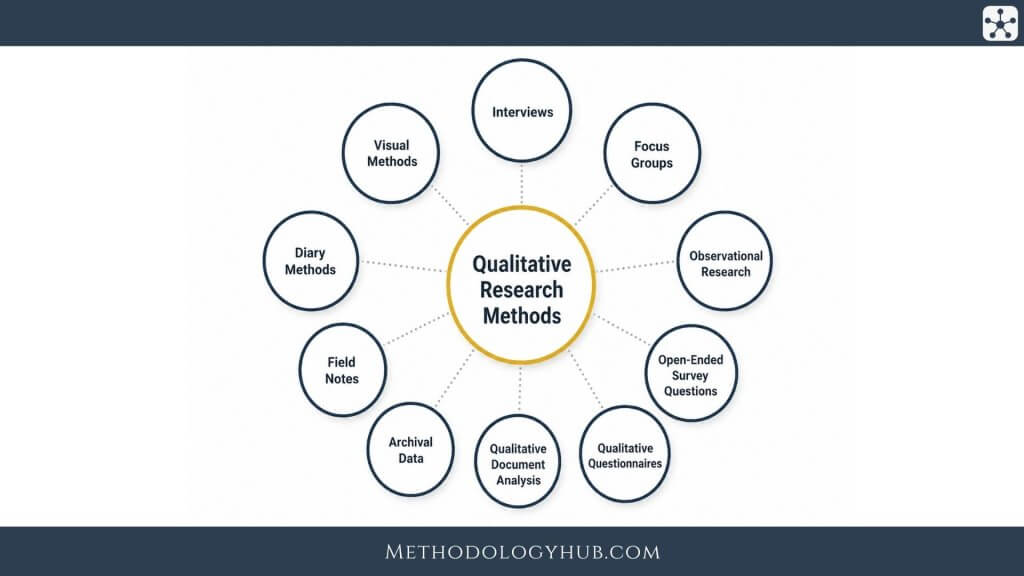
Qualitative research methods are the ways researchers collect and analyse non-numerical evidence when they want to understand meanings, experiences, practices, interactions, and social contexts. They are used when a study needs more than a count, score, or statistical average. Instead of asking only how often something happens, qualitative research asks how people describe it, how

Qualitative Research Methods explained Read More »